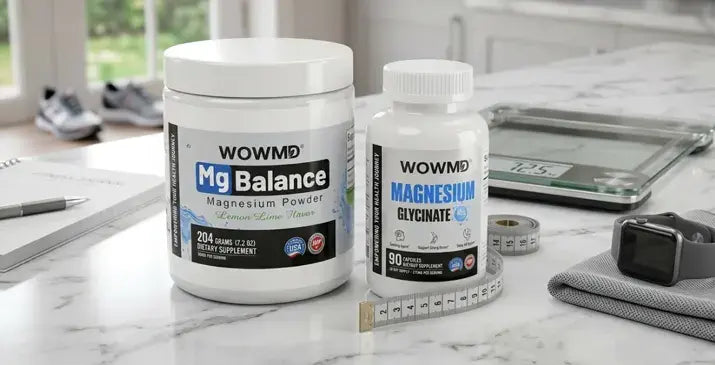


Magnesium for Muscle Recovery: Key Benefits and Is It Good?
Discover how magnesium supports muscle recovery, reduces soreness, promotes muscle relaxation, and helps you recover after workouts.
 By WOWMD Staff

 Fact Checked
Advertiser Disclosure: WOWMD independently vets all recommended products. If you purchase a featured product, we may be compensated. Learn why you can trust us.

Magnesium for muscle recovery is more than a wellness trend—it is a key mineral involved in how your muscles produce energy, repair after training, and relax once the work is done.
If you have ever dealt with muscle soreness after exercise, heavy legs, or stubborn tightness after a hard session, magnesium may be one missing piece. It supports more than 300 enzymatic reactions in the body, including ATP (adenosine triphosphate) production and muscle protein synthesis, both of which are essential for recovery.
Athletes and active adults are especially vulnerable to low levels because of magnesium depletion through sweat and higher training demands. At WOWMD, we focus on science-backed magnesium supplements designed to support real recovery goals.
Below, we will break down the science, explain why magnesium glycinate for muscle recovery gets so much attention, show how to use magnesium effectively, and help you choose the form that best fits your routine.
TL;DR
- Magnesium for muscle recovery supports energy production, reduces soreness, and helps muscles relax after exercise.
- Magnesium glycinate is the best form for most people due to high absorption and added sleep and relaxation benefits.
- Consistent daily intake (200–400 mg) alongside proper nutrition and rest improves post-workout recovery over time.
- Magnesium also enhances sleep quality, which directly boosts muscle repair and overall recovery performance.
Why Magnesium Is Essential for Muscle Recovery
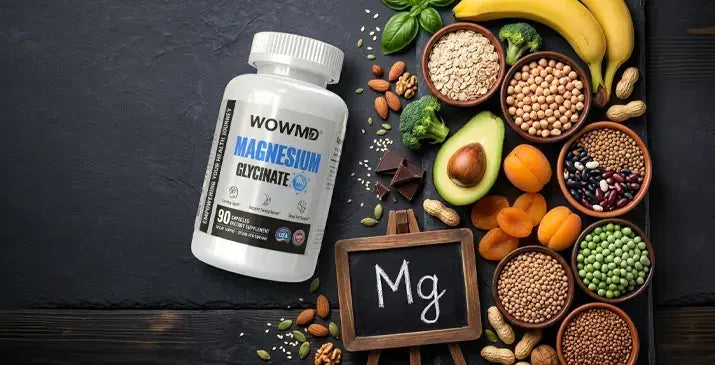
Magnesium for muscle recovery matters because this mineral helps regulate the basic functions your muscles depend on before, during, and after exercise. It is the fourth most abundant mineral in the body, and a meaningful portion is stored in bone and muscle tissue. When your training volume goes up, your demand for magnesium often rises too.
“Magnesium is a cofactor in hundreds of enzymatic reactions in the body, and several of them are at the center of muscle repair after exercise. The best and most researched is ATP synthesis. If there is a deficiency of magnesium, your muscles won't be able to create energy efficiently, and the repair process will be directly affected,” explains Dr. Jason Schroder.
One reason is simple: exercise increases magnesium loss. Hard training can lead to magnesium depletion through sweat and urine, especially during long workouts, hot weather, or repeated high-intensity sessions.
According to the NIH National Library of Medicine, many adults already fail to meet the RDA for magnesium through diet alone, which means active people may begin with less margin for recovery support than they realize.
This is where magnesium muscle recovery becomes especially relevant. Magnesium helps muscles relax after they contract. When intake is too low, muscles may stay tense longer than they should, which can contribute to muscle cramps and spasms, lingering tightness, and increased muscle soreness after exercise. If you are training hard and still feeling unusually sore, low magnesium may be part of the picture.
“Dr. Jason Schroder add to that, magnesium helps to turn on and off calcium channels in muscle cells. When the balance is not in equilibrium, the muscles remain in a constant state of tension, micro-tears build up and recovery becomes stalled. Most active people are unaware that the cause of a sore that lasts longer than normal is due to the lack of magnesium in their diet.”
Research suggests that magnesium also plays a central role in electrolyte balance. After a demanding workout, your body needs the right mix of minerals to restore fluid balance, nerve signaling, and normal muscle function.
When that balance is off, post-workout fatigue can feel worse, and recovery may take longer. While magnesium is not a magic fix for soreness, it is a foundational nutrient that helps create the right conditions for better recovery.
“During training, magnesium supplies are depleted while the body requires increased amounts of magnesium for appropriate muscle relaxation. In the post-workout period, magnesium serves as a co-factor in protein synthesis that regenerates damaged muscle tissue. In addition, it controls the inflammatory response in the muscle tissues and does not block the adaptation process necessary for muscle development,” highlights Jane Moon.
Now that we know why it matters, let’s look at how magnesium actually supports muscle repair inside the body.
Advertisement


The Science Behind Magnesium and Muscle Repair
So, does magnesium help muscle recovery? Yes, because it supports several of the processes that determine how efficiently your body bounces back after exercise.
First, magnesium is required for ATP (adenosine triphosphate) production. ATP is the energy currency of your cells, and it powers not only muscle contractions during exercise but also the repair work that happens afterward.
Without enough magnesium, ATP metabolism becomes less efficient, which can slow recovery at the cellular level. In plain terms, your muscles need magnesium to help generate the energy required to rebuild.
“From a biochemical standpoint, magnesium is a cofactor that activates over 300 reactions involved in muscle recovery processes, including the production of ATP and synthesis of proteins. It also participates in calcium regulation in the muscle cells; calcium stimulates muscle contraction, whereas magnesium triggers muscle relaxation and elimination of the lactate from muscles,” clarifies Jane Moon.
Scientific research indicates magnesium also supports muscle protein synthesis, the process your body uses to repair and rebuild damaged muscle fibers after training. Every hard workout creates a degree of microscopic muscle stress. Recovery depends on how well your body can respond to that stress with repair, adaptation, and new tissue-building activity.
Magnesium helps support the enzymes and cellular pathways involved in that rebuilding process, making it relevant for anyone focused on strength, performance, or steady post-workout recovery.
Another important mechanism involves inflammation. Delayed onset muscle soreness, or DOMS, is partly linked to tissue stress and the inflammatory response that follows hard exercise. Research in Scientifica suggests magnesium may help regulate NF-κB, an inflammatory signaling pathway associated with exercise-induced inflammation.
That does not mean magnesium eliminates soreness, but it may help support a more balanced recovery response, especially when low magnesium status is contributing to the problem.
Magnesium also influences neuromuscular function. It acts like a natural calcium counterbalance at the neuromuscular junction. Calcium helps trigger contraction; magnesium helps support relaxation.
Published research indicates that when magnesium levels are adequate, muscles can release tension more effectively between contractions. That is one reason magnesium for recovery is often discussed in relation to tightness, stiffness, and post-exercise discomfort.
Scientific evidence on magnesium and sleep tells us there is also a valuable sleep connection. Sleep quality and muscle repair are closely linked because deep sleep is when growth hormone release and tissue recovery are most active. Magnesium supports the nervous system, encourages relaxation, and may help improve sleep depth and quality.
That means magnesium for muscle recovery and sleep can offer a dual benefit: direct support for muscle function and indirect support through better rest.
The key caveat is that results vary. Supplements tend to work best when they help correct an underlying gap. Magnesium is most useful as part of a bigger recovery strategy that includes enough protein, hydration, calories, and rest.
How to Take Magnesium for Faster Post-Workout Recovery
Using magnesium for muscle recovery effectively comes down to consistency, smart timing, and choosing a format you will actually stick with.
For many people, the best times to take magnesium are either after a workout or in the evening before bed. Post-workout use fits naturally into a recovery routine, especially if you already take protein or hydrate right after training.
Evening use has an added advantage because it can support relaxation and sleep quality at the same time. Since sleep is one of the most important drivers of muscle repair, this timing can be especially helpful for active adults.
“Timing is very important here. Using magnesium at night, ideally 30-60 minutes before sleep, is believed to “synergize” with the body's natural tissue repair process which is accelerated during sleep, although there is growing research on this time window,” notes Dr. Jason Schroder.
In general, many adults use between 200 and 400 mg of elemental magnesium per day. Athletes and people who sweat heavily may benefit from the higher end of that range, but it is wise to start lower and see how your body responds.
“To obtain maximum muscle recovery benefits from magnesium, Jane Moon recommends taking 300-400 mg of elemental magnesium within two hours post-training, preferably along with a protein-rich meal. This regimen allows for the most efficient absorption of magnesium since this time corresponds to enhanced muscle protein synthesis. Split dosage could also be considered as an option for athletes; 200 mg should be consumed immediately after training, and another 200 mg just before bedtime.”
Always check the label for elemental magnesium, not just the total compound weight, and consult your healthcare provider for individualized guidance—especially if you have kidney issues, take medications, or manage an existing health condition.
“High doses of magnesium, more than 350 mg of supplements per day, can cause digestive problems that will resolve themselves if the dose is corrected. The greater worry is kidney function. If the kidneys don't function correctly, magnesium can accumulate in the body more rapidly than it should, creating a health problem,” warns Dr. Jason Schroder.
Oral supplements remain the most studied option. Capsules are simple and travel-friendly. Powders can be mixed into a drink and fit naturally into a post-workout recovery shake, making magnesium powder a practical option. Some people prefer magnesium gummies because they are easy to remember and convenient for daily use.
Topical options can also play a role. Magnesium spray or lotions are commonly applied directly to sore muscles for localized support, although the evidence for topical absorption is more limited than for oral forms. Still, some users like them as part of a broader recovery ritual.
Consistency matters more than perfect timing. Magnesium is not a one-time performance booster; it works best as a daily habit that supports post-workout recovery over time.
Pair it with enough protein, fluids, sleep, and rest days, and it becomes a strong part of a natural muscle recovery supplement strategy. That leads to the next question: what is the best magnesium for muscle recovery?
Advertisement


Magnesium Glycinate vs. Citrate vs. Oxide: Which Form Is Best for Muscle Recovery?
If you are wondering which magnesium is be st for muscle recovery, the short answer for most people is magnesium glycinate.
“Jane Moon also recommends, magnesium glycinate for recovery purposes. This form of magnesium demonstrates the highest absorption rate compared to other types; additionally, it provides an extra benefit associated with glycine, a component of magnesium glycinate that promotes collagen production and has anti-inflammatory activity.”
Magnesium glycinate is magnesium bound to glycine, an amino acid known for its calming and recovery-friendly properties. This chelated form is widely favored because it offers strong bioavailability of magnesium, meaning your body can absorb and use it efficiently.
It is also gentle on the stomach, which matters if you plan to take it daily. For many active adults, magnesium glycinate muscle recovery support stands out because it combines good absorption with excellent tolerability.
So, does magnesium glycinate help muscle recovery? In many cases, yes. It delivers magnesium in a well-absorbed form, while glycine itself may support relaxation and sleep—two factors that matter for muscle repair. That is why magnesium glycinate for muscle recovery is often the top recommendation for athletes, regular gym-goers, and anyone recovering from frequent training sessions.
You may also see the term chelated magnesium. “Chelated” simply means the mineral is bound to another compound, often an amino acid, to improve absorption and tolerance. Magnesium glycinate and magnesium bisglycinate fall into this category and are both considered strong choices.
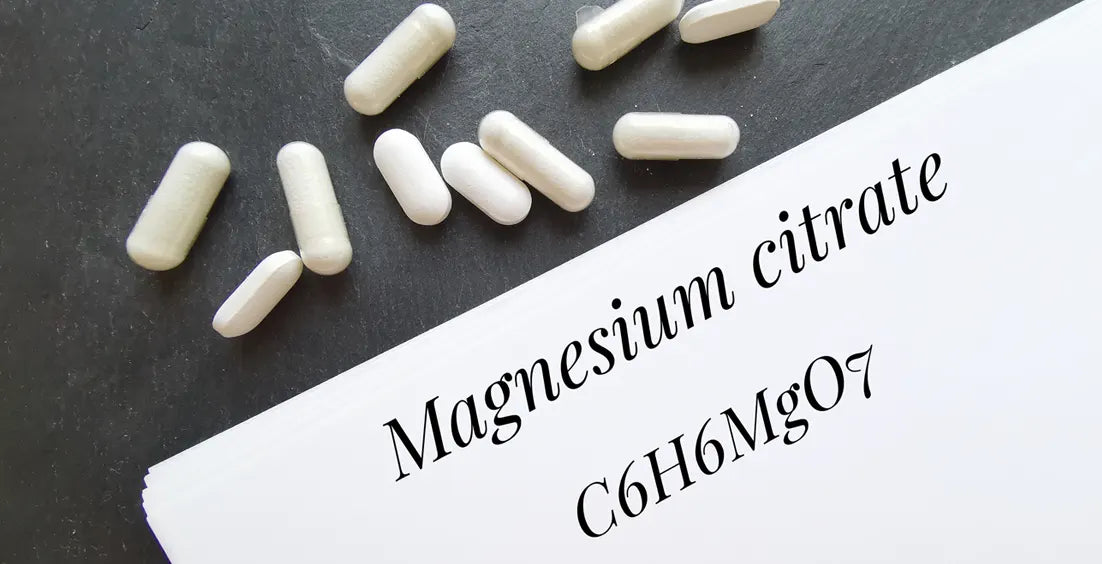
Magnesium citrate is another legitimate option. It has good absorption and works well for many people, but it is more likely to have a mild laxative effect at higher doses. That may be fine for some users, but it is not always ideal when you want a recovery supplement that feels easy and predictable.
“Magnesium citrate is another highly bioavailable type of magnesium with good efficacy; however, excessive consumption of this mineral leads to unpleasant side effects due to digestive tract irritation,” cautions Jane Moon.
Magnesium malate is worth mentioning too. Malate is tied to energy production through the Krebs cycle, so some athletes prefer it when fatigue is a bigger concern than sleep support. It can be a good alternative for people who want recovery help with a more daytime-friendly feel.
Magnesium oxide, on the other hand, is usually not the best choice for recovery-focused users. It has lower absorption and is more commonly used for digestive purposes than muscle support.
When reading labels, look for the amount of elemental magnesium per serving, third-party testing, and formulas without unnecessary fillers or excessive sweeteners. Multi-ingredient blends such as magnesium complex or calcium magnesium zinc may also appeal to people looking for broader mineral support, but form and absorption still matter.
If you are not sure where to start, magnesium glycinate is consistently the top-recommended form for muscle recovery and overall athletic performance. For a deeper comparison, see our magnesium glycinate vs citrate guide.
Start Supporting Your Muscle Recovery with the Right Magnesium
Magnesium for muscle recovery deserves attention because it supports the systems your body relies on to repair and recharge after exercise. From muscle function and electrolyte balance to muscle protein synthesis and recovery-enhancing sleep, magnesium plays a central role in how well you bounce back from training.
“Magnesium supplementation is generally safe for most healthy athletes. However, excessive intake of this mineral may cause gastrointestinal problems, such as diarrhea. People with kidney diseases should exercise caution with magnesium supplements,” advises Jane Moon.
For most active adults, magnesium glycinate is the standout option. It is highly absorbable, easy on the stomach, and paired with glycine, which adds extra support for relaxation and restful sleep. That said, even the best supplement works best when it is combined with the basics: protein, hydration, solid sleep, and active recovery habits.
WOWMD offers expert-recommended, science-backed magnesium supplements made in the USA to help support your training routine with confidence. Explore our magnesium for muscle pain and magnesium glycinate collections to find a formula that fits your goals. You may also find our guide on the best magnesium supplement for muscles helpful when comparing options.
Individual results may vary. Supplements are not intended to diagnose, treat, cure, or prevent any disease. Consult your healthcare provider before starting a new supplement regimen.
Advertisement


FAQs
Meet The Experts
- Dr. Jason Schroder, Medical Director & Co-Founder Craft Body Scan
- Jane Moon, Pharmacist & Director at Herba Health Inc.
This article is for informational purposes only and is not a substitute for professional medical advice, diagnosis, or treatment. Statements made on this website have not been evaluated by the U.S. Food and Drug Administration. Always consult a qualified healthcare professional before making changes to your diet, supplements, medications, or healthcare routine.
Our Top Picks

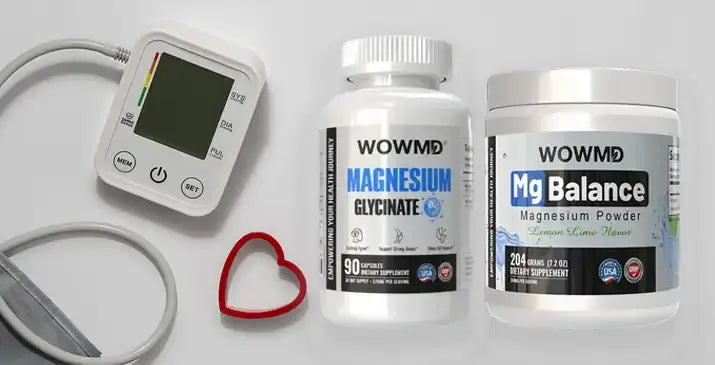
MgBalance Magnesium Powder

Nitric Shock Pre-Workout


References
WOWMD follows strict sourcing guidelines to ensure the accuracy of its content, outlined in our editorial policy. We use only trustworthy sources, including peer-reviewed studies, qualified experts, and information from top institutions.


- Global Dietary Magnesium Deficiency: Prevalence, Underlying Causes, Health Consequences, and Strategic Solutions - PubMed https://pubmed.ncbi.nlm.nih.gov/41504160/
- Molecular Impact of Magnesium-Mediated Immune Regulation in Diseases - PMC https://pmc.ncbi.nlm.nih.gov/articles/PMC12436024/
- The Integral Role of Magnesium in Muscle Integrity and Aging: A Comprehensive Review https://doi.org/10.3390/nu15245127
- Role of Magnesium in Skeletal Muscle Health and Neuromuscular Diseases: A Scoping Review https://doi.org/10.3390/ijms252011220
- Effects of Magnesium Supplementation on Muscle Soreness in Different Type of Physical Activities: A Systematic Review https://doi.org/10.1186/s12967-024-05434-x
- The Mechanisms of Magnesium in Sleep Disorders https://doi.org/10.2147/NSS.S552646