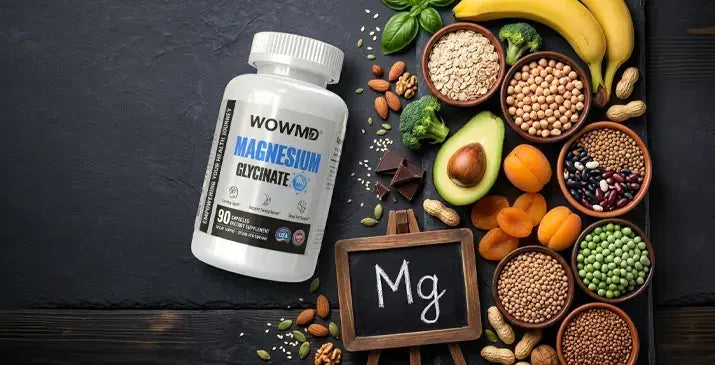


Does Magnesium Increase Testosterone? What Science Says
Learn what research says about magnesium, testosterone levels, deficiency, dosage, and the best forms to consider.
 By WOWMD Staff

 Fact Checked
Advertiser Disclosure: WOWMD independently vets all recommended products. If you purchase a featured product, we may be compensated. Learn why you can trust us.


When it comes to supporting hormone health naturally, magnesium often gets a lot of attention. But does magnesium increase testosterone? Research suggests it can help support healthy testosterone levels, particularly by reducing sex hormone-binding globulin (SHBG) binding and increasing free testosterone availability, especially in men who are deficient.
This matters because testosterone affects energy, muscle mass, libido, and mood, and many men experience testosterone deficiency symptoms without realizing that nutrient gaps may be part of the issue. Low magnesium intake is common, and the connection between magnesium deficiency and hormones is often overlooked in conversations about men’s health. That’s where targeted supplementation becomes relevant. WOWMD offers expert-recommended, science-backed magnesium supplements designed to maintain men’s wellness goals.
In this guide, we’ll break down the research, the mechanisms behind magnesium and testosterone, how much magnesium to take for testosterone support, why magnesium glycinate is often the best form, and which complementary nutrients may help round out your routine.
TL;DR
- Magnesium supports testosterone by improving free testosterone availability, especially in men who are deficient.
- Effects are modest but meaningful—magnesium works best as a supportive rather than a standalone solution.
- Daily intake of 200–400 mg elemental magnesium is commonly used for testosterone support.
- Magnesium glycinate is the preferred form due to better absorption and fewer digestive issues.
- Zinc, vitamin D, and ashwagandha can enhance magnesium’s role in hormonal balance.
- Sleep, stress, and exercise all influence testosterone—magnesium helps support these key areas.
The Link Between Magnesium and Testosterone Levels
The connection between magnesium and testosterone support starts with understanding how common hormonal changes are. Testosterone levels naturally decline with age, and many men begin noticing testosterone deficiency symptoms such as fatigue, reduced muscle mass, lower libido, and mood shifts as early as their 30s. While this is a normal part of aging, nutrient status—especially magnesium—can influence how noticeable that decline feels.
Magnesium plays a role in over 300 enzymatic reactions in the body, including processes tied to hormone production and regulation. It also optimizes the activity of luteinizing hormone, which signals the testes to produce testosterone. So, is magnesium good for testosterone? From a biological standpoint, it plays a supportive role in maintaining healthy hormonal function rather than directly “boosting” levels.
“It takes a lot of biochemical mechanisms to support our body's energy level. In this regard, magnesium is an integral component in over 300 enzymes and some of them have direct involvement in energy generation. Magnesium activates adenosine triphosphate (ATP), the key source of energy within the cell,” explains Jane Moon.
One of the bigger concerns is how common deficiency is. According to the NIH Office of Dietary Supplements, a large portion of adults fall short of recommended magnesium intake. This gap highlights the connection between magnesium deficiency and hormones, where low magnesium status may contribute to suboptimal testosterone levels.
Stress is another key piece of the puzzle. Elevated cortisol can suppress testosterone production—this relationship between cortisol and testosterone is well-documented. Magnesium helps regulate the body’s stress response, and research suggests it may support healthy cortisol regulation, which is why many people explore whether it can help balance both systems. (We explore this further in our guide on does magnesium lower cortisol.)
“Cortisol is produced by the adrenal glands in reaction to the brain signals. The signal is sent to the pituitary gland by the hypothalamus and the pituitary gland orders the adrenals to release cortisol. The latter chain is referred to as the HPA axis,” highlights Jane Moon.
Finally, magnesium also appears to influence testosterone levels naturally by interacting with sex hormone-binding globulin (SHBG). Higher SHBG binds more testosterone, leaving less available for the body to use. Maintaining adequate magnesium levels may help keep more testosterone in its active form.
For a broader look at how magnesium maintains overall hormonal health, our guide on magnesium for hormone balance breaks this down in more detail.
Advertisement


Does Magnesium Boost Testosterone? Here's What Studies Show
Research examining magnesium and testosterone shows a supportive relationship rather than a direct boosting effect. Studies suggest it can contribute to improving free testosterone and overall hormonal balance, especially in men with lower magnesium levels to begin with.
One of the most cited studies, published in Biological Trace Element Research, examined both sedentary men and athletes over a four-week period. Participants who supplemented with magnesium saw increases in both total and free testosterone levels, with the strongest effects observed in those who combined supplementation with magnesium and exercise.
“Magnesium supplementation is generally safe for most healthy athletes. However, excessive intake of this mineral may cause gastrointestinal problems, such as diarrhea. Magnesium can also affects the pharmacokinetics of some antibiotics,” cautions Jane Moon.
A key mechanism behind this effect involves sex hormone-binding globulin (SHBG). SHBG binds to testosterone, making it unavailable for use in the body. Research on magnesium and testosterone-SHBG interactions suggests that magnesium appears to compete with testosterone for SHBG binding, which may help increase bioavailable testosterone—the form your body can actually use for muscle function, energy, and recovery.
There’s also evidence linking magnesium to luteinizing hormone, the signal from the brain that tells the testes to produce testosterone. Because magnesium is involved in enzyme activity throughout the body, it helps optimise this hormonal signaling pathway at a foundational level.
So, does magnesium boost testosterone in a meaningful way? The answer is nuanced. Research consistently shows a positive association between magnesium levels and testosterone, but the effect is most noticeable in men who are deficient. If magnesium levels are already adequate, supplementation may still complement overall hormonal health—but the increase in testosterone is likely to be more modest.
In short, magnesium isn’t a shortcut or a replacement for medical treatment—but it is a well-supported nutritional factor that can help optimize testosterone levels as part of a broader health strategy.
How Much Magnesium for Testosterone? Dosage and Timing Tips
When it comes to how much magnesium for testosterone, most research and clinical guidance point to a daily intake of around 200–400 mg of elemental magnesium. For context, the recommended dietary allowance (RDA) for adult men is approximately 400–420 mg per day, according to the NIH.
“The RDA for adults is 310 to 420 mg per day from all sources, like food and supplements. The upper limit for supplements is 350 mg, and active people are frequently at that limit,” adds Dr. Jason Schroder.
Consistency matters more than perfect timing. Taking magnesium for testosterone support daily helps build and maintain adequate magnesium levels in the body over time, which is key for supporting hormonal balance. Many men prefer taking magnesium in the evening, as it can also enhance sleep quality—and since testosterone production is closely tied to deep sleep cycles, this can be a helpful added benefit.
“Timing is very important here. Using magnesium at night, ideally 30-60 minutes before sleep, is believed to “synergize” with the body's natural tissue repair process, which is accelerated during sleep,” notes Dr. Jason Schroder.
If you’re active, magnesium needs may be slightly higher. Intense training and sweating increase mineral loss, which is why the connection between magnesium and exercise becomes especially relevant. Ensuring consistent intake can help speed recovery and maintain testosterone levels naturally as part of a well-rounded routine.
Diet also plays an important role. Magnesium-rich foods like leafy greens, nuts, seeds, and whole grains should form the foundation, with supplementation filling in any gaps. For most people, well-absorbed forms like magnesium glycinate are a practical choice for daily use due to their bioavailability and gentle effect on digestion.
Jane Moon “recommends taking 300-400 mg of elemental magnesium within two hours post-training, preferably along with a protein-rich meal. This regimen allows for the most efficient absorption of magnesium since this time corresponds to enhanced muscle protein synthesis.”
If you want a more tailored approach, our guide on magnesium for men explores how intake may vary based on lifestyle and goals.
As always, it’s best to consult your healthcare provider before starting supplementation—especially if you have kidney conditions or take medications—to determine what works best for your individual needs.
Advertisement


Magnesium Glycinate for Testosterone: The Best Form to Choose
When it comes to magnesium glycinate for testosterone, this form is widely considered the most effective option for daily supplementation. Magnesium glycinate is bound to the amino acid glycine, which improves absorption and makes it gentler on the digestive system compared to forms like oxide or sulfate. So, does magnesium glycinate increase testosterone? Not directly in isolation, but because of its superior absorption, it helps maintain adequate magnesium levels, which help to maintain a healthy testosterone function.
“Glycine, which is present in magnesium glycinate, promotes the activity of GABA neurotransmitter and works together with magnesium. Hence, magnesium glycinate is considered. It is highly absorbed by the organism and is unlikely to induce gastrointestinal problems,” mentions Jane Moon.
One of the key advantages of magnesium glycinate is its high bioavailability. More magnesium is absorbed and utilized by the body, which is essential when the goal is supporting systems tied to testosterone regulation. This includes interactions with sex hormone-binding globulin (SHBG), where better magnesium status may help keep more testosterone in its active, usable form. This makes magnesium glycinate testosterone support more practical compared to lower-quality forms.
By contrast, magnesium oxide is inexpensive but poorly absorbed—often cited at very low bioavailability—making it a less effective choice for systemic benefits like hormonal support. Magnesium citrate offers better absorption than oxide, but at higher doses it may cause digestive looseness, which can limit its usability for some people.
It’s also worth considering complementary nutrients. The relationship between zinc and testosterone is well established, which is why combinations like best zinc and magnesium supplements are often used in a broader testosterone support strategy. Similarly, vitamin D and testosterone are closely linked, and magnesium plays a role in activating vitamin D—making combinations like magnesium and vitamin d a practical option.
Adaptogens can also complement this approach. Ingredients like ashwagandha for testosterone are often used alongside magnesium to help with stress balance and overall hormonal health.
If you’re choosing a supplement, look for chelated forms like magnesium glycinate, along with third-party testing, clean formulations, and clearly listed elemental magnesium content.
Beyond Testosterone: Magnesium's Broader Benefits for Men
While much of the focus is on magnesium testosterone support, research suggests its benefits extend well beyond hormonal balance. Magnesium plays a key role in several areas of men’s health, making it a well-rounded addition to a daily routine and broader approaches such as men's health supplements.
Sleep is one of the most important. Testosterone production peaks during deep sleep, and magnesium helps with healthy sleep architecture—glycine’s calming properties enhance relaxation and promote deeper, more restorative rest. For men experiencing testosterone deficiency symptoms like fatigue and low motivation, improving sleep quality alone can make a noticeable difference.
“Many people simply take a magnesium supplement without knowing how it works. When you sleep, your brain doesn't just get tired, it has to go into a quiet, peaceful state to fall asleep, and that's where magnesium comes into play. Magnesium stimulates the receptors for the main inhibitory neurotransmitters in your brain (GABA), which reduce over-excitement so your brain can calm down,” emphasizes Dr. Olga Bachilo.
Magnesium is also essential for physical performance. It’s involved in ATP production (the body’s energy currency), muscle contraction, and recovery—making the connection between magnesium and exercise especially relevant for those focused on strength, endurance, and training consistency.
Stress is another major factor. Chronic stress elevates cortisol, which directly works against testosterone. Magnesium helps regulate the nervous system and helps to provide a more balanced stress response, which is why many people consider it when asking, is magnesium good for testosterone?—not just directly, but through its effect on cortisol.
There are also emerging links between magnesium and vascular health. By supporting blood vessel relaxation and nitric oxide activity, magnesium may play a role in overall circulation (we explore this further in our guide on magnesium for ed).
Beyond this, magnesium helps improve mood, energy production, and neurotransmitter balance—factors that often decline alongside testosterone.
Advertisement


Support Your Testosterone Levels Naturally with the Right Magnesium
So, does magnesium increase testosterone? The evidence suggests it can help create healthy testosterone levels—primarily by reducing SHBG binding and supporting the enzymatic pathways involved in hormone production, especially in men who are deficient. Rather than acting as a direct “booster,” magnesium works as a foundational nutrient that helps the body maintain testosterone levels naturally.
Among available forms, magnesium glycinate stands out as the most practical option due to its high absorption and gentle effect on digestion, making it well-suited for consistent daily use. Results are most meaningful when magnesium is combined with a balanced diet, quality sleep, regular exercise, and other complementary nutrients as part of a broader testosterone support supplement approach.
At WOWMD, we focus on expert-recommended, science-backed formulations made in the USA to support men’s hormonal health and overall performance. If you’re ready to take the next step, explore our testosterone pills for men and magnesium collections to find the right fit for your wellness goals. For a deeper comparison of options, see our guide on best magnesium for testosterone.
Individual results may vary. Supplements are not intended to diagnose, treat, cure, or prevent any disease. Consult your healthcare provider before starting any new supplement regimen.
FAQs
Meet The Experts
- Jane Moon, Pharmacist & Director at Herba Health Inc.
- Dr. Jason Schroder, Medical Director & Co-Founder, Craft Body Scan
- Dr. Olga Bachilo, MD, FACS Female Plastic Surgeon at Glamour Plastic Surgery and Med Spa
This article is for informational purposes only and is not a substitute for professional medical advice, diagnosis, or treatment. Statements made on this website have not been evaluated by the U.S. Food and Drug Administration. Always consult a qualified healthcare professional before making changes to your diet, supplements, medications, or healthcare routine.
Our Top Picks

MgBalance Magnesium Powder

Testosterone Support


References
WOWMD follows strict sourcing guidelines to ensure the accuracy of its content, outlined in our editorial policy. We use only trustworthy sources, including peer-reviewed studies, qualified experts, and information from top institutions.


- Magnesium: Fact Sheet for Health Professionals https://ods.od.nih.gov/factsheets/Magnesium-HealthProfessional/
- Effects of magnesium supplementation on testosterone levels of athletes and sedentary subjects at rest and after exhaustion https://pubmed.ncbi.nlm.nih.gov/20352370/
- Role of sex hormone-binding globulin in the free hormone hypothesis and the relevance of free testosterone in androgen physiology https://pmc.ncbi.nlm.nih.gov/articles/PMC11803068/
- Magnesium: Biochemistry, Nutrition, Detection, and Social Impact of Diseases Linked to Its Deficiency https://pmc.ncbi.nlm.nih.gov/articles/PMC8065437/
- The Interplay between Magnesium and Testosterone in Modulating Physical Function in Men https://pmc.ncbi.nlm.nih.gov/articles/PMC3958794/
- Stress-induced cortisol release depresses the secretion of testosterone in patients with type 2 diabetes mellitus https://doi.org/10.1177/11795514221145841
- Magnesium effect on testosterone–SHBG association studied by a novel molecular chromatography approach https://doi.org/10.1016/j.jpba.2008.10.041
- Benefits of testosterone hormone in the human body: a systematic review https://doi.org/10.7759/cureus.78785
- Testosterone deficiency in adults and corresponding treatment patterns across the globe https://doi.org/10.21037/tau.2016.11.16
- Physiology, luteinizing hormone https://pubmed.ncbi.nlm.nih.gov/30969514/