




Understanding Visceral Fat: Health Risks and How to Reduce It
A Practical Guide to Visceral Fat, Health Risks, Measurement, and Reduction
 By WOWMD Staff

 Fact Checked
Advertiser Disclosure: WOWMD independently vets all recommended products. If you purchase a featured product, we may be compensated. Learn why you can trust us.

You can be a healthy weight on the scale and still carry fat in one of the riskiest places your body stores it.
Visceral fat is the fat your body stores deep inside your abdominal cavity, wrapped around your liver, pancreas, and intestines, rather than just beneath your skin.
Unlike the fat you can pinch at your waist or thighs, visceral fat behaves like an active hormonal tissue: it releases inflammatory compounds. It interacts directly with organs like your liver, which is why it carries a much higher health risk than subcutaneous fat, even at the same body weight.
The good news is that visceral fat also responds faster to lifestyle changes than subcutaneous fat does, which means the strategies below can make a measurable difference.
TL;DR
- Visceral fat is stored deep in your abdominal cavity, wrapped around your liver, pancreas, and intestines, unlike subcutaneous fat, which sits just beneath the skin.
- It behaves like an active hormonal tissue rather than passive storage, which is why it’s linked to insulin resistance, cardiovascular disease, elevated blood pressure, and systemic inflammation.
- You can have a normal BMI and still carry excess visceral fat. Waist circumference is a more reliable early signal than body weight alone.
- Waist circumference, bioelectrical impedance scales, DXA scans, and MRI/CT imaging are the main ways to measure it, from low-cost home tools to clinical gold standards.
- Visceral fat responds to lifestyle changes faster than subcutaneous fat, especially aerobic exercise, a Mediterranean-style diet, stress management, and reduced intake of refined sugar and alcohol.
- This article is informational and doesn’t replace medical advice.
What is Visceral Fat and Why Does It Matter?
Not all body fat behaves the same way. The fat you can pinch at your waistline sits just beneath the skin and is largely cosmetic. Visceral fat is different. It lives deep inside your abdominal cavity, packed around your internal organs, including your liver, pancreas, and intestines. You can’t see or feel it from the outside, which is exactly why it’s worth understanding.
Because of where it sits, visceral fat behaves more like an active organ than a passive energy reserve. According to the Cleveland Clinic, visceral fat cells respond to hormones, the chemical messengers your body uses to regulate metabolism, inflammation, and energy balance. That hormonal activity means visceral fat actively participates in how your body processes and stores fuel, rather than simply staying in reserve.
That activity has real consequences. Visceral fat is linked to increased insulin resistance and inflammation, both of which quietly erode your metabolic health over time. According to Teladoc Health, visceral fat in the stomach area is connected to heart and metabolic disease, certain types of cancer, and a higher risk of death.
Here’s what makes this relevant to your daily decisions:
- You can carry a normal BMI and still have excess visceral fat.
- Waist circumference is a more reliable early signal than body weight alone.
- Lifestyle factors, including sleep quality, stress levels, and dietary patterns, directly affect how much visceral fat your body accumulates.
Researchers and clinicians often use the term VAT, short for visceral adipose tissue, when they measure this fat depot in clinical settings. Your body mass index, or BMI, gives a general picture of weight status, but it doesn’t distinguish between subcutaneous and visceral fat. That’s why two people with the same BMI can have very different health profiles.
Also Read: 11 Best Vitamins & Supplements to Lower Blood Sugar
Advertisement

 *All individuals are unique. Your results can and will vary.
Health Risks Associated with Visceral Fat
Visceral fat isn’t a passive bystander. It releases inflammatory compounds, disrupts hormone signaling, and steadily strains the systems your body relies on every day.
1. Cardiovascular Disease and High Blood Pressure
The fat cells clustered around your organs release fatty acids and inflammatory cytokines directly into the portal vein, which feeds straight into your liver. Over time, this process can raise triglycerides, lower HDL cholesterol, and increase blood pressure.
According to University of Washington Medicine, too much visceral fat can raise your blood pressure and increase your risk of stroke. Harvard Health also notes that even in healthy, nonsmoking women, every two extra inches of waist size raised cardiovascular disease risk by 10% in one study, and links higher visceral fat volume to several other heart disease risk factors.
2. Type 2 Diabetes and Insulin Resistance
The more visceral fat accumulates, the harder your body works to regulate glucose, and the harder that regulation becomes over time. The Luxembourg Institute of Health identifies visceral obesity as a major risk factor for type 2 diabetes, independent of total body weight.
If you’re already watching your glucose numbers, our roundup of the best blood sugar supplements covers what to look for.
3. Certain Cancers
Visceral fat’s connection to cancer risk gets discussed less often, but the evidence is real. According to WebMD, studies suggest a link between visceral fat and cancer, including colorectal cancer. Harvard Health reports that people with the most visceral fat face three times the risk of colorectal adenomas, precancerous polyps, compared with those who have the least. The Luxembourg Institute of Health also names oncological conditions, including colon cancer, among the diseases tied to visceral obesity.
4. Increased Risk of Early Death
According to Teladoc Health, visceral fat in the stomach area connects to a higher risk of death, alongside heart and metabolic disease. Harvard Health research on abdominal fat and mortality also found that fat location matters as much as total body fat when it comes to health risk.
5. Surgical Complications and Cushing’s Syndrome
Some consequences of visceral fat show up in less obvious places. University of Washington Medicine notes that visceral fat can complicate surgeries because surgeons find it harder to see and access organs clearly, a practical concern in urgent medical situations, not just a number on a lab report.
Cushing’s syndrome, a condition marked by chronically elevated cortisol (the body’s primary stress hormone), can also directly cause excess visceral fat accumulation in the abdominal region.
Advertisement

 *All individuals are unique. Your results can and will vary.
Visceral Fat vs. Subcutaneous Fat: Key Differences Explained
The fat you can pinch on your belly, hips, or thighs is subcutaneous. It sits just beneath the skin, and while it affects your shape, it plays a neutral role in metabolic health at moderate levels.
Visceral fat tells a different story. It sits deep inside the abdominal cavity, wrapped around your liver, pancreas, intestines, and other organs. Because it’s metabolically active and sits close to vital organ systems, it carries risks that subcutaneous fat simply doesn’t.
|
Feature |
Subcutaneous Fat |
Visceral Fat |
|
Location |
Under the skin |
Around internal organs |
|
Feel |
Soft, pinchable |
Can’t be felt from outside |
|
Metabolic activity |
Lower |
Higher, releases inflammatory compounds |
|
Health risk at excess |
Moderate |
Significant |
|
Visibility |
Visible as body shape |
Hidden, detected by imaging or waist measurement |
Why Visceral Fat is the More Urgent Concern
Excess visceral fat carries real, physical consequences beyond what most people expect. As noted above, University of Washington Medicine points out that too much visceral fat can raise blood pressure and stroke risk, and complicate surgery because a surgeon finds it harder to see your organs.
What This Means for Your Approach
Subcutaneous fat responds to diet and exercise over time, but it shifts slowly. Visceral fat, according to Harvard Health, tends to be more metabolically responsive and is often the first fat store to decrease with sustained lifestyle changes. Regular movement, reduced refined carbohydrate intake, quality sleep, and stress management tend to reach visceral fat first. This difference helps you focus your energy where it matters most.
How to Measure Visceral Fat
You might suspect you carry excess visceral fat. To confirm it, you need more than a guess, since this fat sits deep inside your abdominal cavity, invisible to the eye and undetectable by a standard bathroom scale.
Waist Circumference and Waist-to-Hip Ratio
The waist-to-hip ratio compares your waist measurement to your hip measurement, which shows where your body stores fat.
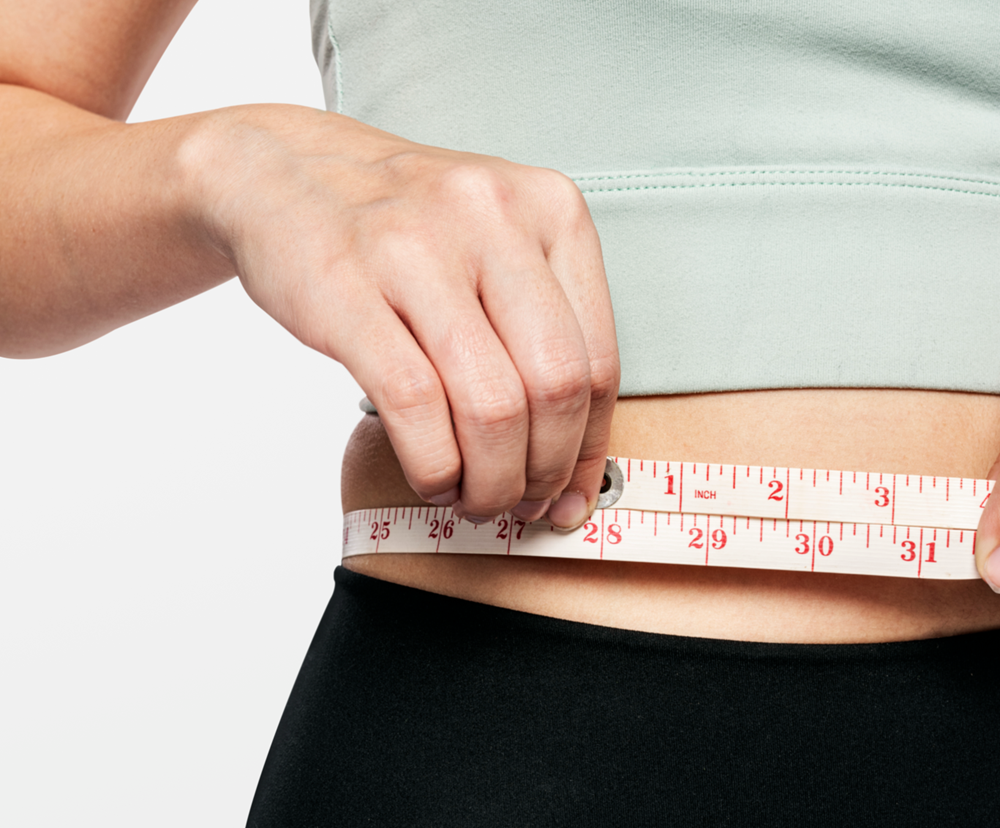
Measure your bare abdomen at the level of your navel to get a waist circumference reading. Health researchers generally suggest that women with a waist above 35 inches and men above 40 inches face elevated metabolic risk.
As Dr. Laura Montour, an obesity medicine expert at UW Medicine’s Center for Weight Loss and Metabolic Surgery, notes, waist circumference remains one of the most practical ways to gauge visceral fat without special equipment.
Body Composition Scales and BIA
Bioelectrical impedance analysis, or BIA, takes things a step further. BIA-based scales and handheld devices send a small electrical current through your body to estimate fat mass versus lean mass. Consumer-grade BIA tools are widely available and affordable. Clinical-grade BIA units offer greater accuracy.
The limitation is that your hydration level strongly affects the readings. If you measure at the same time of day and under the same hydration status each time, your results become more reliable.
DXA Scans
Dual-energy X-ray absorptiometry, or DXA, is a gold standard for body composition analysis. Originally developed for bone density assessment, DXA now provides detailed fat distribution data, including regional measurements that help quantify abdominal fat. It’s available at many clinical and sports medicine facilities and offers far more precision than at-home tools.
MRI and CT Imaging
MRI and CT imaging provide the most accurate assessment of visceral fat volume. These technologies directly visualize and quantify the fat around your organs, and researchers commonly use MRI-based measurements as the reference standard in visceral fat studies. The tradeoff is cost and access. MRI and CT scans are typically reserved for clinical research or medical necessity, not routine wellness check-ups.
Why Measurement Matters
The reason to measure isn’t just curiosity. The Luxembourg Institute of Health identifies visceral obesity as a major risk factor for type 2 diabetes, cardiovascular disease, several inflammatory conditions, and certain cancers, independent of total body weight. When you know where you stand, you have a clear baseline and a reason to act.
Effective Strategies to Reduce Visceral Fat Naturally
Because visceral fat responds to hormonal signals, you need more than calorie cuts to reduce it. Your daily habits send hormonal cues all day long. Some encourage your body to draw energy from deep fat stores. Others keep that fat locked in place. Here are the strategies with the strongest research support.
Prioritize Aerobic Exercise and Strength Work
Movement is your most direct lever. Moderate-to-vigorous aerobic exercise, think a brisk walk, a bike ride, or laps in the pool, has a consistent link to reductions in visceral fat, even when body weight stays relatively stable. Strength work adds to the benefit because it raises your resting metabolic rate, so your body burns more fat between workouts.
Aim for at least 150 minutes of moderate cardio per week, along with two resistance sessions. You don’t need to become an athlete. How often you show up matters more than how hard you push, especially when you’re new.
Follow a Mediterranean Diet Pattern
The Mediterranean diet has earned its reputation for a reason. Rich in vegetables, legumes, whole grains, healthy fats from olive oil and nuts, and lean proteins, it keeps blood sugar and insulin levels steadier throughout the day. Lower chronic insulin exposure is a key driver of visceral fat reduction. Fiber plays a particularly useful role, since it slows glucose absorption and helps you feel fuller for longer.
For more on how diet fits into this, see our guide to the best foods and supplements to keep blood sugar steady.
Manage Stress and Prioritize Sleep
Chronically elevated cortisol tells your body to store energy centrally, which deepens visceral fat deposits over time. A lower stress load, along with steady sleep habits, can support healthier fat metabolism. Most adults need seven to nine hours of quality sleep a night for their hormones to regulate well.
Some people also look to adaptogens, herbs like ashwagandha, that support the body’s stress response, as part of this approach. According to Cleveland Clinic, ashwagandha may help lower cortisol output, which can ease the mental and physical effects of stress. Lower cortisol doesn’t automatically translate into measurable visceral fat loss on its own, and that distinction matters.
The clearest evidence supports ashwagandha’s role in stress and cortisol reduction specifically, while its direct effect on visceral fat remains an open question that needs more research.
READ ALSO - 8 Best Supplements to Reduce Cortisol: Expert Picks for 2026
Reduce Refined Sugars and Alcohol
Both spike insulin rapidly and contribute disproportionately to deep abdominal fat accumulation. Swapping ultra-processed foods for whole-food sources is one of the most practical dietary shifts you can make. Small, consistent changes add up over time more reliably than short bursts of restriction.
Best Supplements to Support Visceral Fat Reduction
Supplements don’t replace the fundamentals above, but some people find they fit naturally alongside them. If stress and cortisol are part of your picture, WOWMD’s Ashwagandha is formulated to support your body’s normal stress response. If your focus is broader weight management, WOWMD’s Weight Management collection includes formulas designed to complement a calorie-conscious, active routine.
These are meant to support a healthy lifestyle, not replace it. Anyone who manages a diagnosed metabolic condition should talk with a healthcare provider before they add a new supplement, particularly if they take other medications.
Advertisement

 *All individuals are unique. Your results can and will vary.
Take Control of Your Visceral Fat Risk
Visceral fat is hidden, active, and closely tied to some of the most serious health risks people face, but it’s also one of the more responsive fat stores when you make consistent changes. Consistent movement, a Mediterranean-style diet, quality sleep, and stress management form the foundation, and they tend to help your energy, sleep, and long-term health along with your waistline.
Explore WOWMD’s weight management collection to find support that fits your routine, and talk with your healthcare provider before starting any new supplement or exercise program, especially if you have a current health condition.
These statements have not been evaluated by the Food and Drug Administration. These products are not intended to diagnose, treat, cure, or prevent any disease. Individual results may vary.
FAQs
This article is for informational purposes only and is not a substitute for professional medical advice, diagnosis, or treatment. Statements made on this website have not been evaluated by the U.S. Food and Drug Administration. Always consult a qualified healthcare professional before making changes to your diet, supplements, medications, or healthcare routine.
