

The 7 Best Prebiotic Supplements for Gut Health in 2026
Discover the best prebiotic supplements for gut health. Compare top picks, key ingredients, benefits, and tips for choosing the right formula.
 By WOWMD Staff

 Fact Checked
Advertiser Disclosure: WOWMD independently vets and sells featured products listed on this page. We may receive compensation from purchases. This does not influence our editorial standards. Learn why you can trust us.


Your gut health is running the show? Gut health is one important part of overall health, particularly digestion, bowel regularity, and immune signaling
Think about the last time you felt sluggish, bloated, or just "off" — chances are your gut was trying to tell you something. Research increasingly shows that the gut microbiome interacts with digestive, immune, and metabolic systems. Scientists are also studying its relationship with sleep, stress, and cognition.
Prebiotics are the fuel your good gut bacteria need to thrive. Unlike probiotics (live bacteria you ingest), prebiotics are specialized fibers and compounds that feed the beneficial microbes already living in your gut. Together, a balanced prebiotic and probiotic routine can make a meaningful difference in how you feel every single day.
The five supplements reviewed here represent some of the most talked-about gut health formulas available to American shoppers right now — each with distinct strengths depending on your lifestyle and goals.
TL;DR
- Prebiotics feed beneficial gut bacteria; combining them with probiotics and postbiotics amplifies gut health results. Some products combine prebiotics, probiotics, and postbiotics. Potential benefits depend on the specific ingredients, doses, and health outcome studied.
- CFU count applies only to probiotics, not prebiotics. This is confusing. Matters, but strain diversity and delivery format matter just as much for real-world results.
- All five products here are gluten-free or allergen-conscious and carry strong customer ratings.
- Powder formats offer flexibility; capsules win on convenience — know which fits your daily routine.
- Most brands offer a money-back guarantee, making it lower risk to find what works best for your gut.
What are Prebiotics?
Prebiotics, probiotics, and postbiotics — what's the difference?
Probiotics are live microorganisms (bacteria and yeast) that add beneficial microbes to your gut. Prebiotics are non-digestible fibre and substances that specifically feed those microbes. Postbiotics are preparations of inactivated microorganisms and their components that have demonstrated health benefits. Microbial fermentation also produces metabolites, including short-chain fatty acids.
Think of it this way: if your gut is a garden, probiotics are the seeds, prebiotics are the fertilizer, and postbiotics are the fruit.
Examples of prebiotics that are commonly used are acacia gum, inulin, FOS (fructooligosaccharides), and Sunfiber (partially hydrolyzed guar gum). They are fermented in the colon and contribute to a healthy, diverse microbiome in the long-term.
Why Your Gut Needs Prebiotic Support
May help support digestive regularity
Prebiotic fibers bulk stool and feed bacteria that produce gut-motility-supporting compounds. Certain prebiotic fibers may support stool frequency or consistency by holding water in the stool and changing fermentation patterns; effects vary by fiber type and individual tolerance.
May help support immune system
The gastrointestinal tract contains a substantial amount of immune tissue (about 70% of the total in the human body), and the gut microbiome helps regulate immune responses.
Advertisement


May help support mood and cognition
The gut-brain axis links microbiome health to serotonin production and mental clarity. The gut and brain communicate through neural, immune, and metabolic pathways. Research on how dietary fibers and the microbiome affect mood and cognition is still emerging
May help support energy and metabolism
Short-chain fatty acids from fermented prebiotics fuel colon cells and support metabolic health.
May help reduce cravings
A balanced microbiome may help regulate appetite hormones and reduce unhealthy food cravings. Researchers are studying how microbial metabolites may relate to appetite regulation, but evidence that prebiotic supplements reduce cravings remains limited.
Best Prebiotic Supplements for Gut Health: Our Top Picks
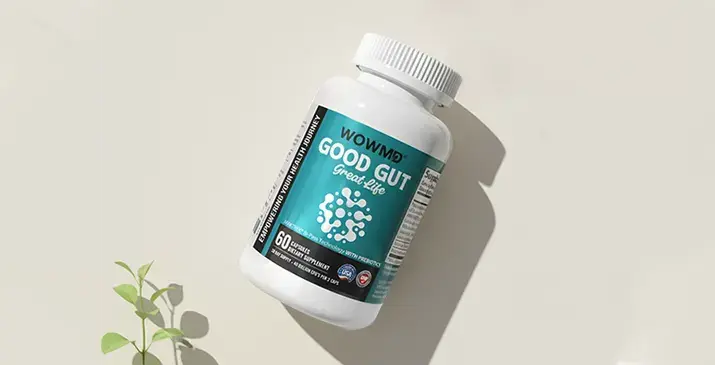
Best Overall: WOWMD Good Gut Great Life
Best Pre Pro And Postbiotics: Gundry MD Bio Complete 3
Best Prebiotic Greens Powder: Transparent Labs Greens
Best Pre And Post Probiotics: MaryRuth's Organic 3-in-1 Probiotics
Best Pre Pro And Postbiotics: Gundry MD Bio Complete 3
Best Prebiotic Probiotic Supplement: 1MD Nutrition BiomeMD Probiotic
Best Delayed-Release Synbiotic: Ritual Synbiotic+

Quick facts
Price: $39 one-time purchase; subscription options from $35.10 per bottle
Dosage: 2 capsules daily; ideally 1 during the day and 1 in the evening
Key ingredients: Lactobacillus acidophilus, Bifidobacterium lactis, Lactobacillus plantarum, Lactobacillus paracasei
A high-CFU daily probiotic with four clearly labeled strains — L. acidophilus, B. lactis, L. plantarum, and L. paracasei. Gluten-free, non-GMO, and free from artificial additives. Backed by a 60-day money-back guarantee for first-time single-bottle buyers and a near-perfect public rating.
Pros
- 40 billion CFU high-potency blend
- Transparent strain labeling
- Gluten-free, non-GMO formula
- Strong 4.9-star customer rating
- 60-day money-back guarantee
Cons
- Requires two capsules daily
- Best price requires subscription
Customer Review
Emily Carter: I liked that the capsules were easy to add to my routine. After several weeks, my digestion felt steadier, though I still watched my diet.

Quick facts
Price: $49.95
Dosage: 2 capsules daily with water, preferably before a meal
Key ingredients: Tributyrin/CoreBiome, acacia gum, Sunfiber, Bacillus coagulans, Bifidobacterium bifidum
A three-part gut formula combining CoreBiome tributyrin (postbiotic), acacia gum and Sunfiber (prebiotics), and Bacillus coagulans with Bifidobacterium bifidum (probiotics). Sugar-free, soy-free, dairy-free, and lectin-free. Recommended before meals for optimal absorption.
Pros
- Prebiotic + probiotic + postbiotic
- Named prebiotic fibers and strains
- 90-day money-back guarantee
- Free from major common allergens
Cons
- Prices may vary
- Requires consistent usage
Customer review
Michael Anderson: Bio Complete 3 felt easy to take before meals. I liked the three-part formula, but I'd compare prices carefully before reordering.

Quick facts
Price: $39.99
Dosage: 1 scoop in 8 oz of water or juice; 1 to 3 servings per day or as directed by a qualified healthcare practitioner
Key ingredients: Organic Chlorella 3,000 mg, Organic Spirulina 3,000 mg, Organic Acacia Fiber 3,000 mg, Green Banana Flour 3,000 mg, Jerusalem Artichoke Fiber 1,000 mg, Chicory Root 1,000 mg
A fully disclosed six-ingredient greens powder that skips proprietary blends entirely, pairing nutrient-dense algae with four distinct prebiotic fiber sources. Every dose is printed on the label, and the brand publishes third-party purity and ingredient verification results publicly. 100% vegan and plant-based, free from artificial sweeteners, coloring, and preservatives, with three flavor options and a 45-day satisfaction guarantee. Best for anyone who wants real prebiotic fiber volume rather than a token dusting of greens.
Pros
- Four prebiotic fiber sources, not just one
- Roughly 20% of the daily value for fiber per serving
- Fully disclosed doses, zero proprietary blends
- Third-party test results published on-site
- Three flavors including Peach Mango and Pineapple Coconut
Cons
- Powder is less travel-friendly than capsules
- Fiber load may need gradual introduction
Customer Review
Daniel Reyes: I liked being able to see the exact dose of every single ingredient on the label. It mixes cleanly, though the fiber took me about a week to adjust to.

Quick facts
Price: $49.11
Dosage: 30 servings; powder format
Key ingredients: 20 billion CFU, 7 probiotic strains, prebiotics; listed strains include Lactobacillus acidophilus, Lactobacillus reuteri, Bifidobacterium bifidum, Bifidobacterium breve, Bifidobacterium lactis, Bifidobacterium longum
An Apple & Raspberry flavored powder for those who prefer mixing supplements into drinks. USDA Organic, vegan, non-GMO, and third-party tested, with 20 billion CFU across 7 strains plus built-in prebiotic support — all in a single scoop.
Pros
- USDA Organic and third-party tested
- 7 probiotic strains + prebiotics
- Great for smoothie drinkers
- Vegan and non-GMO
Cons
- Less convenient when traveling
- Flavor may not suit everyone
- Non-returnable on Amazon
Customer review
Jessica Miller: The berry flavor was pleasant enough and mixed into smoothies well. I liked the organic formula, but powder is less convenient when traveling.

Quick facts
Price: $27.17 Subscribe & Save
Dosage: 1 capsule daily
Key ingredients: 50 billion CFU, 23 unique prebiotic/probiotic/postbiotic strains, partially hydrolyzed guar fiber
A once-daily vegan capsule packing 50 billion CFU from 23 strains, plus prebiotics and postbiotics — all unflavored. One of the best value high-CFU options for shoppers who want a comprehensive gut formula without the hassle of multiple pills.
Pros
- One capsule per day — super simple
- 50 billion CFU, 23 strains
- Includes pre-, pro-, and postbiotics
- Best Subscribe & Save price of the five
Cons
- Only 30 servings per bottle
- Non-returnable on Amazon
Customer review
Ashley Thompson: I appreciated the one-capsule routine and clean formula. It felt gentle overall, though I would need longer use to judge major digestive benefits.

Quick facts
Price: $54 one-time price
Dosage: 30 capsules; page-visible serving instructions not fully shown in accessible text
Key ingredients: 62 billion CFU, 15 probiotic strains, Bifidobacterium lactis UABla-12, Lactobacillus acidophilus DDS-1, prebiotic blend
Doctor-formulated and packing the highest CFU count here at 62 billion across 15 strains, including two trademarked probiotics: B. lactis UABla-12 and L. acidophilus DDS-1. Combines probiotic and prebiotic support in a professional-grade capsule — best for those who want clinical-level potency.
Pros
- Highest CFU count — 62 billion
- Two trademarked research-backed strains
- Doctor-formulated and broad-spectrum
- Includes prebiotic blend
Cons
- Most expensive of the five
- Non-returnable on Amazon
Customer Review
Brian Wilson: The formula looks strong and professional, and I liked the named strains. The price is higher, so I'd monitor results before buying monthly.

Quick facts
Price: $61.36 one-time purchase; $54.00 subscription, discounted to $43.20 on a first single-item subscription
Dosage: One vegan capsule per day, with or without food, AM or PM; 30 servings per bottle
Key ingredients: Probiotic Blend 40 mg delivering 11 billion CFU (Lactobacillus rhamnosus LGG and Bifidobacterium animalis ssp. lactis BB-12), PreforPro 15 mg, Tributyrin as CoreBiome 300 mg
A 3-in-1 synbiotic built around two of the most heavily researched probiotic strains in the category, delivered in a delayed-release capsule designed to reach the colon rather than the stomach. Vegan, shelf stable, gluten and major allergen free, Non-GMO Project Verified, and a Clean Label Project Purity Award holder, with every lot third-party tested for heavy metals, microbes, and major allergens. Backed by a 30-day money-back guarantee. Best for people who want traceable sourcing and clinically dosed ingredients over raw CFU numbers.
Pros
- One capsule daily, no refrigeration needed
- Tributyrin dosed at 300 mg, matching the studied amount
- Supplier and manufacturing location disclosed for every ingredient
- Non-GMO Project Verified and Clean Label Project certified
- 90% of reviewers would recommend it
Cons
- Lowest CFU count of the group at 11 billion
- Highest per-bottle price without a subscription
- One-time orders add $10.99 shipping
Customer Review
Tiffany Wright: I have tried numerous digestive supplements over the years, but the Ritual Synbiotic+ stands out as the most thoughtful and effective formula I have encountered.
Comparison Table
| Our Top Picks | WOWMD Good Gut Great Life | Gundry MD Bio Complete 3 | Transparent Labs Probiotic Advanced Gut Health | Ora Organic Trust Your Gut | MaryRuth's 3-in-1 Probiotics for Digestive Health | 1MD Nutrition BiomeMD for Women | Ritual Synbiotic+ |
|---|---|---|---|---|---|---|---|
| Third-party tested | Yes | Brand states independent lab testing | Yes | Yes | Yes | Not stated on the product page | Yes |
| Highlights | 40 billion CFU, 4 clinically studied strains, MAKTREK® Bi-Pass delivery technology, non-GMO and gluten-free, made in the USA | Triple-biotic formula with prebiotic, probiotic and postbiotic. Bacillus coagulans, Sunfiber® and CoreBiome® tributyrin. Two capsules daily | 100 billion CFU from 10 clinically studied strains. Vegan, gluten-free, non-GMO, no artificial sweeteners or preservatives | 16 billion CFU from 6 acid-resistant strains, plus 750mg organic Jerusalem artichoke inulin prebiotic. Shelf-stable, no refrigeration needed | 50 billion CFU with 23 pre, pro and postbiotic strains, plus SunFiber® prebiotic. One capsule daily. Vegan, top-9 allergen free | 62 billion CFU from 16 strains, including UREX™ (L. rhamnosus GR-1® and L. reuteri RC-14®) and UABla-12™. Targets vaginal, urinary and digestive health | 11 billion CFU from LGG® and BB-12®, plus PreforPro® prebiotic and CoreBiome® tributyrin postbiotic. Delayed-release capsule, one per day |
| Money-Back Guarantee | 60-day money-back guarantee (first-time, single-bottle purchase) | 90-day money-back guarantee | 45-day satisfaction guarantee | 60-day money-back guarantee on a first purchase (direct from brand). Standard 30-day return window on Amazon | 30-day full refund in store credit (direct from brand). Standard 30-day return window on Amazon | 90-day money-back guarantee with free returns | 30-day money-back guarantee on subscriptions |
| Shipping | Free U.S. shipping on orders over $60 | Free U.S. shipping on orders $49 and above | Free U.S. shipping on orders over $99 | Free shipping with Amazon Prime | Free shipping with Amazon Prime | Free U.S. shipping on all orders direct from 1MD. Free shipping with Amazon Prime | Free shipping on subscription orders. Free shipping with Amazon Prime |
How Do Prebiotic Supplements for Gut Health Work?
Your gut contains about 38 trillion microorganisms – more than your own cells! You have this community known as the gut microbiome, which is constantly changing depending on the types of foods you consume, your stress levels, the quality of your sleep and if you take antibiotics or any other medications.
Prebiotics are compounds that are not digested in the small intestine and make their way into the colon where they are fermented by gut bacteria. The fermentation creates short-chain fatty acids (SCFAs), particularly butyrate, which is the primary energy source for gut cells and an important factor in maintaining the integrity of the gut lining, which acts as a barrier to harmful substances entering your bloodstream.
A diverse, well-fed microbiome is associated with lower inflammation, better nutrient absorption, healthier weight management, and stronger mental resilience. Supplementing with prebiotics — especially alongside probiotics supplements — is one of the most direct ways to support that diversity.
Advertisement

 *All individuals are unique. Your results can and will vary.
Who Benefits Most From Prebiotic Supplements for Gut Health?
Fiber is a nutrient that is severely lacking in modern American diets, with the average being only about 15g a day, while the recommended amount is 25-38g a day. Over time, beneficial gut bacteria can be depleted by consuming ultra-processed foods, stress, and frequent antibiotics use. A prebiotic may be worth discussing for people with low fiber intake or occasional constipation. New, persistent, severe, or unexplained gastrointestinal symptoms should be evaluated by a healthcare professional. A prebiotic supplement might actually be of benefit if you've experienced any of the following:
After eating, you suffer from digestion irregularity, bloating or gas. You've recently taken antibiotics and want to restore gut balance. Feeling confused and fatigued despite having a good night's sleep. You don't eat regular fruits, vegetables or legumes. You wish to focus on boosting long-term immune health. After antibiotics, focus on regular meals and fiber-rich foods as tolerated. Ask your clinician whether a specific probiotic is appropriate for your individual situation.
Even if you're pretty diligent about your diet, a daily prebiotic supplement can give targeted nourishment to the strains that are most important — which diet can do with precision. A supplement may provide a measured dose of a particular fiber, but it does not replace the broader nutritional benefits of beans, lentils, fruits, vegetables, whole grains, nuts, and seeds.
Bryan Henry, Family Nurse Practitioner, The characteristics of various prebiotics vary, therefore tolerance is important. While fermentable fibres like inulin and FOS are commonly utilised, some people may find it simpler to gradually introduce alternatives like acacia fibre. Instead of concealing its constituents in a proprietary blend, a high-quality product should be able to plainly identify its ingredients and quantities.
Did You Know?
- The gut-brain axis is a two-way communication network — about 90% of the body's serotonin is produced in the gut, not the brain.
- A single course of antibiotics can reduce gut microbial diversity by up to 25%, and in some cases diversity takes months to fully recover. Antibiotics can alter the gut microbiome, although the extent and duration of change vary considerably among individuals and medications
Key Ingredients in Prebiotic Supplements for Gut Health
Lactobacillus acidophilus
One of the most researched probiotic strains for digestive outcomes. Supports lactose digestion, reduces bloating, and inhibits harmful bacteria. Found in WOWMD and 1MD BiomeMD.
Bifidobacterium lactis
Boosts immune response, supports bowel regularity, and helps reduce gut inflammation. A foundational strain in several of our top picks. Certain Bifidobacterium lactis strains have been studied for immune markers and bowel regularity. These findings do not establish treatment for inflammatory bowel disease or other medical conditions.
Tributyrin (CoreBiome)
A postbiotic precursor delivering butyrate directly to the colon. Supports gut lining integrity and reduces leaky gut risk. Featured in Bio Complete 3.
Sunfiber (Guar gum)
A clinically tested prebiotic fiber that feeds beneficial bacteria, improves stool consistency, and is gentle on sensitive stomachs.
Acacia gum
A natural prebiotic fiber with low fermentation rate, making it one of the most tolerable options for those new to prebiotic supplementation.
How to Choose the Right Prebiotic Supplements for Gut Health
The "best" gut health supplement is the one you'll actually take consistently — and one that matches your specific goals. Here's a practical decision framework:
If you want the highest-rated option with simple daily use, WOWMD Good Gut Great Life is the strongest all-rounder.
If you want comprehensive 3-in-1 support with prebiotic fibers and postbiotics, choose between Gundry MD Bio Complete 3 or MaryRuth's Organic — the latter wins on strain count and price.
If you prefer avoiding capsules or want organic certification, Ora Organic Powder is your best bet.
If you want clinical-grade potency and don't mind a higher price, 1MD BiomeMD's 62B CFU formula is the most powerful here.
Most people notice initial changes in 2–4 weeks, with more stable results after 8–12 weeks of consistent use. Some people notice changes in stool frequency, stool consistency, gas, or bloating within days to several weeks. Benefits are not guaranteed, and the appropriate trial period depends on the product and intended use. Starting with a lower CFU count if you're new to probiotics can reduce the risk of temporary gas or bloating as your microbiome adjusts.
What To Check Before Buying Prebiotic Supplements for Gut Health
- CFU count and strain diversity — Higher CFU isn't always better; strain variety often matters more than raw numbers alone.
- Named strains vs generic blends — Products listing specific strain names (e.g., DDS-1, UABla-12) are more transparent and often more research-backed.
- Prebiotic fiber inclusion — A probiotic without prebiotic fiber is like seeds without soil. Look for Sunfiber, acacia, inulin, or FOS on the label. Some products combine prebiotics and probiotics, but either can be used separately depending on the product, intended outcome, and individual tolerance.
- Allergen and diet compatibility — Check for gluten-free, vegan, soy-free, and dairy-free certifications based on your dietary needs.
- Third-party testing — Look for NSF, USP, or independent lab verification. Ora Organic is explicitly third-party tested.
- Return policy — Generous guarantees (like a 60- or 90-day return policy) offer excellent buyer protection.
- Subscription vs one-time — Subscription pricing often saves 10–15%; commit only after testing a single bottle first.
Advertisement

 *All individuals are unique. Your results can and will vary.
Final Thoughts
Gut health isn't a trend — it's foundational to how you feel, think, and function every day. Whether you're managing bloating, rebuilding after antibiotics, or simply want to invest in long-term wellness, the right prebiotic or synbiotic supplement can be a genuinely impactful addition to your routine.
Our top recommendation is WOWMD Good Gut Great Life for its unbeatable combination of customer satisfaction, transparent formulation, and strong money-back guarantee.
For those wanting maximum strain diversity on a budget, MaryRuth's 3-in-1 is a compelling value. And for anyone chasing clinical-grade potency, 1MD BiomeMD delivers the highest CFU count with research-backed trademarked strains.
Start with one bottle, give it 4–8 weeks, and pay attention to how your body responds. Your gut will thank you for it.
FAQs
Meet The Experts
- Bryan Henry , President at PeterMD, Family Nurse Practitioner
This article is for informational purposes only and is not a substitute for professional medical advice, diagnosis, or treatment. Statements made on this website have not been evaluated by the U.S. Food and Drug Administration. Always consult a qualified healthcare professional before making changes to your diet, supplements, medications, or healthcare routine.

References
WOWMD follows strict sourcing guidelines to ensure the accuracy of its content, outlined in our editorial policy. We use only trustworthy sources, including peer-reviewed studies, qualified experts, and information from top institutions.


- Fiber and Prebiotics: Mechanisms and Health Benefits - PMC https://pmc.ncbi.nlm.nih.gov/articles/PMC3705355/
- If you want to boost immunity, look to the gut | UCLA Health https://www.uclahealth.org/news/article/want-to-boost-immunity-look-to-the-gut
- Frontiers | The gut–brain connection: microbes’ influence on mental health and psychological disorders https://www.frontiersin.org/journals/microbiomes/articles/10.3389/frmbi.2025.1701608/full
- Revised Estimates for the Number of Human and Bacteria Cells in the Body - PMC https://pmc.ncbi.nlm.nih.gov/articles/PMC4991899/
- Roles of Short-Chain Fatty Acids in Inflammatory Bowel Disease https://www.mdpi.com/2072-6643/15/20/4466
- Bifidobacterium lactis and Lactobacillus plantarum Enhance Immune Function and Antioxidant Capacity in Cats through Modulation of the Gut Microbiota - PMC https://pmc.ncbi.nlm.nih.gov/articles/PMC11273429/