

 Anti-aging
 Anxiety & Depression
 Beauty
 Blood Pressure Control
 Blood Sugar Support
 Bone Health
 Brain & Memory
 Cellular Health
 Digestion
  Energy & Vitality
 Eye Health
 General Wellness
 Hair, Skin & Nails
 Heart Health
  Immunity Support
 Joint Support
 Liver Support
 Men's Health
 Mood
Mood
 Muscle and Fitness
 Oral Health
 Pain & Inflammation
 Respiratory and lungs
 Sleep Support
 Sports Nutrition
 Stress Support
 Thyroid Support
 UTI Balance
 Weight Management
 Women's Health
 Alpha Man Power Pack
 All-Day Fat Burn Trio
 Better Immunity Bundle
  Calm & Sleep Duo
 Cognitive Health & Vision Combo
 Complete Weight Loss Bundle
 Core Vitality Trio
 Energy Booster Combo
 Focus Fuel Trio
 Glow & Balance Duo
 Health Balance Trio
 Heart Care Bundle
 Joint Health Support Combo
 Men's Immunity & Prostate Health Bundle
 Metabolism Boost Duo
 Natural Skin Care Bundle
 Peak Performance Duo
 Relax & Recharge Duo
 Skin Detoxification Bundle
 Smart Energy Trio
 Stress + Energy + Wellness Combo
  Total Burn Ignite Trio
 Total Harmony Pack
 Workout Supplements Combo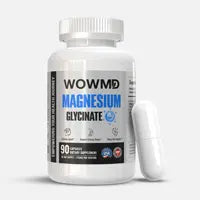






 Anti-Aging Skincare
 Body Care
 Eye Care
 Facial Cleansers
 Facial Toners
 Hair Care
 Moisturizers
 Serums
 Shop All Skincare
 Dehydrated Skin
 Dullness
 Fine Lines + Wrinkles
 Redness Prone
 Skin Discoloration
 Uneven Skin Texture












Best Magnesium for Sleep: Which Forms Actually Work?
Not all magnesium supplements support sleep equally. Here's how to choose the right form, dose, and timing for genuinely restorative rest.
 By WOWMD Staff

 Fact Checked
Advertiser Disclosure: WOWMD independently vets all recommended products. If you purchase a featured product, we may be compensated. Learn why you can trust us.
Table of contents


If you've tried the sleep hygiene routines, cut back on screens, and committed to a consistent bedtime and restorative sleep still feels out of reach, here's something worth knowing: your body may simply not have enough magnesium to support the sleep process effectively.
Magnesium is involved in over 300 enzymatic reactions in the body, and its role in sleep quality and stress reduction is one of the most clinically recognized among them. The challenge is that not all magnesium supplements work the same way. Magnesium oxide, magnesium glycinate, and magnesium L-threonate each interact with your body through different pathways, and choosing the wrong form could mean getting very little benefit where you need it most.
That's where this guide comes in. We've reviewed the research, compared the most commonly recommended forms, and built a structured breakdown to help you find the right magnesium for your sleep goals. Whether you're struggling with racing thoughts at night, waking up unrefreshed, or the physical tension that keeps you from winding down, there's a form of magnesium sleep support worth exploring with your healthcare provider.
Key Takeaways
- Magnesium glycinate and magnesium L-threonate are the two forms most consistently recommended for sleep support, each with a distinct mechanism and evidence base.
- Magnesium glycinate is well-studied for its calming properties and tends to cause fewer digestive side effects, making it a strong starting point for most adults.
- Dosing is not one-size-fits-all. Experts reference 320 mg for women and 420 mg for men, taken one to two hours before bed.
- Third-party testing, clean ingredient labels, and GMP-certified manufacturing matter when choosing any magnesium supplement. Quality directly affects how much of the active mineral you actually absorb.
- Results build over time. Most people notice improvements in sleep quality within two to four weeks of consistent daily use
Why Magnesium Deficiency Can Affect Sleep

Before diving into which form to choose, it helps to understand why magnesium matters for sleep in the first place and why so many people aren't getting enough of it.
According to the NIH Office of Dietary Supplements, nearly half of American adults don't meet the recommended daily intake of magnesium. Low magnesium levels are associated with increased neurological excitability, elevated cortisol, disrupted GABA activity, and poor melatonin regulation, all of which are directly relevant to sleep onset and sleep quality. When your magnesium status is suboptimal, it makes it harder for your nervous system to shift into the calm, parasympathetic state that allows you to fall and stay asleep.
There’s a compounding effect: poor sleep lowers magnesium levels, and stress lowers them even more. This creates a cycle where low magnesium makes sleep worse, and poor sleep makes it harder to replenish magnesium through diet alone.
Common signs that magnesium may be playing a role in your sleep difficulties include:
- Difficulty falling asleep despite feeling tired
- Waking frequently during the night
- Restless legs or muscle twitching before bed
- Racing thoughts that won't quiet down
- Waking unrefreshed despite a full night's sleep
Correcting a deficiency won't work overnight. But you can address it with time to restore the neurological and hormonal conditions that support better rest. We explore the full picture of magnesium's role in recovery in our guide to magnesium for sleep.
Why the Form of Magnesium Matters for Sleep
Choosing the wrong magnesium form for sleep support is one of the most common missteps shoppers make. Some forms absorb efficiently and cross into brain tissue. Others stay in the digestive tract and serve an entirely different purpose. Here is a breakdown of the three forms you will encounter most often in sleep formulas.
Magnesium Glycinate: The Sleep Supporter
Not all magnesium forms are created equal when sleep is your primary goal. Magnesium glycinate is formed by binding elemental magnesium to glycine. It is well-suited for sleep support rather than digestive relief, and its effectiveness comes down to two specific mechanisms:
Calming the Nervous System
Magnesium glycinate excels at promoting relaxation and sleep onset by supporting GABA receptor activity, the same receptors targeted by many prescription sleep aids, though through an entirely natural mechanism. Glycine itself has also been studied for its role in lowering core body temperature, a process that signals to your body it is time to rest.
A study published in Sleep and Biological Rhythms found that glycine supplementation improved subjective sleep quality and reduced daytime sleepiness in individuals with mild sleep complaints.
This dual action, magnesium quieting nervous system activity and glycine cooling the body toward sleep, is what separates glycinate from forms that simply move water into the colon.
Gentle on the Gut
One of the most common reasons people stop taking magnesium supplements is digestive discomfort. Loose stools, cramping, and urgency are well-documented side effects of poorly absorbed forms like oxide and citrate, which draw water into the large intestine. Magnesium glycinate is absorbed higher in the small intestine before it can accumulate and create that osmotic effect, making it significantly less likely to cause digestive issues.
This makes it a practical choice for consistent nightly use. And consistency is key to replenishing magnesium stores and supporting healthy sleep patterns over time.
Pros:
- Promotes relaxation and reduces stress
- Supports falling asleep and staying asleep
- Excellent bioavailability
- Gentle on the stomach
- Well-studied for sleep and anxiety
- Highly tolerable, can be taken consistently
Cons:
- Usually more expensive per milligram than basic forms like magnesium oxide
How Long Does Magnesium Take to Work?
Magnesium does not work instantly like a sleep medication, but many people notice improvements in relaxation and sleep quality within a few days to a week. For more consistent and measurable benefits, especially if you are correcting a deficiency, it typically takes 2 to 4 weeks of daily use. Forms like magnesium glycinate and L-threonate may feel more noticeable sooner due to their calming and neurological effects.
Magnesium Sleep Benefits
Magnesium glycinate tends to work well for a few specific groups. If you have a sensitive stomach or have had negative experiences with other forms of magnesium, the gentler absorption profile may make a real difference. Also, if your sleep struggles stem from racing thoughts, muscle tension, or difficulty winding down rather than a structural sleep disorder, glycinate targets those mechanisms directly.
It is equally a reasonable option for older adults, who are statistically more likely to be deficient in magnesium and more sensitive to gastrointestinal side effects.
Best Time to Take Magnesium for Sleep
Magnesium is best taken 30 to 60 minutes before bedtime, as this timing aligns with its calming effect on the nervous system. Taking it in the evening allows magnesium to support relaxation, reduce mental and physical tension, and help prepare the body for sleep. Some people also benefit from splitting doses (afternoon + evening), but nighttime intake is most important for sleep support.
Magnesium L-theronate: Brain-Boosting Sleep Aid
If you have tried magnesium glycinate and loved its gentleness, you may be ready to explore a form that targets a different dimension of sleep entirely. It is a specialized magnesium supplement with the ability to cross the blood-brain barrier more efficiently than most other magnesium compounds. This is why it's mostly used to reduce anxiety and improve sleep quality.
Most magnesium supplements face a significant challenge when it comes to neurological benefits. The blood-brain barrier is highly selective, and the majority of magnesium forms simply do not cross it efficiently. Magnesium L-threonate was developed in part to address this limitation. Research indicates it is uniquely capable of raising magnesium concentrations within brain tissue in ways that other forms cannot reliably achieve.
How Elevated Brain Magnesium Supports Sleep

When brain magnesium levels rise, the effects on sleep can be meaningful. Magnesium supports the activity of GABA receptors, the primary inhibitory receptors that quiet neural activity and allow the brain to transition into rest. A brain with adequate magnesium is better equipped to dial down the mental chatter that keeps so many people awake long after they have gone to bed.
Research into magnesium L-threonate has also highlighted its role in managing stress. Elevated cortisol and a hyperactive stress response are among the most common obstacles to restful sleep, and increasing brain magnesium levels may lower the stress. This is why L-threonate is frequently used to improve sleep quality and cognitive resilience.
Emerging research also suggests that raising brain magnesium through L-threonate may support synaptic plasticity and memory function. What this means is that it doesn’t just improve your sleep, the benefits extend to improve your performance during the day as well. If you’re over 40 and are in need of a supplement that serves this dual purpose, go for L-threonate.
Who Benefits Most and What to Expect
Magnesium L-threonate is most effective for people who have trouble sleeping due to mental overactivity, rumination, or stress-driven wakefulness. Because of its innate ability to cross the blood brain barrier, it targets the gamma-aminobutyric acid (GABA) neurotransmitters in the brain – the body’s primary inhibitory system that calms the overactive neural circuits. This reduces anxiety, slows down the nighttime mental chatter and other adrenaline surges that make it harder for you to fall asleep when you want to.
Research supports this too. A random, placebo-controlled trial conducted on eighty 35 - 55 year olds showed that 1g/day of magnesium L-threonate for 21 days improved sleep quality, especially deep/REM (Rapid Eye Movement) sleep stages.
However, L-threonate is typically more expensive per serving than glycinate or citrate, and standard doses often require three or more capsules daily to deliver the studied amount of elemental magnesium.
As always, consult a healthcare provider before adding magnesium L-threonate to your routine, especially if you are on medication or managing a neurological condition.
Pros:
- Crosses the blood-brain barrier more effectively than other forms
- Supports deep and REM sleep stages
- Helps quiet mental overactivity and stress-driven wakefulness
- Promising for cognitive function and memory alongside sleep
- Generally well-tolerated with a favorable GI profile
Cons:
- More expensive than glycinate
- Research is still emerging compared to longer-studied forms
Magnesium Citrate
Magnesium citrate is one of the most widely available forms on the market and a decent option for general magnesium supplementation. However, it works best for digestive regularity, not sleep support like glycerate and L-theranoate.
How It Works in the Body
Magnesium citrate is formed by combining elemental magnesium with citric acid, which improves solubility and absorption in the gut. It absorbs more efficiently than oxide, which makes it a practical choice for correcting general magnesium deficiency. So, if you’re deficient and need to raise magnesium levels fast, citrate gets the job done.
Indirectly, magnesium citrate can improve sleep quality but at low doses. When magnesium deficiency is the root cause of poor relaxation or restlessness, you can use it as a supplement and it improves your sleeping pattern simultaneously.
Where It Falls Short for Sleep
Unlike glycinate, magnesium citrate does not carry a calming amino acid the way glycinate does. It also doesn’t cross the blood-brain barrier efficiently the way L-threonate does.
At higher doses, it draws water into the large intestine and produces a laxative effect. This is the last thing you want when you’re ready to sleep.
While a low dose may contribute modestly to overall magnesium status, citrate is not the preferred choice when sleep quality is your primary goal. So, if you see it listed as the sole magnesium source in your supplement, check in with your doctor first before you buy it.
Pros:
- Widely available and affordable
- Reasonable bioavailability for general supplementation
- Useful for digestive regularity
- Can help address general magnesium deficiency
Cons:
- Laxative effect at higher doses and as a result not ideal at bedtime
- No amino acid component to support nervous system calming
- Does not target sleep-specific neurological pathways
- Not the preferred choice when sleep quality is the primary goal
Magnesium Oxide
Magnesium oxide is the form you will find most often in budget supplements. It has the highest elemental magnesium content by weight of any common form. But only a small fraction is absorbed in your bloodstream. The rest of it stays in the gut and acts as a laxative to treat heartburn or constipation. This is why it's not the best form of magnesium to take when you’re trying to improve sleep quality.
Pros:
- Highest elemental magnesium content by weight
- Widely available and the most affordable option
- Useful for digestive regularity
- May help address general deficiency at sufficient doses over time
Cons:
- Significantly lower bioavailability than glycinate, citrate, or L-threonate
- Low absorption into the bloodstream
- Minimal evidence for meaningful sleep-specific benefits
- Laxative effect at higher doses, and as a result, not suited for nighttime use
Which Type to Choose
The decision boils down to what is driving your sleep difficulties. If you are having anxiety, racing thoughts, or an inability to wind down, magnesium glycinate is the best starting point. However, if you get to sleep for a long time but not as deeply as you’d love to, magnesium L-threonate can help, since it acts directly in the brain. Magnesium oxide, while useful for other purposes, rarely moves the needle on sleep quality.
All individuals are unique. Your results can and will vary. Consult a healthcare provider before starting any new supplement, especially if you are pregnant, nursing, or taking medication.
Comparing Magnesium Forms at a Glance
|
Form |
Bioavailability |
Primary Sleep Mechanism |
Best For |
|
Magnesium Glycinate |
High |
GABA support, body relaxation, reduced core temperature |
Sleep onset, anxiety, everyday nightly use |
|
Magnesium L-Threonate |
High (brain-targeted) |
Blood-brain barrier crossing, deep and REM sleep, stress reduction |
Sleep depth, mental overactivity, cognitive support |
|
Magnesium Citrate |
Moderate |
General deficiency correction |
Basic supplementation; not sleep-specific |
|
Magnesium Oxide |
Low |
Digestive regularity |
Budget supplementation; poor fit for sleep |
Magnesium and Medication Interactions
Taking magnesium for sleep feels like an easy step, but if you are managing a health condition with prescription or over-the-counter medications, it can interact with certain drugs.
Magnesium can affect how certain medications are absorbed and how well they work, which means you need to consider the timing and form before adding it to your routine to avoid interference.
Key Drug Categories to Know
Proton pump inhibitors (PPIs):
Long-term use of PPIs for acid reflux can deplete magnesium levels over time. The Food and Drug Administration has issued guidance noting that prolonged PPI use may cause low serum magnesium. As expected, this signifies adding supplements to your routine, but you should also monitor your levels before adding more.
Fluoroquinolone and tetracycline antibiotics:
Magnesium interferes with Fluoroquinolone and tetracycline antibiotics by binding them to the stomach. This form is complex, and insoluble, which makes the antibiotic ineffective. Space your magnesium dose at least two hours apart from your antibiotic .
Thyroid medications:
Taking magnesium too close to levothyroxine can impair how well the medication works. A gap of three to four hours between the two is the standard clinical guidance.
Hormone replacement therapy (HRT):
HRT patches do not interact with magnesium at the gut level the way oral medications do. Instead, magnesium plays a role in how estrogen is metabolized. Some practitioners note that glycinate or L-threonate may support sleep for people navigating HRT-related disruption, given their distinct neurological profiles.
Bisphosphonates:
Drugs like alendronate (Fosamax) compete with magnesium for absorption in the gut. Take bisphosphonates on an empty stomach and keep any magnesium supplement at least two hours away.
Dosage and Safety Considerations
Getting the dose right is where magnesium supplementation either works for your sleep or falls flat. Too little and you may not notice much. Too much or fast, and your digestive system will be affected.
Magnesium Glycinate
The recommended target is 320 mg for women and 420 mg for men, taken one to two hours before bed. Starting at a lower point (around 200 mg) gives your body time to adjust before you reach the full therapeutic range. Go for the latter if you have had digestive sensitivity with other supplements.
Magnesium L-Threonate
There is no recommended daily allowance for magnesium threonate, according to Medical News Today. The Office of Dietary Supplements set the upper limit for supplemental magnesium for males and females to 350mg. Overall, consult your physician first before ingesting it.
Safety Thresholds and Supplement Quality
The National Institutes of Health sets the Tolerable Upper Intake Level for supplemental magnesium at 350 mg per day for adults. This applies to magnesium from supplements only, not food sources. Going over that threshold does not automatically cause harm, but it does increase the likelihood of loose stools, nausea, and cramping, especially with less well-absorbed forms.
People with chronic kidney disease need to be more careful. Because the kidneys regulate how much magnesium the body holds onto, impaired function can allow it to accumulate. Always check with a healthcare provider before supplementing if kidney function is a concern.
Because the FDA does not apply the same pre-market approval process to dietary supplements that it does to pharmaceuticals, always check for third-party testing and GMP-certified manufacturing when choosing a product. A supplement made in an FDA-registered facility with independent purity verification gives you a meaningful degree of confidence that what is on the label is actually in the capsule.
Timing
Taking magnesium one to two hours before sleep gives the active compounds time to absorb and begin working before you lie down. A small meal alongside it can reduce any mild digestive sensitivity.
Safety Tips
- Take magnesium with food when possible to reduce gastrointestinal sensitivity and slow absorption.
- Separate magnesium from antibiotics, thyroid medications, and bisphosphonates by at least two to four hours.
- Consult a healthcare provider if pregnant, nursing, or on medication before adding any new supplement to your routine.
- If you are using PPIs long-term, ask your physician to monitor serum magnesium periodically.
Choosing the Right Magnesium for Your Sleep Needs
By now you have a clear picture of how each form works. What remains is matching the right option to your actual situation.
First, ask yourself these questions:
- Where is your sleep problem coming from?
- Do you have any digestive sensitivity or medication considerations that should shape your first choice?
This will help you choose the right form that targets your specific needs more effectively.
A Simplified Decision Framework
|
Your Primary Sleep Challenge |
Recommended Form |
|
General sleep difficulty or anxiety at bedtime |
Magnesium glycinate |
|
Racing thoughts, stress-driven wakefulness |
Magnesium L-threonate |
|
Sensitive stomach or digestive concerns |
Magnesium glycinate |
|
Interest in daytime cognitive support alongside sleep |
Magnesium L-threonate |
|
On antibiotics, thyroid medications, or bisphosphonates |
Review interaction guidance first; consult a healthcare provider |
|
Pregnant, nursing, or managing a chronic condition |
Consult a healthcare provider first |
Conclusion
No magnesium form works in isolation. Individual results vary based on your baseline magnesium status, diet, stress load, and sleep habits. Whichever form you choose, give it four to eight weeks of consistent daily use before drawing conclusions. This window gives you the clearest signal on whether it is the right fit.
Why WOWMD Magnesium Glycinate Fits
If you are looking for a daily-use option designed specifically for relaxation and sleep support, WOWMD Magnesium Glycinate is formulated with that goal in mind.
It uses the highly bioavailable glycinate form for better absorption and tolerability. The formula is clean, GMP-certified, and manufactured in an FDA-registered facility in the USA. Our magnesium supplements are expert-recommended, science-backed, and made to support your nightly routine from the inside out.
Explore the magnesium for sleep collection to find the formula that fits your routine.
FAQs
Our Top Picks


Night Time Fat Burner
You May Also Like






Popular Stories
- Best Cholesterol-Lowering Supplements of 2026
- Liver Supplement Side Effects: What You Need to Know Before You Take One
- Probiotics for Oral Health: A Comprehensive Guide
- Magnesium and Calcium Supplement: Why You Might Need Both (And How to Take Them)
- Magnesium for Athletes: Why It Matters and How to Use It Right
- Magnesium vs Potassium: What's the Difference and Which One Do You Need?
References
WOWMD follows strict sourcing guidelines to ensure the accuracy of its content, outlined in our editorial policy. We use only trustworthy sources, including peer-reviewed studies, qualified experts, and information from top institutions.


- Magnesium https://ods.od.nih.gov/factsheets/Magnesium-HealthProfessional/
- The Mechanisms of Magnesium in Sleep Disorders https://pmc.ncbi.nlm.nih.gov/articles/PMC12535714/
- The Role of Magnesium in Sleep Health: a Systematic Review of Available Literature https://pubmed.ncbi.nlm.nih.gov/35184264/