

Inulin vs Psyllium: Which Is Better for Gut Health?
Discover which is the better option for gut health between inulin or psyllium. This article provides a detailed comparison of these two types of fiber.
 By WOWMD Staff

 Fact Checked
Advertiser Disclosure: WOWMD independently vets all recommended products. If you purchase a featured product, we may be compensated. Learn why you can trust us.


Gut health impacts digestion, immunity, and even mental clarity. But when choosing the best fiber. Inulin vs psyllium, which one truly supports conditions like IBS, constipation, and weight loss? Let’s break down the science, benefits, and best choice for you.
Gut health plays a vital role in your overall health and wellbeing. There have even been links established between your digestive system and cognitive faculties as well as your immune system.
Simply put: when your digestive health is out of whack, your whole body is likely to suffer for it. This is why fiber can be so important for your general health. Dietary fiber is a key nutrient for digestive function which touches on many other aspects of your health.
The importance of fiber has led many health-conscious consumers to wonder about psyllium husk vs inulin fiber as they pertain to digestive health. More specifically: which is better for gut health, psyllium or inulin?
So in the following article, we will explore the debate of inulin fiber vs psyllium to help you decide which is the best route to take for your digestive health.
TL;DR
- Both inulin and psyllium are types of soluble fiber that support digestive health.
- Inulin helps with gut bacteria growth, weight loss, and blood sugar control.
- Psyllium is more effective for alleviating constipation, diarrhea, and managing IBS.
- Inulin can cause gas in some people with IBS, making psyllium a better option for them.
- Combining inulin and psyllium may provide comprehensive digestive benefits.
What is Fiber and Why is it Important for Gut Health?
Fiber is essential for gut health because it allows for the functional processing of foods, nutrients, and waste material. But there are three specific ways in which fiber is beneficial for gut health
- It Maintains the Digestive Lining: Dietary fiber contributes to the integrity of your digestive tract's lining. The lining of your gut can cover about 4,000 square feet according to Harvard Health. So it's very important to keep this lining intact.
- It Produces Short-Chain Fatty Acids: Fiber is processed by beneficial gut bacteria, and the end result is the production of short-chain fatty acids. The three main short-chain fatty acids produced are acetate, propionate, and butyrate. Butyrate in particular is the primary energy source for colonocytes (the cells lining your colon) and has been linked to reduced colorectal cancer risk in preliminary research. These compounds influence the immune system and help suppress inflammation throughout the body.
- It Proliferates Good Gut Bacteria: Certain bacteria in the gut help your digestive system function normally, but they need to be fed in order to thrive and regenerate. Dietary fiber is essentially the preferred fuel for healthy gut bacteria, so consuming enough of it helps the good bacteria survive and do their job.
How Soluble Fiber Works and Why the Mechanism Matters
Not all fiber works the same way, though. Soluble fiber dissolves in water, forms a gel, and is fermented by gut bacteria. Insoluble fiber, by contrast, adds bulk and speeds transit through the digestive tract. Both inulin and psyllium are primarily soluble fibers, but they work through different mechanisms, inulin via fermentation and psyllium via viscosity. That distinction is exactly why they suit different health goals.
For context, the FDA recommends 28g of dietary fiber per day for adults on a 2,000-calorie diet, yet most Americans consume only 10 to 15g daily. Closing that gap matters, and understanding which fiber to reach for is the first step.
It's important to understand that inulin and psyllium both contribute meaningful dietary fiber. That's why taking psyllium and inulin together is a common practice among people with digestive concerns like IBS (Irritable Bowel Syndrome) and acid reflux.
But which dietary fiber is better if you have to choose just one? To answer that question, we should first take a look at each type individually.
Advertisement

 *All individuals are unique. Your results can and will vary.
Understanding Inulin
Inulin is a type of dietary soluble fiber found in many natural foods, including garlic, onions, asparagus, jicama, bananas, artichoke, leeks, wild yams, wheat, soybeans, burdock, and chicory root.
What Inulin Is and How It Works in the Body
According to PubMed, inulin is found in more than 36,000 plant species around the world. As a dietary soluble fiber, inulin has a beneficial effect on gut bacteria by helping them produce fatty acids that benefit the entire body.
Chemically, inulin is a fructooligosaccharide (FOS), a chain of fructose molecules with a terminal glucose unit. The degree of polymerization (DP) ranges from 2 to 60 units. Longer-chain inulin (DP greater than 10) ferments more slowly in the colon, producing less gas than short-chain FOS. That distinction matters a great deal for tolerance, especially if you have a sensitive digestive system.
Here are some key benefits of inulin:
- May Help in Weight Management: Research suggests that inulin-type fructans may influence satiety-related hormones such as GLP-1 and PYY, which play a role in signaling fullness, meaning inulin may help you feel fuller for longer.
- May Help Lower Blood Sugar: Inulin slows gastric emptying and reduces the glycemic index of foods eaten alongside it. A meta-analysis published in The Journal of Translational Medicine (2019) found that inulin supplementation significantly reduced fasting blood glucose in people with prediabetes and type 2 diabetes.
- Help Support Gut Health: As a prebiotic, inulin selectively stimulates Bifidobacterium and Lactobacillus species. In one study, participants taking 10g per day of chicory-derived inulin saw an average 92% increase in Bifidobacterium counts after just ten days, demonstrating a meaningful shift in microbiome composition
Possible Side Effects: Inulin may cause gas, bloating, or discomfort, particularly in people with FODMAP sensitivity or IBS. Start with 2 to 3g per day and increase gradually Doses above 10g per day are more likely to trigger digestive discomfort.
|
Food Source of Inulin |
Amount of Inulin (approx.) |
|
Chicory Root |
35 - 48% inulin content |
|
Garlic |
9 - 16% |
|
Onion |
6 - 10% |
|
Banana |
0.3 - 0.7% |
Understanding Psyllium Husk
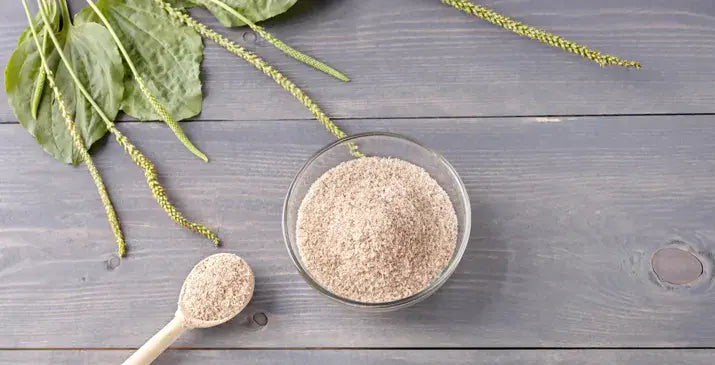
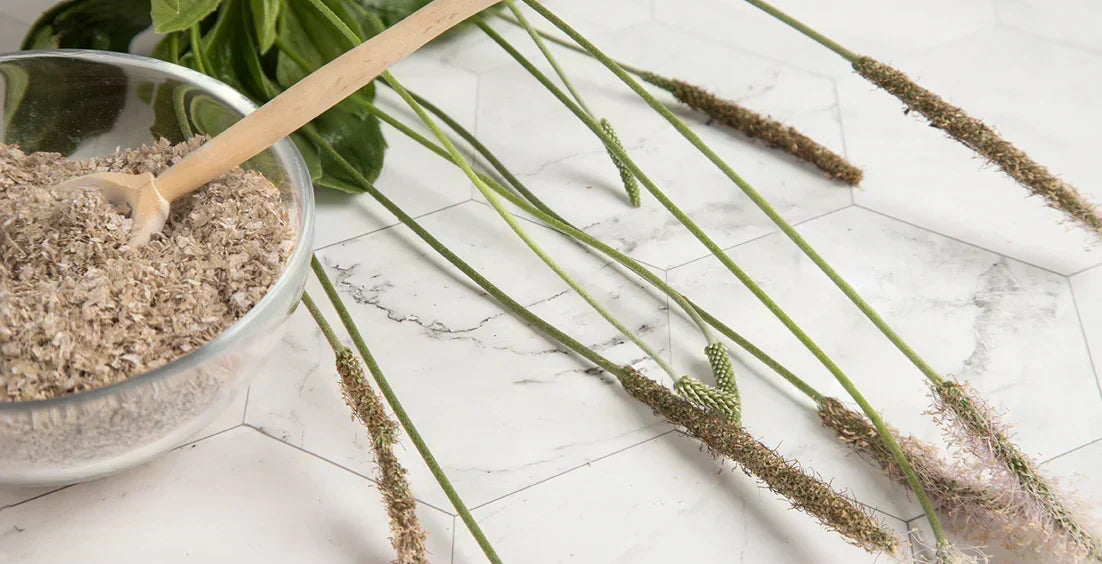
Psyllium husk is a soluble fiber derived from the seeds of Plantago ovata, a plant grown primarily in India, which supplies over 85% of the world's psyllium. It is widely used as a bulk-forming agent because it absorbs water in the digestive tract, softens stool, and supports regular bowel movements.
Products containing psyllium husk are often used to support both constipation and diarrhea management, and it also has a beneficial effect on gut bacteria. Here is a closer look at how it works:
- Helps Move Fecal Matter Through the Colon: Psyllium is high in fiber, which supports the movement of fecal matter and helps maintain regularity. Psyllium can absorb up to 50 times its own weight in water, making it one of the most effective bulk-forming fibers available.
- May Help Lower LDL: The FDA has authorized a qualified health claim for psyllium, consuming 7g per day of soluble fiber from psyllium husk, as part of a diet low in saturated fat and cholesterol, may reduce the risk of heart disease. A meta-analysis of 28 trials published in the American Journal of Clinical Nutrition found that psyllium supplementation reduced LDL cholesterol by approximately 12.8 mg/dL in individuals with and without hypercholesterolemia.
- Help Support Blood Sugar: Psyllium's viscous gel slows glucose absorption in the small intestine. A 2020 Cochrane review found that psyllium supplementation of 5 to 10g before meals significantly reduced postprandial blood glucose and HbA1c in people with type 2 diabetes.
- May Help Improve Circulation: Psyllium fiber may also support healthy blood circulation and blood pressure levels.
Typical clinical doses range from 5 to 10g taken one to three times daily with at least 240ml (8 oz) of water. Always take psyllium with adequate water to avoid the risk of esophageal obstruction.
Advertisement

 *All individuals are unique. Your results can and will vary.
Inulin vs. Psyllium: A Comparison
There are a lot of similarities between inulin and psyllium. But in the following section, we are going to compare the merits of these fibers as they pertain to specific health concerns.

Irritable Bowel Syndrome
In general, psyllium husk is considered a better choice for people managing IBS. That's because inulin is a high-FODMAP food and is explicitly restricted on the low-FODMAP diet developed by Monash University. Its rapid fermentation by colonic bacteria generates gas that can worsen the painful or uncomfortable symptoms of IBS.
Psyllium husk, by contrast, softens stool and improves digestive function without generating excess gas. A 2009 randomized controlled trial published in the BMJ found that psyllium supplementation at 10g per day significantly reduced IBS symptom severity scores compared to placebo after 3 months, with symptom severity dropping by 90 points in the psyllium group versus 49 points in the placebo group.
|
Aspect |
Psyllium Husk |
Inulin |
|
Effect on IBS |
Preferred choice for IBS sufferers |
Can worsen IBS symptoms |
|
Impact on Digestive Gas |
Does not generate excess gas |
Known to cause digestive gases |
|
Effect on Stool |
Softens stool and improves digestive function |
May not be as effective in softening stool |
|
Risk of Irritation |
Less likely to irritate IBS conditions |
Can irritate IBS conditions due to gas |
|
Clinical Evidence |
RCT-supported (10g/day) |
Restricted on low-FODMAP protocol |
Constipation
When comparing inulin and psyllium for constipation, psyllium is typically the more effective option. It is classified as a bulk-forming laxative by the FDA and is the active ingredient in Metamucil. A 2022 systematic review and meta-analysis of 16 randomized controlled trials found that psyllium significantly increased stool frequency in people with chronic constipation, with psyllium increasing bowel movements by an average of 3 per week.
Inulin can mildly increase stool frequency through its prebiotic effect on gut motility, but the evidence is weaker and the effect slower, typically taking 2 to 4 weeks to become noticeable.
|
Aspect |
Psyllium |
Inulin |
|
Effect on Stool |
Absorbs moisture, softens stool, eases passage |
Does not absorb moisture as effectively |
|
Benefit for Constipation |
Effective in supporting regularity |
Less effective for constipation relief |
Weight Loss
Inulin and psyllium fiber both support weight management, but through different pathways. Inulin's effect is primarily hormonal, stimulating the release of GLP-1 and PYY, the satiety hormones that signal fullness to the brain. A 2024 systematic review and meta-analysis of 32 randomized controlled trials published in the American Journal of Clinical Nutrition found that inulin-type fructan supplementation reduced body weight by a mean of 0.97 kg and BMI by 0.39 kg/m² compared to control.
Psyllium's weight-related benefit is more modest and is primarily attributed to the gel-forming bulk it creates at mealtimes, which promotes a feeling of fullness without the hormonal signaling that inulin provides.
|
Aspect |
Inulin |
Psyllium |
|
Weight Loss Mechanism |
Stimulates satiety hormones GLP-1 and PYY |
Creates gel-forming bulk that promotes fullness |
|
Effect on Appetite |
Reduces hormones that signal hunger |
Does not directly affect appetite hormones |
|
Impact on Digestion |
Supports digestion and prebiotic fiber intake |
Improves bowel movement and waste removal |
Diarrhea
When comparing inulin and psyllium for diarrhea, psyllium is the stronger choice. That's because psyllium's dual action, absorbing excess water in loose stools while also softening hard stools, earns it the description of a "stool normalizer" rather than simply a laxative. This bidirectional effect has been documented in IBS-D (diarrhea-predominant IBS) trials and is what makes psyllium uniquely versatile.
Inulin, by contrast, is not typically used for diarrhea management and may worsen loose stools in some individuals due to its fermentation activity.
|
Aspect |
Psyllium |
Inulin |
|
Effect on Stool Consistency |
Forms bulkier, more solid stools |
May not be as effective in solidifying stools |
|
Impact on Diarrhea |
Helps normalize loose stools |
Less effective in addressing diarrhea |
|
Role in Digestion |
Acts as a stool normalizer, absorbing excess water |
Not typically used for diarrhea management |
Dosage Guide: How Much Inulin and Psyllium Should You Take?
Getting the dose right matters as much as choosing the right fiber. Too little produces no effect, while too much, especially with inulin, can cause significant digestive discomfort.
|
Fiber |
Starting Dose |
Therapeutic Dose |
Timing |
Water Requirement |
|
Psyllium husk |
3 to 5g/day |
5 to 10g, 1 to 3 times/day |
Before meals |
At least 240ml per dose |
|
Inulin |
2 to 3g/day |
5 to 10g/day |
With meals |
200ml minimum |
Inulin vs. Psyllium for Specific Populations
Your health status and life stage can significantly influence which fiber is the better fit. Here is what the evidence says for key populations.
Type 2 Diabetes
Both fibers may support blood sugar management, but through different mechanisms. Inulin slows gastric emptying and reduces the glycemic index of co-ingested foods, while psyllium's viscous gel slows glucose absorption in the small intestine. People managing type 2 diabetes may benefit from either, though psyllium has the stronger short-term postprandial evidence.
IBS and FODMAP Intolerance
Psyllium is the appropriate choice. Inulin is classified as a high-FODMAP food and should be avoided by anyone following the Monash University low-FODMAP protocol.
Older Adults
Both fibers support gut motility, which tends to slow with age. Psyllium is generally better tolerated due to its lower fermentation activity, while inulin's prebiotic effect on Bifidobacterium may be particularly valuable since these beneficial bacteria naturally decline with age.
Pregnancy
Fiber needs increase during pregnancy. Psyllium is generally considered safe and is commonly recommended to support regularity. Always consult a healthcare practitioner before adding any new supplement during pregnancy.
Medication Interactions
Psyllium can reduce the absorption of certain medications, including lithium, digoxin, and warfarin. If you take any of these, separate psyllium doses from medication by at least 2 hours and speak with your doctor.
Kidney Disease
People with kidney disease should consult a physician before significantly increasing fiber intake, as some high-fiber diets can affect potassium and phosphorus levels.
Checklist for Buyers
- ✅ Choose the right fiber type, inulin for microbiome diversity and prebiotic support, psyllium for stool regulation and cholesterol management.
- ✅ For psyllium, look for products with at least 70% psyllium husk content (not psyllium seed powder, which is less potent) and no artificial sweeteners if you have IBS.
- ✅ For inulin, chicory-root-derived inulin (labeled as "chicory inulin" or "inulin-FOS") is the most studied form. Agave inulin has a different degree of polymerization profile and less clinical backing.
- ✅ Start low, go slow, begin with half the recommended dose for the first week to assess tolerance, especially with inulin.
- ✅ Ensure third-party testing (such as NSF or USP certification) for purity and quality.
- ✅ Opt for organic or non-GMO sources where possible.
- ✅ Check for added ingredients or fillers that may not be necessary.
- ✅ Read reviews to ensure the brand's reputation for effectiveness and safety.
Advertisement

 *All individuals are unique. Your results can and will vary.
Conclusion
Both fibers have a place in gut health, but the right choice depends on your goals. Choose psyllium for stool regularity, IBS symptom management, or cholesterol support, as it even carries an FDA-authorized qualified health claim for LDL. Choose inulin for microbiome diversity, prebiotic support, or blood sugar management. For comprehensive coverage, consider both. Either way, consult your healthcare practitioner and look for supplements free of unnecessary fillers. At WOWMD, we recommend reviewing every ingredient label carefully and pairing your fiber routine with a healthy lifestyle for the best results.
FAQs
This article is for informational purposes only and is not a substitute for professional medical advice, diagnosis, or treatment. Statements made on this website have not been evaluated by the U.S. Food and Drug Administration. Always consult a qualified healthcare professional before making changes to your diet, supplements, medications, or healthcare routine.
Our Top Picks

Colon Sweep

Greens Blend

Good Gut Great Life

References
WOWMD follows strict sourcing guidelines to ensure the accuracy of its content, outlined in our editorial policy. We use only trustworthy sources, including peer-reviewed studies, qualified experts, and information from top institutions.


- Leaky gut: What is it, and what does it mean for you?: https://www.health.harvard.edu/blog/leaky-gut-what-is-it-and-what-does-it-mean-for-you-2017092212451
- Inulin: properties and health benefits: https://pubmed.ncbi.nlm.nih.gov/36876591/
- Inflammation in Irritable Bowel Syndrome (IBS): Role of Psyllium Fiber Supplementation in Decreasing Inflammation and Physiological Management of IBS: https://pmc.ncbi.nlm.nih.gov/articles/PMC8975494/
- RANDOMIZED CLINICAL TRIAL: SOLUBLE/INSOLUBLE FIBER OR PSYLLIUM FOR CHRONIC CONSTIPATION: https://pmc.ncbi.nlm.nih.gov/articles/PMC4891216/