

Collagen in Pregnancy: Potential Benefits and Safety
Wondering if collagen is safe during pregnancy? Learn about potential benefits, safety considerations, food sources, and what experts recommend.
 By WOWMD Staff

 Fact Checked
Advertiser Disclosure: WOWMD independently vets all recommended products. If you purchase a featured product, we may be compensated. Learn why you can trust us.
Table of contents
- What is Collagen?
- Is Collagen Safe During Pregnancy?
- Benefits of Collagen
- Collagen Benefits vs. Evidence in Pregnancy
- Expert Advice
- A Buffet of Choices
- Buyers' Checklist
- User Reviews
- Safety Precaution
- Collagen Rich Foods
- Tips for Supporting Your Pregnant Body
- When to Talk with Your Doc?
- Conclusion
- FAQs

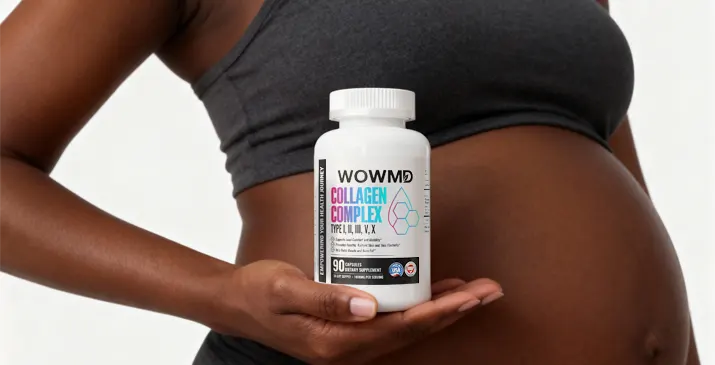
Oh, the joys and worries of pregnancy! One minute you're over the moon about your little bean and the next, you're scratching your head over what's safe to eat or take.
If you've been also eyeing those collagen supplements and wondering, "Can you take collagen while pregnant?" or "Is it okay for pregnant women to have collagen?", you're not the only one. Let's dive into this collagen conundrum and sort it out together.
TL;DR
- Collagen = a structural protein naturally found in skin, joints, and bones.
- Possible pregnancy benefits: skin elasticity, joint comfort, tissue repair.
- Evidence: supportive but limited; most trials are short and not pregnancy-specific.
- Safety: usually well tolerated — check for contaminants, allergens, and extra added herbs.
- Action: ask your provider before starting; prefer food sources if unsure.
What is Collagen?
Think of collagen as the scaffolding of your body. It's everywhere - your skin, bones, joints, you name it. It's like the glue holding you together (and no, it's not made from horses, despite what you might have heard on the playground).
When you're growing a tiny human, your body goes into overdrive, and your body’s own collagen may go through natural changes [1]. Your little one is building their own "scaffolding," and you're stretching in ways you never thought possible. No wonder some moms-to-be are curious about whether collagen might play a role!
💡 DYK? “Type V collagen is one of the proteins naturally present in placental tissue. Whether collagen supplements may have any effect on the placenta is not known.”
Is Collagen Safe During Pregnancy?
Many moms-to-be wonder whether collagen is something to consider during pregnancy. Collagen is naturally made by the body, but the safety of collagen supplements during pregnancy has not been well established. Let’s look at what is and isn’t known, and why talking with your provider may be a helpful first step.
Collagen is a protein that's already in your body. It is part of the natural structure of your skin, joints, and bones. When you're pregnant, your body needs more protein to help your baby grow. Collagen is one source of protein, but it is not a complete protein on its own.
During pregnancy, your body goes through big changes. Your belly gets bigger, and your joints might feel sore. Some people wonder whether collagen might play a role, though this has not been clearly shown in pregnancy. Stretch marks may be influenced by genetics and how quickly skin stretches, and no supplement can be relied on to prevent them. Joint discomfort during pregnancy can have many causes, and it may be worth discussing with your provider.
Collagen is naturally present in tissues that support pregnancy. There's a type of collagen called Type V that's found in the place where the mom and baby connect in the womb. Its natural presence there does not mean a collagen supplement may affect your baby’s development.
✅ Best practice: Many people may choose to focus on a balanced diet and talk with their OB/GYN before considering any supplement.
Advertisement


When choosing collagen supplements, it’s important to pick high-quality products that have been third-party tested, which can be one way to check for heavy metals, contaminants, and unnecessary additives. There is limited information on the safety of collagen supplements during pregnancy, so it may be best to talk with your doctor before considering one.
If you’re planning to get pregnant, there is limited information on how collagen supplements may affect fertility or early pregnancy. Just like during pregnancy, it’s wise to talk with your healthcare provider first.
Collagen and Pregnancy: Possible Roles and What Isn’t Known
A few of the many benefits of collagen are:
 Benefits Of Taking Collagen While Pregnant
1. May help with skin struggles
Pregnancy can really do a number on your skin. As your belly grows, your skin has to stretch a lot. Collagen is a natural part of the skin’s structure. Collagen supplements may possibly affect skin elasticity in non-pregnant adults, but this may not apply during pregnancy [2].
Whether collagen may affect skin during pregnancy is not known. Stretch marks are very common, and no supplement can be counted on to prevent them.
2. Support giving your joints a break
As your baby grows, your body carries more and more weight. This can be tough on your joints, especially your knees and hips. They might start to ache or feel stiff. Collagen is a part of cartilage, and collagen supplements may possibly play a role in joint comfort for non-pregnant adults [3].
Its effect on joint discomfort during pregnancy is not known. With your provider’s okay, gentle movement may help some people feel more comfortable. Being able to move more freely may feel good for your overall well-being when you're feeling weighed down.
3. May help with protein power-up
When you're pregnant, your body needs a lot more fuel. Protein is a big part of that. Protein needs may increase during pregnancy [4].
Collagen contains amino acids such as glycine and proline, but it lacks tryptophan, so it is not a complete protein. It may be one of several protein sources, but it may not replace complete proteins in a balanced diet.
4. Collagen and bones
Your bones, and your little one's bones, need to be strong. Collagen is part of bone’s natural structure [5]. During pregnancy, your body is working overtime to build your baby's skeleton.
There is no clear indication that collagen supplements may support a baby’s bone development. It could also help keep your bones strong. Remember, your baby will be taking some of your calcium and other minerals to grow. Calcium and vitamin D are the nutrients most often discussed for bone health in pregnancy, and your provider can advise on what may be right for you.
5. May help overall hair, skin, and Nail health
Pregnancy often brings noticeable changes to your hair and nails—sometimes making hair more fragile or nails prone to breaking. Collagen is a natural part of skin, and some people wonder whether it might play a role in hair and nails, but its effects during pregnancy are not known.
Collagen may be one topic to discuss with your provider as part of your pregnancy care.
Collagen in Pregnancy: What’s Known and What Isn’t
| Potential Benefit | Evidence Level | Clinical Note |
|---|---|---|
| Skin elasticity & hydration | Moderate (in adults) | May help reduce dryness/stretch, but not guaranteed to prevent stretch marks |
| Joint comfort | Low–Moderate | May possibly play a role in joint comfort for non-pregnant adults; not established in pregnancy |
| Bone & tissue support | Low | May support overall structure; not a substitute for calcium or vitamin D |
| Placenta/fetal tissue support (Type V) | Limited | Naturally present in placental tissue; no clear indication that supplements may affect the placenta or baby |
💡 DYK? "Type V collagen is one of the proteins naturally found in placental tissue."
What Experts Say About Collagen During Pregnancy?
Lily Nichols, RDN, CDE, says;
"Collagen-rich foods and supplements provide crucial amino acids that help a pregnant woman meet her higher protein needs. Sufficient protein, particularly from sources like collagen, can be beneficial for the prevention of preeclampsia and for mitigating swelling in late pregnancy."
Collagen Supplements: A Buffet of Choices
If you do decide to look into collagen supplements (after a chat with your doc, of course), you'll find there's quite a variety:
- Powders: These are like the chameleons of the supplement world. Mix them into your morning smoothie, your oatmeal, or even your coffee (if you drink coffee, your provider can tell you how much caffeine may be okay during pregnancy).
- Pills: For those who like to keep it simple. Pop it and go. But keep in mind, that they might not pack as much collagen punch as other forms.
- Liquids: Ready to drink, no mixing required. But watch out for added sugars or artificial flavors hiding in there.
- Gummies: The candy of the supplement world. Tasty? You bet. But they often have less collagen and more sugar than their counterparts.
Advertisement


Some brands of collagen products also include zinc and Vitamin C .Vitamin C plays a role in the body’s own collagen production, and these added nutrients may overlap with your prenatal vitamin. Some products also contain biotin or hyaluronic acid, and the safety of these added ingredients during pregnancy may not be well established. Blends contain more ingredients, so they may call for an extra conversation with your provider.
Each type has its fans and critics. If a supplement is considered, a simpler ingredient list may be easier for you and your provider to review. Think of it like shopping for baby clothes - you want something simple and comfy, not covered in scratchy sequins.
What to Look for in a Collagen Supplement?
Buyers' Checklist
- ✅ Check for Hydrolyzed Collagen: May be easier for some people to digest and absorb.
- ✅ Natural Sources: Some people may choose collagen from grass-fed bovine or wild-caught fish.
- ✅ Quality & Purity: A product with fewer additives or fillers may be easier to review for minimal additives or fillers.
- ✅ Non-GMO & Gluten-Free: May suit people with certain dietary preferences or gluten sensitivity.
- ✅ Third-Party Testing: Can help confirm label contents and screen for certain contaminants.
- ✅ Amount:There is no established collagen amount for pregnancy or breastfeeding, so your provider can help decide whether any amount may be appropriate for you.
The "Proceed with Caution" Part: Side Effects & Safety
Collagen supplements may not be right for everyone, and their safety in pregnancy and breastfeeding has not been clearly established. There are a few things to keep an eye out for:
- Tummy Tantrums: Some people find that collagen doesn't sit well with their stomach. And let's face it, pregnancy can make your tummy finicky enough as it is.
- Allergy Alert: If fish or eggs make you break out in hives, some collagen supplements, such as marine or egg-based ones, may not be suitable for you.
- Sneaky Additions: Some supplements are like those mystery novels you read - full of unexpected twists. Likewise might have vitamins or herbs that aren't pregnancy-friendly.
- Quality Questions: Not all supplements are created equal. Some might have unwanted guests like heavy metals or contaminants.
The biggest worry? We just don't have a crystal ball to see how collagen supplements might affect your growing baby. That's why many doctors err on the side of caution.
Food Sources of Collagen
If you're not keen on playing supplement roulette, good news! You can get natural sources of collagen through food. It's often a safer bet when you're expecting. Here's your pregnancy-friendly collagen menu:
| Food | Collagen Source/Benefit | Why It's Good |
|---|---|---|
| Bone Broth | Contains collagen and gelatin | A warm, comforting option for many people. |
| Fish | Skin and bones of smaller fish like sardines or salmon | Rich in collagen, especially from the skin and bones. |
| Chicken | Skin | Provides collagen, and an excuse to enjoy crispy bits! |
| Eggs | Whites | Provide protein, including amino acids the body may use to make collagen (eat fully cooked during pregnancy). |
| Berries | Supports collagen production | High in vitamin C, which is vital for collagen synthesis. |
| Leafy Greens | Supports collagen production | Rich in nutrients that help your body make collagen. |
These foods may be part of a balanced diet and provide nutrients the body uses in many ways, including making its own collagen. Food sources may be a comfortable starting point to discuss with your provider.
💡 DYK? “Collagen may support your body’s ability to heal post-birth by promoting faster tissue recovery, aiding in the repair of muscles and skin”
Advertisement


Beyond Collagen: Tips for Supporting Your Pregnant Body
If you're on the fence about collagen supplements, no worries. There are plenty of other ways to show your body some love during pregnancy:
- Eat the Rainbow: Focus on a variety of whole foods. It's like giving your body a nutrient party.
- Hydrate, Hydrate, Hydrate: Water is an important part of daily health and may help your skin feel more comfortable. Staying hydrated is part of overall health and may help your skin feel more comfortable. Drinking water throughout the day may be a simple habit for overall well-being.
- Move your body: Exercise doesn't have to mean training for a marathon. Even a leisurely walk can do wonders for your joints and overall health.
- Moisturize: Think of it as a spa treatment for your stretched skin.
- Catch Those Z's: Sleep might become your new favorite hobby. It's when your body does its repair work.
These habits are like a support group for your body, helping you navigate the wild ride of pregnancy.
When to Talk with Your Doc?
Before you jump on any supplement, have a heart-to-heart with your doctor. They know your health history better than Dr. Google ever could. Some questions to get the ball rolling:
- "Is collagen safe for me and my little one?"
- "Could it cause any side effects with my current meds or supplements?"
- "Are there better options for what I'm trying to achieve?"
- "If it gets the green light, then how much Collagen should I take?
- “Are the collagen supplements I’m considering tested for quality and free of harmful additives?”
- “Is collagen safe for me if I’m trying to conceive or breastfeeding?”
- “Can collagen help with my specific skin or joint concerns during pregnancy?”
Remember, your doctor's advice is like gold - it outweighs anything you'll read online, including this article.
Read More - Best collagen supplements for women over 50
Conclusion
So, can you have collagen while pregnant? It's not a clear-cut yes or no. Collagen is a natural part of the body, but how supplements may affect pregnancy is not clearly known. But we're not 100% certain about their safety during pregnancy. Many doctors lean towards getting collagen from food rather than pills or powders when you're expecting.
Keep in mind:
- Every pregnancy is as unique as your baby's first giggle.
- What works for your neighbor might not be right for you.
- Safety first, always.
- Your doctor is your best source of personalized advice.
At the end of the day, what matters most is the health of you and your little one. Focus on overall good nutrition, stay active, and try to enjoy this wild, wonderful journey.
If collagen is still on your mind, have a chat with your healthcare provider. They can help you weigh the pros and cons of your specific situation.
Pregnancy is like a nine-month crash course in decision-making. It's natural to have questions and want the absolute best for your baby.
Just make sure you're getting your information from reliable sources, and always keep your medical team in the loop. Here's to a healthy, happy pregnancy - you've got this, mama!
FAQs
This article is for informational purposes only and is not a substitute for professional medical advice, diagnosis, or treatment. Statements made on this website have not been evaluated by the U.S. Food and Drug Administration. Always consult a qualified healthcare professional before making changes to your diet, supplements, medications, or healthcare routine.
Our Top Picks

References
WOWMD follows strict sourcing guidelines to ensure the accuracy of its content, outlined in our editorial policy. We use only trustworthy sources, including peer-reviewed studies, qualified experts, and information from top institutions.


- Alteration in the Collagen Content of the Human Uterus During Pregnancy and Post Partum Involution https://www.ncbi.nlm.nih.gov/pmc/articles/PMC2137490
- A Collagen Supplement Improves Skin Hydration, Elasticity, Roughness, and Density: Results of a Randomized, Placebo-Controlled, Blind Study https://www.ncbi.nlm.nih.gov/pmc/articles/PMC6835901/
- Collagen Supplementation for Joint Health: The Link between Composition and Scientific Knowledge https://pubmed.ncbi.nlm.nih.gov/36986062
- Protein and Amino Acid Requirements during Pregnancy https://www.sciencedirect.com/science/article/pii/S2161831322007712
- Specific Collagen Peptides Improve Bone Mineral Density and Bone Markers in Postmenopausal Women—A Randomized Controlled Study https://www.ncbi.nlm.nih.gov/pmc/articles/PMC5793325