

Best Beetroot Supplements 2026: A Complete Guide
In this guide, find out why not all beetroot supplements are the same, which ingredients matter most, and what to check on the label before you choose the best beetroot supplements in 2026.
 By WOWMD Staff

 Fact Checked
Advertiser Disclosure: WOWMD independently vets and sells featured products listed on this page. We may receive compensation from purchases. This does not influence our editorial standards. Learn why you can trust us.
Table of contents
- Introduction
- What to look for
- Beetroot Ingredients in Supplements
- What are the Benefits
- How Beetroot Supplements Work
- What Experts Say
- About Beetroot Supplements
- Beetroot Supplements Vs. Beets or Beet Juice
- Good Choice For You
- Should You Consume Daily?
- Beetroot Supplement Safety
- Conclusion
- Meet the Experts
- FAQs

What is really inside a beetroot supplement, and does it actually work? Beetroot is rich in dietary nitrates, which your body converts into nitric oxide. This may help support normal blood flow, stamina, and cardiovascular health, making beetroot supplements a popular choice among athletes, fitness enthusiasts, and people looking to support their overall well-being.
In this guide to the best beetroot supplement in 2026, we explain the key ingredients, differences between powders, capsules, and extracts, potential benefits, and what research says. We also cover safe usage, common side effects, and who should consult a doctor before taking them, helping you make an informed decision.
TL;DR
- Beetroot supplements are made from dried beetroot, and this guide to the best beetroot supplements in 2026 explains what they contain and what to know before use.
- Dietary nitrates are the main active ingredient. Your body converts them into nitric oxide, which may help support normal blood flow and workout performance.
- Betalains give beetroot its red color and act as antioxidants in lab studies, though their effects in people are still being studied.
- Beetroot also provides folate, potassium, magnesium, and vitamin C, but most powders and capsules contain much less fiber than whole beets.
- When checking a supplement label, look for whole beetroot, a clear amount in mg, nitrate content, and third-party testing.
- Talk to a doctor first if you have kidney stones, low blood pressure, or take blood pressure or nitrate medicines. Beetroot contains oxalates and nitrates that may require extra caution.
Advertisement


What to look for in a Good Beetroot Supplement?
 What to look for in a Good Beetroot Supplement
- Beetroot Juice: 200-500 mL daily, often consumed 2-3 hours before exercise, is a common range for those looking to support nitric oxide levels before exercise.
- Beetroot Powder: 20g per day, providing approximately 500-600 mg of nitrates, is a commonly used amount.
- Beetroot Supplements: Capsules or tablets with standardized nitrate content offer a convenient way to keep intake consistent.
- Low blood pressure (Hypotension)
- Kidney stones
- Diabetes or blood sugar concerns
- Irritable Bowel Syndrome (IBS)
- Gout
- FODMAP intolerance or sensitivity
- Jonathan Serman, Founder of Mobility with Ease in the United States
- Dr. Stacy Sims, Female Athlete Health and Performance Specialist in Bay of Plenty, New Zealand
- Dr. Jason Schroder, Medical Director & Co-Founder, Craft Body Scan
- Dr. Narbeh Tovmassian, MD, FACP
- Dr. Lauren Williams, MD
1. Dietary Nitrates: The Main Active Compound
Dietary nitrates are the most studied ingredient in beetroot and the main reason people use beetroot supplements. Your body converts nitrates into nitric oxide, a molecule that helps blood vessels relax. This may help support normal blood flow, oxygen delivery, and exercise performance [1].
Research also suggests that beetroot’s effects may not come from nitrate alone, so other compounds in beetroot likely play a part. Nitrate content is not the same in every beet. It changes with the soil, growing conditions, and how the beetroot is processed. This is why nitrate content is one of the most important things to look for on a supplement label.
“Among the various compounds present in beetroot, dietary nitrates are the most solidly supported clinically. The deep red pigment that beets owe their color to, called betalains, have been found to have antioxidant properties in laboratory studies,” notes Dr. Jason Schroder.
2. Betalains: The Natural Red Pigments
Betalains are the pigments that give beetroot its deep red-purple color. The best-known one is betanin, which is the main red pigment in beetroot. In laboratory studies, betalains show antioxidant properties, meaning they may help the body manage oxidative stress [2].
Most of this research comes from lab and animal studies, and more human research is needed [3]. This is why betalains are best described as something that “may help support” overall wellness, rather than something with a proven direct effect.
3. Vitamins and Minerals in Beetroot
Beetroot is a good source of folate (vitamin B9), which supports normal cell growth and function. It also provides potassium, which supports normal fluid balance, nerve signals, and muscle function. Smaller amounts of magnesium, vitamin C, vitamin E, iron, and manganese add to its nutrient profile [4].
The amount of each nutrient depends on the beet variety, soil, and cooking method. Supplements usually contain far fewer vitamins and minerals than a whole beet, so it is best not to rely on them as a main nutrient source.
4. Dietary Fiber
Whole beetroot contains about 3 g of dietary fiber per 100 g, which supports digestion and regularity. Fiber also helps you feel full for longer.
Most beetroot powders and capsules contain very little fiber because it is lost during processing. If fiber is important to you, eating whole beets is the better choice.
5. Betaine and Other Plant Compounds
Beetroot contains betaine, a natural compound that takes part in normal metabolic processes in the body. It also has phenolic compounds and flavonoids, which are plant antioxidants that add to beetroot’s overall antioxidant power [5].
Research on these compounds is still developing. Their amounts can differ a lot from one product to another, so they should be seen as a bonus rather than the main reason to use beetroot.
6. Natural Sugars and Oxalates: What to Know
Beetroot is naturally sweet because it contains sugars such as sucrose. Beet juice has more concentrated sugar than beetroot powder or capsules, which is one reason many people prefer supplements.
Beetroot also contains oxalates, natural plant compounds that matter for people who are prone to kidney stones [6]. For most healthy people, this is not a concern, but anyone with a history of kidney stones should talk to a doctor before using beetroot supplements.
How Beetroot Ingredients Appear in Supplements
Supplements concentrate beetroot into powder, capsules, or extract, but they do not always carry every nutrient in the same amount. A capsule usually has less fiber and fewer vitamins than a whole beet, and nitrate content varies between products.
Some supplements also add other ingredients, such as grape seed extract or vitamin C. Always read the Supplement Facts and Other Ingredients lists. Look for whole beetroot, a clear amount in mg, and ideally organic sourcing and third-party testing.
What are the Benefits of Beetroot Supplements?
 Benefits of Beetroot Supplements
May Help Improve Cardiovascular Health
The nitrates in beetroot may help support nitric oxide production, which plays a role in normal blood vessel function and blood flow. This may help support overall heart health. Results vary, and beetroot supplements are not a treatment for high blood pressure.[7]
“The research surrounding beetroot supplements and blood pressure is a lot more complex than people realize. There is a real mechanism behind this. Dietary nitrates from beetroot convert to nitric oxide in the body, and nitric oxide causes the smooth muscle of the blood vessels to relax, thereby reducing blood vessel resistance and hence lowering blood pressure,” explains Dr. Jason Schroder.
May Help Enhance Athletic Performance
By increasing oxygen efficiency, beetroot supplements may help athletes support their workout performance. They may also help support endurance and post-workout recovery.
May Help Support Cognitive Health
Beetroot's nitrates may help support blood flow to the brain, which may play a role in focus and mental clarity.
Read Also: Best Brain Supplements For Memory, Focus & Clarity
May Help Increase Stamina and Energy
For men, beetroot supplement benefits include improved stamina and energy levels, making it ideal for active lifestyles and intense workouts.
May Help With Antioxidant Protection
Red beetroot contains antioxidant compounds that may help the body manage oxidative stress and support overall vitality.
“Beetroot is high in dietary nitrates.The body converts these into nitric oxide, which helps relax blood vessels, lowers blood pressure, and increases oxygen delivery to tissues.These benefits help support heart health, endurance, and wound healing by improving microcirculation. There is also a growing body of evidence showing improved cognition and exercise recovery, due to better oxygen availability”says Jonathan Serman, Founder of Mobility with Ease in the United States.
How Beetroot Supplements Work
Beetroot supplements may help support your health, thanks to two key ingredients: nitrates and betalains. Betalains are antioxidant pigments whose role in humans is still not well understood, while nitrates are the main reason people take beetroot.
Betalains get a lot of attention as antioxidants, but their direct cardiovascular impact in humans is not well-established. Dr. Narbeh Tovmassian tells patients: the nitrate is the active ingredient — make sure the product is standardized for nitrate content.
When you take beetroot supplements, your body turns the nitrates into nitric oxide. This may help relax blood vessels and support normal blood flow. Normal circulation may help your muscles and organs get the oxygen and nutrients they need, which may help you feel more energetic. This may help support exercise performance and post-workout recovery.
In short, beetroot supplements may help support normal blood flow as part of an active, healthy routine. It's a natural way to support your health and fitness.
What Experts Say About Beetroot Supplements?
Dr. Stacy Sims, PhD (Exercise Physiologist and Nutrition Scientist), says;
For athletes and active individuals, beetroot supplements can enhance power output and reduce the oxygen cost of exercise, meaning you can work harder for longer. It's an excellent way to support vascular function and boost performance without relying on stimulants, which is especially important for women's physiology.
About Beetroot Supplements
Beetroot supplements are concentrated forms of beetroot, available as powders, capsules, or tablets. People often take them for their possible role in supporting cardiovascular health, athletic performance, and cognitive function.
From red beetroot supplements to the best beet powder for nitric oxide, these products cater to diverse health goals.[8] Choosing high-quality options, such as organic beetroot supplements, can help you get a cleaner, higher-quality product.
“Beet supplements are of most interest when they provide significant amounts of dietary nitrate, aiding in the conversion to nitric oxide in the body and potentially offering a small degree of relaxation in the blood vessels, blood pressure, circulation, and workout performance,” clarifies Dr. Lauren Williams.
Advertisement


Beetroot Supplements vs. Beets or Beet Juice
While fresh beets and beet juice are nutrient-rich, beetroot supplements offer added convenience and consistency. The best beetroot supplements are concentrated, providing a concentrated source of nitrates and antioxidants without the high sugar content found in juice.
Beetroot supplements, including red beetroot supplements and organic beetroot supplements, are easy to incorporate into daily routines—no peeling, juicing, or cooking required. They may also help support nitric oxide production and normal blood flow.
Are Beetroot Supplements A Good Choice For You?
Beetroot supplements can be a great choice for many people. They may help support normal blood flow, which may play a role in exercise performance and recovery for those who work out regularly.
This may make it easier to stay active during workouts. If you have high blood pressure or take blood pressure medication, talk to your doctor first. Beetroot supplements are not a treatment for hypertension or a replacement for prescribed medicine.
Additionally, beetroot may help support blood flow to the brain, which may play a role in memory and focus. It’s also a healthy option for those looking to improve overall well-being.
Since beetroot is low in calories and packed with nutrients, it can be a simple way to add beetroot's nutrients to your routine without adding extra calories.
How Much Beetroot Should You Consume Daily?
The ideal daily intake of beetroot depends on its form and your health goals. Research suggests the following dosages: [9]
These are general ranges, not personal recommendations. Always follow the product label. However, excessive consumption may lead to mild side effects like red urine or digestive discomfort. Supplements help regulate intake.
For safety, consult a healthcare provider before starting high doses, especially if you take blood pressure or nitrate medications.
Read More: Beetroot Benefits, Uses, Side Effects & Why You Need It
Are Beetroot Supplements Safe?
Beetroot supplements are generally well tolerated by most healthy adults. Beetroot in its various forms — powder, capsules, juice, and extract — has been widely studied in clinical research, showing positive effects on blood pressure, heart health, exercise performance, and more. That said, there are a few things worth knowing before you add a beetroot supplement to your daily routine.
It is always a good idea to speak with your doctor before starting any new supplement, especially if you have any of the following conditions:
These conditions may be affected by the naturally occurring compounds in beetroot, such as nitrates and oxalates, which is why a quick check-in with your healthcare provider is always the smart move.
One common and completely harmless thing you may notice after taking beetroot supplements is that your urine or stool turns pinkish or reddish in color. This is known as beeturia, and it happens due to a natural pigment in beetroot called betacyanin. It is generally not a cause for concern and typically affects around 10–14% of people who consume beets regularly.
As with any supplement, always read and follow the dosage instructions on the product label. If you notice any unusual reactions or discomfort after taking a beetroot supplement, stop use and consult your doctor right away.
“Don't use a high dosage of beetroot as a supplement if you are already taking a nitrate-containing drug, such as nitroglycerin or isosorbide, as it can raise blood pressure to a dangerous level,” warns Dr. Jason Schroder.
Advertisement

Conclusion
Beetroot supplements may offer a range of possible benefits, from supporting endurance to supporting heart health.
But as we’ve seen, not all supplements are created equal. Choosing one with whole beetroot, high nitrate content, and third-party testing can help you choose a higher-quality product.
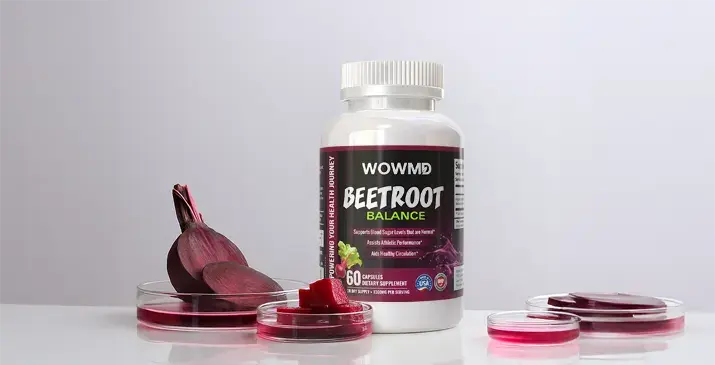
WOWMD Beetroot Balance checks these boxes. With 1300 mg of organic beetroot powder, it's formulated to help support everyday energy, normal cardiovascular function, and post-workout recovery. Give it a shot!
Meet the Experts
FAQs
This article is for informational purposes only and is not a substitute for professional medical advice, diagnosis, or treatment. Statements made on this website have not been evaluated by the U.S. Food and Drug Administration. Always consult a qualified healthcare professional before making changes to your diet, supplements, medications, or healthcare routine.
Our Top Picks

Ashwagandha Extra Strength Formula

Nitric Shock Pre-Workout

CoQ10 Energy Max

References
WOWMD follows strict sourcing guidelines to ensure the accuracy of its content, outlined in our editorial policy. We use only trustworthy sources, including peer-reviewed studies, qualified experts, and information from top institutions.


- Dietary Nitrate from Beetroot Juice for Hypertension: https://doi.org/10.3390/biom8040134
- Biological properties and applications of betalains: https://doi.org/10.3390/molecules26092520
- Biological effects of red beetroot and betalains: https://doi.org/10.1002/ptr.6653
- Beetroot as a functional food with huge health benefits: Antioxidant, antitumor, physical function, and chronic metabolomics activity: https://doi.org/10.1002/fsn3.2577
- Betaine as a functional ingredient: metabolism, Health-Promoting Attributes, food sources, applications, and analysis methods: https://doi.org/10.3390/molecules28124824
- Dietary oxalate and kidney stone formation: https://doi.org/10.1152/ajprenal.00373.2018
- Mineral Composition of Dietary Supplements-Analytical and Chemometric Approach: https://pmc.ncbi.nlm.nih.gov/articles/PMC8746997/
- Possible Effects of Beetroot Supplementation on Physical Performance Through Metabolic, Neuroendocrine, and Antioxidant Mechanisms: A Narrative Review of the Literature: https://doi.org/10.3389/fnut.2021.660150
- Evaluation of 12-Week Standardized Beetroot Extract Supplementation in Older Participants: A Preliminary Study of Human Health Safety: https://doi.org/10.3390/nu16121942