

Health Benefits of Drinking Beet Juice: Backed by Science
Discover the top beetroot juice benefits, from supporting heart health and exercise performance to boosting energy, stamina, and overall wellness.
 By WOWMD Staff

 Fact Checked
Advertiser Disclosure: WOWMD independently vets all recommended products. If you purchase a featured product, we may be compensated. Learn why you can trust us.


Most people reach for beetroot juice after hearing it can lower blood pressure or boost a workout. But the science behind it is more interesting and more practical than a single headline suggests. From the way your mouth bacteria convert plant nitrates into a gas that relaxes your arteries, to the antioxidant pigments that give beets their signature color, this is one of the more well-researched functional foods available today.
This guide breaks down what the evidence actually shows, how much to take, what to watch out for, and where beetroot juice fits alongside other popular options.
The Science Behind Beetroot Juice, Nitrates and Nitric Oxide
Beets are rich in dietary nitrates, and the way your body processes them is where the cardiovascular benefit begins.
How Dietary Nitrates Become Nitric Oxide
The conversion works in two stages. Beneficial bacteria in your mouth reduce dietary nitrates to nitrites. Those nitrites then enter the bloodstream and tissues, where they become nitric oxide: a signalling molecule that causes smooth muscle in blood vessel walls to relax and widen. The result is vasodilation. Wider vessels, lower resistance, and more efficient delivery of oxygen and nutrients throughout the body.
What This Means for Heart Health and Circulation
For everyday wellness, this means the heart works with less resistance to circulate blood. For those managing cardiovascular markers, research shows measurable support for healthy blood pressure levels already within a normal range.
Betalains and Antioxidant Support for Arterial Health
Beetroot is also a meaningful source of betalains, the pigments responsible for its deep red color. These compounds have demonstrated antioxidant activity in research settings and may help support the body's natural response to oxidative stress, including the kind associated with LDL cholesterol oxidation. Oxidized LDL is the form most closely linked to arterial wall stress.
On timing: research suggests consuming beetroot juice roughly two to three hours before physical activity allows nitric oxide levels to peak when they are most useful.
Advertisement


Beetroot Juice and Athletic Performance
Beetroot juice supports how muscles use oxygen during exercise, not by acting as a stimulant, but by widening the vessels that deliver oxygen-rich blood to working tissue.
More Oxygen to Working Muscles, Less Fatigue
When nitric oxide expands blood vessels, working muscles receive more oxygen more efficiently, allowing the body to sustain effort longer before fatigue sets in. Research supports this: pre-workout beetroot juice has been associated with improvements in endurance, and some studies suggest a reduction in delayed onset muscle soreness (DOMS) following hard training sessions.
A Stimulant-Free Alternative to Traditional Pre-Workouts
Unlike caffeine-based pre-workouts, beetroot juice carries no crash and supports the body's own oxygen delivery system, making it a sustainable part of a training routine rather than a situational fix.
How Betalains May Support Post-Exercise Recovery
The betalains in beets may contribute to recovery as well. Some research suggests they may help modulate NF-κB signalling, a key regulator of the body's inflammatory response, which could partly explain the association between beetroot juice and reduced post-exercise soreness.
For consistent results, build the two-to-three-hour pre-activity window into your nutrition routine rather than treating it as an afterthought.
Comparing Beetroot Juice with Other Juices
Not all juices are built the same. Here is how beetroot juice stacks up against popular alternatives, particularly for cardiovascular health and physical performance.
Beetroot Juice vs. Pomegranate Juice
Both are antioxidant-rich and frequently cited in cardiovascular research. Pomegranate juice delivers impressive polyphenol content, particularly punicalagins, which support healthy inflammatory responses. Beetroot juice leads with dietary nitrates that convert to nitric oxide, directly supporting blood vessel flexibility and circulation. For endurance or daily cardiovascular support, beets offer a more direct physiological pathway.
| Feature | Beetroot Juice | Pomegranate Juice |
|---|---|---|
| Key compound | Dietary nitrates | Punicalagins, anthocyanins |
| Primary benefit | Blood flow, oxygen delivery | Antioxidant defense, vascular support |
| Sugar content | Moderate | Moderate to high |
| Athletic relevance | High | Moderate |
Beetroot Juice vs. Celery Juice
Celery juice is low in calories and provides some vitamin K and potassium, with a following in wellness communities for digestive support. Beetroot juice offers a broader nutritional profile, including folate, manganese, and performance-relevant nitrates, and a considerably stronger research base for cardiovascular and exercise applications.
Beetroot Juice vs. Tart Cherry Juice
Tart cherry juice has genuine credibility for post-exercise recovery and sleep quality. Beetroot juice occupies a different lane: it is most relevant for the effort phase, supporting pre-activity oxygen efficiency. Research from Cleveland Clinic has noted that beetroot juice can support physical performance and stamina by increasing blood flow and oxygen delivery.
Each juice earns its place for specific goals. Beetroot juice stands out when the priority is vascular support, endurance, and broad nutritional density.
Advertisement


Daily Intake: How Much Is Actually Useful?
There is no universal dose, but research consistently points to a range that delivers meaningful benefit.
For general cardiovascular and everyday wellness support, most studies use between 70 and 250 ml of concentrated beetroot juice daily, or roughly 500 ml of standard juice. That is one to two small servings, easy to work into a morning routine.
Research from Penn State found that while nitrate-rich beetroot juice did not enhance muscle blood flow during exercise in their study, it did measurably reduce arterial stiffness under resting conditions, suggesting consistent daily intake supports arterial flexibility over time rather than producing acute in-workout effects alone.
|
Health Goal |
Suggested Daily Amount |
Timing Notes |
|
General wellness |
70 to 150 ml concentrate |
Morning with food |
|
Cardiovascular support |
200 to 250 ml concentrate |
Daily, consistent timing |
|
Athletic endurance |
300 to 500 ml standard juice |
2 to 3 hours pre-activity |
|
LDL and lipid balance |
250 ml standard juice |
With a meal |
Tips for daily use:
- Start around 70 ml and build up gradually to assess tolerance
- Choose cold-pressed or minimally processed options to preserve nitrate content
- Pair with a vitamin C source, such as citrus, to support nitric oxide conversion
- Avoid boiling beets when preparing homemade juice, as heat degrades nitrates significantly
- If you take blood pressure medication, consult your doctor before adding beet juice regularly
Consistency matters more than volume. A modest daily habit maintained over weeks is where the real benefit tends to show up.
Potential Side Effects and Considerations
For most healthy adults, beetroot juice is well tolerated. That said, a few things are worth knowing.
Beeturia
The most commonly reported reaction is beeturia, a temporary pink or red discoloration of urine and occasionally stool. It is a benign response linked to how the body processes betalain pigments, and it resolves on its own. It appears more often in people with lower stomach acid levels or iron absorption differences.
Digestive Sensitivity
Amounts above 500 ml per day may cause temporary bloating, loose stools, or stomach discomfort in some individuals. Starting with a smaller serving and increasing gradually gives the digestive system time to adapt.
Blood Pressure and Medication Interactions
Because beetroot juice has meaningful effects on circulation, combining it with blood pressure medication may intensify those effects. Anyone managing cardiovascular concerns should speak with their healthcare provider before making it a regular part of their routine.
Kidney Stone Risk
Beets are naturally high in oxalates. Individuals with a history of calcium oxalate kidney stones should moderate their intake and consult a qualified healthcare professional.
Advertisement

Beetroot Juice, Older Adults, and the Oral Microbiome
The cardiovascular case for beets goes deeper than nitrates alone. Research from the University of Exeter found that blood pressure reductions from beetroot juice in older adults may be linked to specific changes in the oral microbiome. The nitrates in beetroot juice feed beneficial mouth bacteria, which convert them to nitrites, which then become the nitric oxide that relaxes and widens blood vessels.
This mechanism matters particularly for adults over 50. The oral microbiome naturally shifts with age, often reducing the efficiency of that nitrate-to-nitrite conversion. Regular beetroot juice intake may help restore that pathway.
A few practical points:
- Antiseptic mouthwash can destroy the oral bacteria responsible for this conversion, so timing matters if you use one regularly
- Consistent daily intake supports steadier nitric oxide production than occasional large doses
- Pairing beetroot juice with a balanced diet compounds the benefit across multiple cardiovascular markers
Conclusion
Beetroot juice is not a supplement trend. It is one of the more thoroughly studied functional foods in the cardiovascular and sports nutrition space, with a clear biological mechanism, a credible body of research, and a practical place in a daily wellness routine.
The evidence points to consistent, moderate intake: one to two small servings a day, timed around your goals. Whether the priority is arterial health, endurance, or general vitality, the foundation is the same. Dietary nitrates feeding a pathway your body already knows how to use.
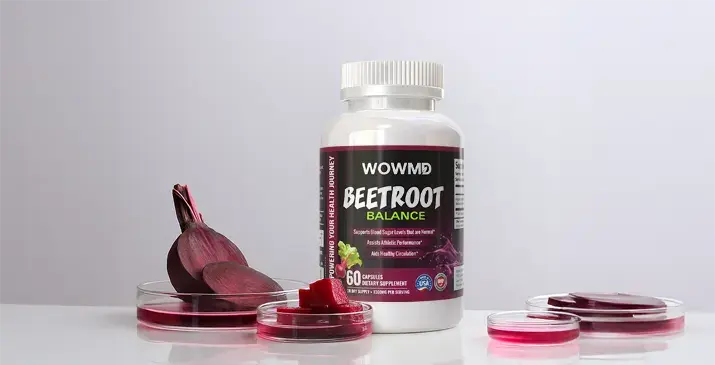
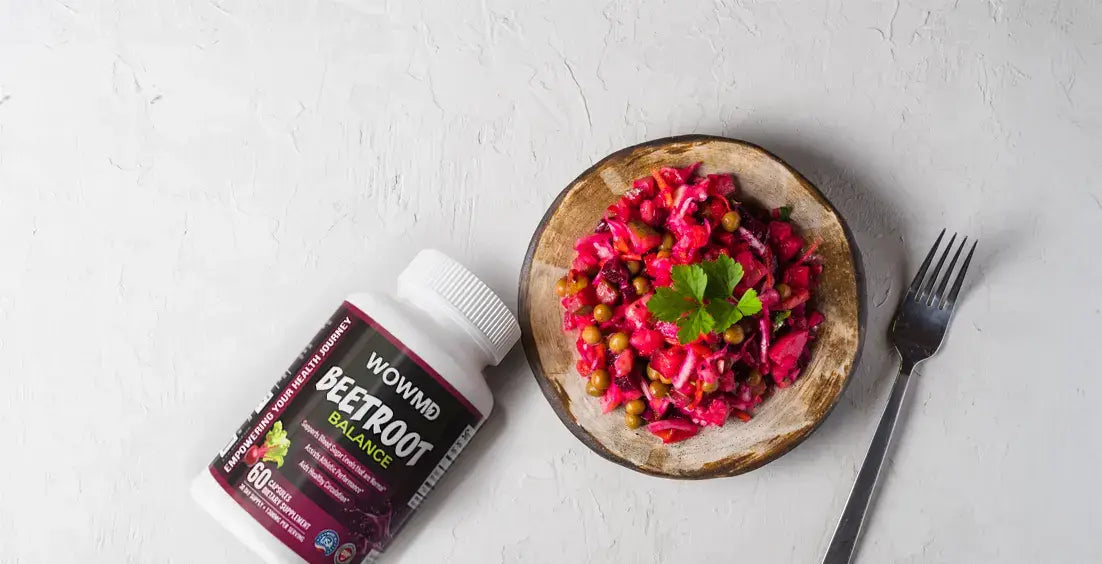
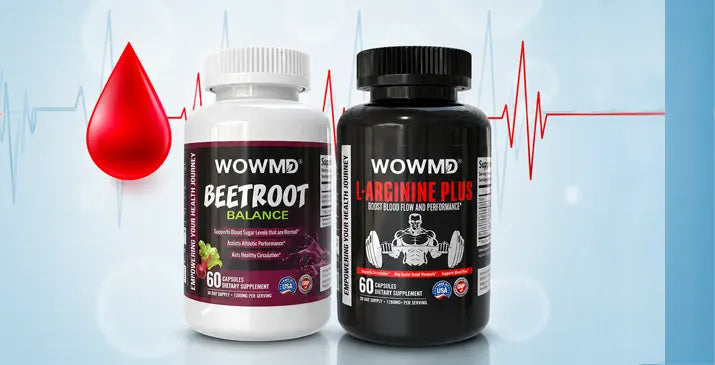
If drinking straight beetroot juice daily is not practical, a concentrated beetroot supplement with verified nitrate content delivers the same core mechanism. WOWMD's beetroot formulas are non-GMO, manufactured in a GMP-certified, FDA-registered facility in the USA, and independently tested for purity and potency.
This article is for informational purposes only and is not a substitute for professional medical advice, diagnosis, or treatment. Statements made on this website have not been evaluated by the U.S. Food and Drug Administration. Always consult a qualified healthcare professional before making changes to your diet, supplements, medications, or healthcare routine.