

Can You Take Vitamins With Your Probiotic Supplements?
Find out how probiotics and vitamins can work together to support digestion, immune health, and overall wellness. Learn the best practices for combining supplements.
 By WOWMD Staff

 Fact Checked
Advertiser Disclosure: WOWMD independently vets all recommended products. If you purchase a featured product, we may be compensated. Learn why you can trust us.

Hey there! If you've ever stood in the supplement aisle wondering whether you can pop your probiotic pill alongside your daily multivitamin, you're not alone. It's a common question, and today we're going to break it all down for you.
We'll explore the world of probiotics and multivitamins, understand why they're important, and answer the burning question: can you take a probiotic with a multivitamin?
Key Takeaways
- Probiotics, multivitamins: often safe together.
- Probiotics aid nutrient absorption.
- Both support overall wellness.
- Timing, quality, consistency matter.
Overview Of Multivitamins and Probiotics
Before we discuss the nitty-gritty, let's get a bird's eye view of what we're dealing with. Probiotic supplements help balance the good bacteria in your digestive system that keep your gut happy and healthy.[1]
Multivitamins, on the other hand, are like a nutritional safety net, helping to fill in any gaps in your diet. Both can play important roles in keeping you feeling your best.
According to Jessica Powers, a nutritionist and public health professional, “Multivitamins and probiotics complement each other. Multivitamins address nutrient gaps, while probiotics enhance nutrient absorption and gut health. Together, they provide a holistic approach to overall well-being.”. But how do they work together? Let's find out!
| Supplement | Multivitamins | Probiotics |
|---|---|---|
| Nutrient Support | Provides a wide range of essential vitamins and minerals | Supports nutrient absorption, particularly B vitamins and minerals |
| Specific Populations | Beneficial for pregnant women, elderly, vegetarians/vegans, and those with restrictive diets | Helpful for those with digestive issues, after antibiotic use, or with compromised immune systems |
| Convenience | Easy one-a-day dosage covers multiple nutritional needs | Typically taken once daily, available in various forms (pills, powders, foods) |
| Disease Prevention | May help prevent chronic diseases related to nutrient deficiencies | May help prevent gastrointestinal diseases and boost immune function |
| Mental & Emotional Health | Supports overall mental health through balanced nutrition | Growing evidence suggests potential benefits for mood and mental health |
A 2023 review explored how probiotic bacteria interact with intestinal immune cells to modulate immune functions. Probiotics can stimulate immune cells and commensal microflora to enhance specific immune functions and maintain immune homeostasis.[2]
Also the clinical trial (NCT07130396) is investigating the impact of combining a multivitamin (PhytoMulti) with a probiotic (UltraFlora Balance Probiotic) on gut health in individuals taking GLP-1 medications.
The trial aims to assess the safety and efficacy of this combination, providing insights into how probiotics and multivitamins may work together to support gut health.[3]
What are Probiotics?
Probiotics are like tiny superheroes for your gut. They're live bacteria and yeasts that are good for your health, especially your digestive system. When you hear "bacteria," you might think of the nasty germs that make you sick. But your body is full of bacteria, both good and bad, and probiotics are firmly on Team Good Guy.
As Will Bulsiewicz, Gastroenterologist and Author, says, “Probiotics are essential for maintaining a balanced microbiome. They support gut health by promoting beneficial bacteria, which in turn enhances digestion and nutrient absorption.”
You can find probiotics in fermented foods like yogurt, kimchi, and sauerkraut. However, many people choose to take probiotic supplements to ensure they're getting enough of these beneficial bugs.
A 2024 review discussed the mechanisms by which probiotics may optimize the absorption of vitamins and minerals in the gut.
Selected probiotics may enhance nutrient absorption through mechanisms such as lowering pH, modulating hormone levels, beneficial alterations of the gut microbiota, and inhibiting pathogenic bacteria adhesion.[4]
ALSO READ: Best Time to Take Probiotics
Advertisement


Probiotic Health Benefits
Probiotics aren't just hanging out in your gut for fun. They're hard at work providing several health benefits:[5]
- Digestive Health: They can help with issues like diarrhea and constipation.
- Immune Support: A healthy gut means a stronger immune system.
- Nutrient Absorption: They help your body make the most of the food you eat.
- Mental Wellbeing: Some studies suggest probiotics might even have benefits for mental health!
- Oral Health:Using a probiotic for oral health helps balance mouth bacteria, supporting fresher breath and healthier gums.
As Vincent Pedre, Medical Director of Pedre Integrative Health says that “The benefits of probiotics extend far beyond digestion. Emerging research suggests they support immune health, cognitive function, and may even reduce anxiety.”
What Are Multivitamins?
Multivitamins are like an all-in-one nutritional insurance policy. They're supplements that contain a mix of vitamins and minerals, designed to help fill any nutritional gaps in your diet.
Think of them as a backup plan for those days when your meals might not be as balanced as you'd like.
ALSO READ: Best Multivitamin for Your Lifestyle
Why Are They Important?
Multivitamins can be a helpful addition to your health routine for several reasons[6]:
- Nutrient Gaps: They help prevent deficiencies in essential vitamins and minerals.
- Convenience: They are an easy way to ensure you're getting a wide range of nutrients.
- Special Needs: They can be especially useful for people with specific nutritional needs, like pregnant women or vegetarians.
- Overall Health: Some studies suggest they might help prevent certain chronic diseases.
As Kimberly Langdon, Obstetrician/Gynecologist, says that “Multivitamins help ensure our bodies receive the required nutrients for daily functioning. They're particularly vital for those with specific health needs or restricted diets.”
ALSO READ: Best Time to Take Multivitamins
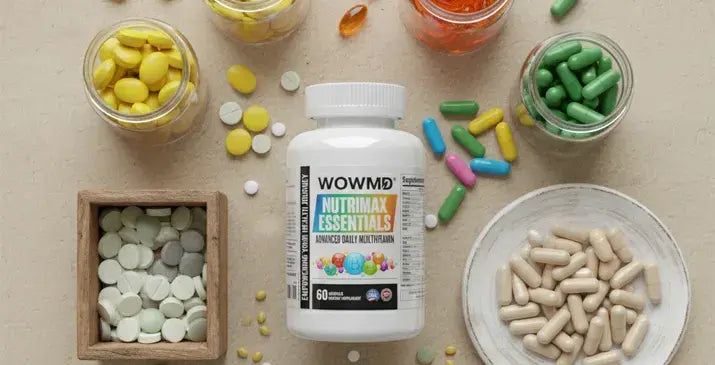
In this video, Russ Godfrey shares his experience with WOWMD NutriMax Essentials, discussing how the multivitamin has boosted his energy levels, improved his endurance during walks, supported his immune system, and even enhanced his vision.
Can You Take Vitamins and Minerals With Your Probiotic Supplement?
Now for the million-dollar question: Should vitamins and probiotics be taken together? The short answer is yes! It's generally safe to take probiotics alongside your vitamins and minerals. In fact, they might even work better as a team.
Here's why:- Improved Absorption: Probiotics can help your body better absorb certain vitamins and minerals.
- Gut Health: While probiotics support your digestive system, vitamins and minerals provide the nutrients your body needs to function optimally.
- Overall Wellness: Both contribute to your overall health in different ways, so taking them together can provide a more comprehensive approach to wellness.
A 2021 review examined the effects of vitamins on the gut microbiome and related gastrointestinal health. The review highlighted that certain vitamins can influence the composition and activity of the gut microbiota, which may impact gastrointestinal health. [7]
Advertisement


What Should I Consider When Taking Probiotics and Vitamins Together?
While it's generally safe to take probiotics with vitamins and minerals, there are a few things to keep in mind:
- Timing: Some experts suggest taking probiotics on an empty stomach and multivitamins with food. But unless your doctor has told you otherwise it’s generally safe taking them at the same time too.
- Quality Matters: Choose high-quality supplements from reputable brands.
- Listen to Your Body: If you notice any unusual symptoms after starting this combination, chat with your healthcare provider.
- Consistency is Key: For best results, try to take your supplements regularly.
- Storage: Make sure to store both your probiotics and multivitamins according to the package instructions.
- Individual Needs: Remember, everyone's nutritional needs are different. What works for your friend might not be the best for you.
As Megan Johnson, Health and Wellness Coach, says that “When taking probiotics and vitamins together, timing and quality matter. Probiotics should ideally be taken on an empty stomach to survive stomach acid, while multivitamins should be consumed with meals for optimal absorption.”
Dr. McLaughlin, a board-certified orthopedic surgeon, explained that for some patients with underlying gastrointestinal issues, taking a probiotic and multivitamin together could potentially cause temporary side effects like bloating or loose stools as the body adjusts.
In these cases, he recommends starting with a lower dosage of one or both and gradually building up the tolerance. It is best for individuals to discuss their unique situation with their physician to determine what approach is right for them.

Conclusion
So, can you take probiotics with vitamins and minerals? Absolutely! Not only is it safe for most people, but it might even enhance the benefits of both. These two types of supplements can work together to support your overall health, from your gut to your immune system and beyond.
Remember, while supplements can be a great addition to your health routine, they're not a replacement for a balanced diet. Always aim to get your nutrients from whole foods first, and use supplements to fill in the gaps.
Lastly, it's always a good idea to chat with your healthcare provider before starting any new supplement regimen. They can help you figure out the best approach for your individual needs.
Here's to your health!
Learn More About Multivitamins and Probiotics
- Can You Take Prebiotics and Probiotics Together
- Probiotic Foods to Support Gut Health
- When Is the Best Time to Take Multivitamins
- What Vitamins Shouldn’t Be Taken Together
Advertisement


FAQs
This article is for informational purposes only and is not a substitute for professional medical advice, diagnosis, or treatment. Statements made on this website have not been evaluated by the U.S. Food and Drug Administration. Always consult a qualified healthcare professional before making changes to your diet, supplements, medications, or healthcare routine.
Our Top Picks

Greens Blend

VitaSun Vitamin K2+D3

Colon Sweep

References
WOWMD follows strict sourcing guidelines to ensure the accuracy of its content, outlined in our editorial policy. We use only trustworthy sources, including peer-reviewed studies, qualified experts, and information from top institutions.


- A human gut microbial gene catalog established by metagenomic sequencing https://www.ncbi.nlm.nih.gov/pmc/articles/PMC3779803/
- Probiotics Mechanism of Action on Immune Cells and Beneficial Effects on Human Health https://doi.org/10.3390/cells12010184
- Study details | NCT07130396 | Impact of multivitamin (PhytoMulti®) and a probiotic (UltraFlora® Balance Probiotic) on gut health of people taking GLP-1 medication https://clinicaltrials.gov/study/NCT07130396
- Exploring the interaction and impact of probiotic and commensal bacteria on vitamins, minerals and short chain fatty acids metabolism https://doi.org/10.1186/s12934-024-02449-3
- Probiotics: Usefulness and Safety https://www.nccih.nih.gov/health/probiotics-usefulness-and-safety
- Crosstalk between Gut Microbiota and Dietary Lipids Aggravates WAT Inflammation through TLR Signaling https://pubmed.ncbi.nlm.nih.gov/26321659/
- Multivitamins: What are Multivitamins? https://journalofnutrition.org/encyclopedia/what-are-multivitamins/#
- Vitamins, the gut microbiome and gastrointestinal health in humans. Nutrition Research, 95, 35–53. https://pubmed.ncbi.nlm.nih.gov/34798467/