

Understanding Turmeric's Role in Liver Health
A Practical Guide to Turmeric, Liver Health, Safety, and Supplement Selection
 By WOWMD Staff

 Fact Checked
Advertiser Disclosure: WOWMD independently vets all recommended products. If you purchase a featured product, we may be compensated. Learn why you can trust us.

Your liver quietly handles hundreds of tasks every day: filtering your blood, processing nutrients, and clearing out waste your body no longer needs. When it's under pressure from a poor diet, environmental exposure, or the natural effects of aging, you may notice fatigue, sluggish digestion, or skin that looks less vibrant than it used to.
Turmeric enters that conversation not as a trend, but as a plant with centuries of documented use. Ayurvedic practitioners have long regarded it as a liver-protective botanical, using it to support digestion and the body's natural detoxification processes. Modern research is now catching up to what traditional healers observed, and in some areas, uncovering risks those traditional preparations never carried.
In this guide, we will break down what curcumin actually does for liver health, what the science shows, where the safety picture gets complicated, and how to choose a turmeric supplement that works without putting your liver at unnecessary risk.
TL;DR
- Q: Does turmeric support liver health? Tumeric in food may help to reduce inflammation and manage fat buildup in people with non-alcoholic fatty liver disease (NAFLD). But the evidence isn't conclusive yet, and results vary.
- Q: Is turmeric safe for the liver? Culinary turmeric at food-level amounts has a strong safety record. High-dose supplements, especially with absorption enhancers, carry a documented risk of liver injury in a small number of users.
- Q: Who is most at risk? People with an existing liver condition, those on medications affecting liver function, and those carrying a specific genetic variant (HLA-B*35:01) appear more susceptible.
- Q: What should I look for in a supplement? Standardized curcumin content, transparent formulation, third-party testing, and GMP-certified manufacturing.
- Q: When should I see a doctor? If you develop unusual fatigue, nausea, dark urine, or yellowing of the skin or eyes after starting a turmeric supplement, stop use and seek medical attention right away.
Advertisement

 *All individuals are unique. Your results can and will vary.
>> Support your daily wellness with WOWMD Turmeric Boost -> Shop Now
What Does Your Liver Actually Do?
Before getting into what turmeric does, it helps to understand why liver support matters in the first place.
Your liver is one of the most metabolically active organs in the body. It filters toxins from the blood, converts nutrients into usable forms, produces bile for digestion, regulates blood sugar, and processes medications and supplements you take. Everything you swallow, including supplements, first stops there.
Kristin Kirkpatrick, MS, RDN, registered dietitian at Cleveland Clinic, explains the role of the liver in detail:
"The liver is probably one of our most incredible organs in terms of its ability to do a lot of things at once. It is your detox center. The question I tell my patients to ask is not, where can I get a good liver detox? It's, ' How can I support my liver to do the job it's already meant to do?"
That said, a supplement is not a liver cleanse. It's one of the many things the liver has to process. When a supplement supports liver function, it does so by working with the liver's existing pathways. When it causes injury, it’s often because the liver is overwhelmed by a compound delivered at a concentration far higher than what food or traditional preparations ever provided.
Nonalcoholic fatty liver disease (NAFLD) is estimated to affect approximately 24% of U.S. adults, making it one of the most common liver conditions in the country, and one that's closely tied to diet, metabolic health, and lifestyle.
💡 DYK? Nonalcoholic fatty liver disease affects approximately 1 in 4 U.S. adults, and many people don't know they have it until the condition has progressed.
What is Curcumin and Why Does It Matter for Liver Health?
Curcumin is the active compound in turmeric and why researchers have paid so much attention to this root. It exhibits antioxidant and anti-inflammatory properties, both of which are directly relevant to liver health. Oxidative stress and low-grade inflammation are two of the key mechanisms that can compromise liver function over time, and curcumin appears to target both.
One of the more specific findings from liver research is that curcumin may help inhibit fat accumulation in liver cells, the defining concern in NAFLD. According to the NIH's National Center for Complementary and Integrative Health (NCCIH), early research suggests turmeric or curcumin may improve NAFLD measures. The NCCIH is clear, however, that it is not yet known which measures improve consistently or by how much.
Curcumin may also support the two-phase process your liver uses to remove unwanted compounds. Phase I converts toxins into intermediate compounds using enzymes including cytochrome P450. Phase II neutralizes those intermediates by attaching them to molecules like glutathione so they can be safely excreted. Consistent, bioavailable curcumin intake may help your liver keep pace with its daily workload.
Read Also: Best Turmeric Curcumin Supplements
Advertisement

 *All individuals are unique. Your results can and will vary.
What Does the Research Show on Curcumin and Liver Health?
The research on curcumin and liver function is promising but still developing. Here is what the current evidence actually supports.
Antioxidant Action Inside Liver Cells
Your liver generates oxidative stress just from normal daily function. Curcumin helps by neutralizing free radicals directly and by activating Nrf2, a master regulatory protein that switches on genes for producing glutathione and other protective enzymes. That dual action gives curcumin a broader antioxidant reach than many single-pathway compounds, which is one reason it has attracted research interest.
Reduces Liver Fat Accumulation
Some studies on curcumin supplementation in adults with NAFLD suggest that 500 to 1,000 mg of curcumin daily may support reductions in liver fat and inflammation markers. However, individual results vary, studies use different formulations and doses, and consistent use over time appears to matter more than any single dose. Most of the positive findings come from smaller trials or animal models, and larger, long-term human studies are still needed.
Supports Liver Detoxification Pathways
Curcumin may support some enzymes involved in the liver’s two-phase detoxification process. Its antioxidant and anti-inflammatory effects also help explain why researchers continue to study curcumin for liver health.
However, higher curcumin absorption does not always mean greater safety. Some supplements add ingredients or use delivery systems that increase the amount of curcumin that enters the bloodstream. This higher exposure may increase the risk of drug interactions and side effects. For this reason, you need to check the formulation of a curcumin supplement before you add it to your stack.
💡 DYK? Curcumin makes up only about 2 to 5% of raw turmeric root by weight. A supplement labeled "turmeric root powder" delivers far less curcumin than one that specifies curcuminoid content.
What Are the Risks of Turmeric Supplements?
Culinary turmeric at food-level amounts has a strong and well-documented safety record built over centuries of traditional use. High-dose supplements are a different picture.
The Drug-Induced Liver Injury Network (DILIN), a federally funded U.S. research group, identified 10 confirmed cases of turmeric-associated liver injury between 2004 and 2022. Five of those patients were hospitalized. One died of acute liver failure. Seven of the ten carried the HLA-B*35:01 genetic variant, suggesting some people may be more genetically susceptible than others.
In these cases, nearly all confirmed injuries involved enhanced-absorption formulas, especially those that combined turmeric with piperine, the black pepper extract commonly added to boost curcumin uptake.
"This study examined not only turmeric in a supplemental form but also the addition of piperine, which appeared to enhance bioavailability," says Kristin Kirkpatrick, MS, RDN, of Cleveland Clinic. "The liver is the body's TSA agent. You can't move forward in the body without first being screened by this gatekeeper. Supplements make their first stop there, and therefore, the liver takes the brunt of the energy the body takes to break down, detoxify, and allow in or remove."
The NIH's NCCIH states plainly that highly bioavailable curcumin may harm your liver, while conventionally formulated turmeric without absorption enhancers is likely safe at typical doses for two to three months.
The concern centers on three factors:
- Bioavailability enhancers. Piperine, nanoparticles, and liposomal delivery systems can increase how much curcumin reaches your bloodstream. That same mechanism appears to be implicated in most of the documented injury cases.
- Excessive dosing. Clinical trials have safely tested conventional turmeric at doses up to 6 grams per day for 4 to 7 weeks. The injury cases involved high-dose supplement use, especially paired with absorption enhancers.
- Product quality. Supplements without third-party testing may carry contaminants, inconsistent potency, or undisclosed additives.
Stop taking your supplement and consult a healthcare provider right away if you notice any of these symptoms:
- Unusual fatigue
- Nausea
- Poor appetite
- Dark urine
- Yellowing of the skin or eyes.
💡 DYK? The liver injury cases linked to turmeric supplements all occurred after 2011, and 6 of the 10 occurred after 2017, coinciding with the rise in popularity of high-dose, enhanced-absorption turmeric products.
Who Needs to Be Most Careful?
Most healthy adults tolerate conventional turmeric supplementation well at appropriate doses. But consult your physician first if you:
- Have an existing liver condition. Don't add a turmeric supplement without first speaking to a healthcare provider. If the liver is already under strain, adding a supplement it must process at high concentrations only increases the risk.
- Are on medications that affect liver metabolism. Curcumin interacts with cytochrome P450 enzymes that process many common medications, which can change how those medications behave in the body.
- May carry the HLA-B*35:01 genetic variant. People with this variant appear to be more susceptible to turmeric-associated liver injury based on the DILIN case series. This genetic test is not routine, but it is worth knowing this susceptibility exists, especially if you have family members who have experienced adverse reactions to herbal supplements.
- Are already taking high-dose curcumin with piperine. Pay attention to how they feel in the first one to four months. This is the window in which most of the documented injury cases developed symptoms.
Read Also: Turmeric vs Curcumin
How to Choose the Right Turmeric Supplement
The difference between a formula that supports your liver and one that puts it at unnecessary risk comes down to bioavailability, formulation, and sourcing.
Standardized Curcumin Content
Raw turmeric root powder is only about 2 to 5% curcumin by weight. Check labels for curcumin content specifically, not just total turmeric milligrams. A product that lists "1,000 mg turmeric root powder" may deliver far less active compound than one that specifies "500 mg curcuminoid extract standardized to 95% curcuminoids."
Bioavailability Enhancers:
The most common absorption approach is piperine (black pepper extract). A study by Shoba et al. found that 20 mg of piperine increased curcumin bioavailability by approximately 2,000% in human volunteers. However, more recent independent trials have struggled to reproduce the full effect, and piperine is the enhancer most directly linked to DILIN liver injury cases.
Phospholipid complexes bind curcumin to fat molecules for better gut uptake and have fewer safety reports associated with them so far. Nano-emulsified and liposomal formats protect curcumin during digestion for more efficient delivery, though some LiverTox-documented injury cases have also involved these formats.
Higher bioavailability does not automatically mean better. It means more curcumin reaches your system, and your liver processes more of it. That benefit applies only when the dose and formulation fit your health status.
Dosage Range
Most clinical research uses 500 to 1,500 mg of curcumin extract daily. Start at the lower end and let your body adjust.
Third-Party Testing and Manufacturing Standards
Look for products made in GMP-certified, FDA-registered facilities with third-party testing that confirms purity and potency. Supplements are not regulated the same way pharmaceuticals are, which makes these markers more important, not optional.
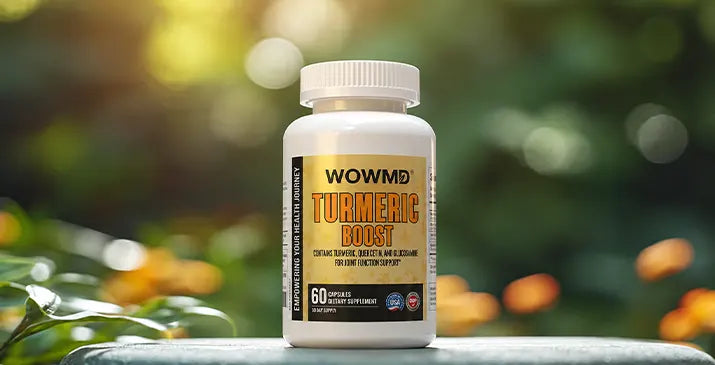
When you are ready to explore a well-formulated daily option, WOWMD Turmeric Boost is built with standardized curcumin content, transparent ingredient sourcing, and GMP-certified manufacturing. Browse the full turmeric collection to find the formula that fits your goals.
Read Also: How to Take Turmeric
How to Integrate Turmeric into Your Wellness Routine
Cooking with turmeric is the gentlest place to start. Stir half a teaspoon into scrambled eggs, blend it into a smoothie, or whisk it into warm oat milk with a crack of black pepper. That pairing matters: piperine does enhance curcumin absorption in your gut, just at a much lower, food-level dose than concentrated supplements use.
Also:
Add a Supplement Strategically
For more concentrated support, choose a formula with a standardized curcumin percentage, avoid mega-dosing, and let your doctor know if you take medications that affect liver metabolism.
Build a Consistent Practice
Take it with a meal that contains healthy fat, since curcumin is fat-soluble. Set a routine around an existing habit so it becomes second nature. Pair it with adequate hydration and fiber-rich foods that support your gut-liver axis. That full-picture consistency, paired with a well-formulated, well-tested product, is what actually earns turmeric a place in your routine.
Buyers' Checklist for Turmeric Supplements
- Check that the label specifies curcuminoid percentage, not just total turmeric milligrams. That number tells you how much active compound you are getting.
- Aim for 500 to 1,500 mg of curcumin extract daily, which is the range used in most clinical research. Start at the lower end to assess tolerance.
- Look for the bioavailability enhancer to be disclosed on the label, so you can weigh the absorption benefit against the added risk profile.
- Choose a product that has been independently tested for purity, potency, and the absence of contaminants, not just one that claims these things on the front of the package.
- Confirm the supplement is made in a GMP-certified, FDA-registered manufacturing facility.
- Opt for a short, recognizable ingredient list with no artificial additives or unnecessary fillers.
- If you have an existing liver condition or take medications that affect liver metabolism, speak to your healthcare provider before starting any turmeric supplement.
Advertisement

 *All individuals are unique. Your results can and will vary.
Conclusion
Turmeric and its active compound curcumin have real biological relevance to liver health. The anti-inflammatory and antioxidant mechanisms are credible, and early research on NAFLD is encouraging. At the same time, the documented cases of liver injury, esoecially with high-dose enhanced-absorption products, are a reason to be deliberate about which formula you choose and how much you take.
Culinary turmeric is safe. Concentrated, enhanced-absorption supplements at high doses are not automatically safe, and for some people they carry genuine risk. Choosing a formula with transparent formulation, standardized curcumin content, and verified manufacturing standards is where careful supplementation starts.
WOWMD's turmeric supplements are expert-recommended, science-backed, and made in the USA to support your daily wellness goals with ingredients that meet a high-quality standard. Explore the collection and find the formula that fits your routine.
>> Support your liver and overall wellness with WOWMD Turmeric Boost -> Shop Now
Individual results may vary. Supplements are not intended to diagnose, treat, cure, or prevent any disease. Consult your healthcare provider before starting any new supplement regimen, particularly if you have an existing liver condition or take medications that affect liver metabolism.
FAQs
This article is for informational purposes only and is not a substitute for professional medical advice, diagnosis, or treatment. Statements made on this website have not been evaluated by the U.S. Food and Drug Administration. Always consult a qualified healthcare professional before making changes to your diet, supplements, medications, or healthcare routine.

References
WOWMD follows strict sourcing guidelines to ensure the accuracy of its content, outlined in our editorial policy. We use only trustworthy sources, including peer-reviewed studies, qualified experts, and information from top institutions.


References
- Hoofnagle JH et al. Liver Injury Associated with Turmeric: A Growing Problem. The American Journal of Medicine, 2023. https://pubmed.ncbi.nlm.nih.gov/36252717/
- Turmeric. NIH National Center for Complementary and Integrative Health. https://www.nccih.nih.gov/health/turmeric
- Younossi ZM et al. Global epidemiology of nonalcoholic fatty liver disease. Hepatology, 2016. https://www.ncbi.nlm.nih.gov/pmc/articles/PMC5413461/
- Shoba G et al. Influence of piperine on the pharmacokinetics of curcumin in animals and human volunteers. Planta Medica, 1998. https://pubmed.ncbi.nlm.nih.gov/9619120/
- Kirkpatrick K. Turmeric and black pepper supplements linked to liver injury. Medical News Today, 2023. https://www.medicalnewstoday.com/articles/turmeric-black-pepper-supplements-linked-liver-injury