

Nitric Oxide Supplements: Benefits, Types, and What to Look For
How Nitric Oxide Works, Supplement Types, and Choosing the Right Formula
 By WOWMD Staff

 Fact Checked
Advertiser Disclosure: WOWMD independently vets all recommended products. If you purchase a featured product, we may be compensated. Learn why you can trust us.


Your cardiovascular system depends on a molecule your body produces in remarkably small quantities. Nitric oxide is a gaseous signaling molecule made naturally in the body, and it plays a central role in relaxing blood vessels and carrying signals between cells across multiple systems.
Nitric oxide is particularly relevant for health-conscious adults focused on cardiovascular wellness, energy, and physical performance, as well as older adults interested in healthy aging and circulation. This guide covers how nitric oxide works, the benefits linked to nitric oxide supplements, the main types and formats, how to choose a quality product, and the side effects and cautions worth understanding before you start.
This article is for informational purposes only and is not a substitute for professional medical advice. Speak with your healthcare provider before starting a nitric oxide supplement, especially if you take blood pressure medication, blood thinners, or erectile dysfunction medication.
TL;DR
- Nitric oxide is a signaling molecule that helps relax and widen blood vessels, supporting healthy blood flow.
- The body makes nitric oxide from the amino acid L-arginine and from dietary nitrates found in foods like beets and leafy greens.
- Nitric oxide production decreases by an estimated 75% between ages 20 and 70.
- Research on nitric oxide supplements is promising in some areas but still inconclusive overall, and doctors do not routinely recommend them.
- Side effects can include headaches, upset stomach, and low blood pressure, and these supplements may interact with blood thinners and erectile dysfunction medication.
- Look for clearly disclosed ingredients, third-party testing, and GMP manufacturing when comparing products.
What Is Nitric Oxide and What Does It Do?
Nitric oxide’s importance reaches well beyond a single body system. According to Oregon State University Extension, nitric oxide is a gaseous molecule made mostly within the lining of the arteries, and its discovery was significant enough that three scientists were awarded the Nobel Prize in physiology or medicine for it in 1998.
University Hospitals explains that the primary role of nitric oxide is to relax the blood vessels, which allows more blood, oxygen, and nutrients to reach vital organs. It also helps protect the endothelium, the layer of cells that lines the blood vessels. University Hospitals notes that too little nitric oxide can lead to endothelial dysfunction, and that people with low levels are at greater risk for high blood pressure and coronary artery disease.
How the Body Makes Nitric Oxide
The body produces nitric oxide through two main routes.
- The L-arginine pathway: The body converts the amino acid L-arginine into nitric oxide through enzyme activity. Medical News Today notes that L-arginine is found naturally in red meat, dairy, poultry, and fish, and that L-citrulline, another precursor, is found in meat, nuts, legumes, and watermelon.
- The nitrate pathway: The body converts dietary nitrates from vegetables into nitric oxide. Oregon State University Extension explains that this pathway needs healthy oral bacteria in saliva to start converting nitrates.
Why Nitric Oxide Levels Matter With Age
Nitric oxide production naturally falls over time. Oregon State University Extension reports that nitric oxide production decreases by 75% between ages 20 and 70, and lists adults over 40 among those at risk of low levels. That decline is one reason nitric oxide support has attracted interest among people focused on healthy aging.
Advertisement


What Are the Benefits of Nitric Oxide Supplements?
Because nitric oxide relaxes blood vessels, it has been a focus of cardiovascular research for decades. The practical question for most people is what supplementing its building blocks may actually do day to day.
Cardiovascular Support
Supporting healthy blood flow is one of the most studied areas of nitric oxide supplementation. When nitric oxide signals the smooth muscle in blood vessel walls to relax, resistance to blood flow drops. Several mechanisms are involved:
- Vasodilation: Nitric oxide signals vascular smooth muscle to relax, widening blood vessels and reducing the resistance the heart works against.
- Endothelial function: The endothelium relies on nitric oxide to regulate vascular tone, and supporting nitric oxide availability may help support endothelial health over time.†
- Circulation efficiency: Wider vessels allow more oxygen-rich blood to reach working muscles, which may help support stamina during physical activity.†
It’s important to keep expectations realistic. Medical News Today reports that research into the efficacy of L-arginine and L-citrulline supplements is inconclusive, and that some of the reported reductions in arterial stiffness and blood pressure come from animal studies rather than human trials. It also notes that doctors do not routinely recommend nitric oxide supplements.
ALSO READ: What Are the Benefits of L-Arginine For Men?
Exercise Performance
Nitric oxide’s effect on blood flow has made it popular with people who train. Medical News Today notes that studies have shown nitric oxide supplements may enhance tolerance to exercise, but mainly in people who did not exercise regularly or only exercised at a moderate rate. The same Medical News Today article adds that research has not shown these supplements help elite athletes.
Sexual Health and Blood Flow
Nitric oxide’s ability to relax blood vessels also applies to the tissue involved in sexual function, and adequate blood flow is needed for erectile function. Banner Health notes that nitric oxide may help men with erectile dysfunction (ED) and improve sexual wellbeing, and Medical News Today reports that some studies have found it may reduce ED in people with mild to moderate symptoms.
The evidence here is more limited than many marketing claims suggest, and results vary between people. Nitric oxide precursors are best viewed as complementary support, not a substitute for medical care.
†These statements have not been evaluated by the Food and Drug Administration. These products are not intended to diagnose, treat, cure, or prevent any disease.
How Can You Boost Nitric Oxide Naturally?
Before turning to supplements, it helps to know that everyday habits have a real effect on your nitric oxide levels.
- Eat nitrate-rich vegetables: WebMD highlights beets, kale, spinach, and arugula as rich in the nitrates and nitrites your body converts into nitric oxide, and lists garlic and melon as average sources. University Hospitals adds citrus fruits, cabbage, cauliflower, carrots, broccoli, nuts, and seeds.
- Cook vegetables gently: Oregon State University Extension notes that the nitrate content of foods can be reduced by 60% to 80% by boiling or dehydrating them, so raw, steamed, or lightly cooked vegetables are a better choice.
- Go easy on antibacterial mouthwash: Because the nitrate pathway depends on oral bacteria, Oregon State University Extension reports that antibacterial mouthwash can decrease nitric oxide production by at least a third, and by up to 90%.
- Exercise regularly: University Hospitals notes that regular exercise helps improve nitric oxide production.
- Try humming: In one of the more surprising findings, Oregon State University Extension reports that nasal humming can increase nitric oxide production 15-fold compared with quiet exhalation.
Advertisement


What Types of Nitric Oxide Supplements Are Available?
The range of nitric oxide products has grown considerably, and the formats reflect different preferences, routines, and fitness goals. Understanding the core options helps you match a supplement to your routine before comparing specific products.
Capsules and Tablets
Capsules are the most familiar format for anyone who already takes a daily supplement. They deliver a pre-measured dose, need no mixing, and are easy to take with water before a workout or a meal. Many nitric oxide capsules use L-arginine, L-citrulline, or beetroot extract as their main active ingredients. Tablets work the same way, although some use binders that can affect how quickly the ingredients are absorbed.
Powders
Powders dissolve in water and are popular with people who already mix pre-workout or recovery drinks. They allow flexible dosing and are often combined with other performance ingredients such as creatine, beta-alanine, or electrolytes. Any difference in absorption between powders and capsules depends more on the specific ingredient and formulation than on the format itself.
Chewables and Gummies
Chewables and gummies appeal to people who prefer not to swallow capsules and are usually flavored. They often carry lower doses per serving, so checking the milligram amount of active ingredient per piece matters more here than with other formats.
Liquid Drops and Shots
Liquid concentrates and ready-to-drink shots are designed for convenience around workouts. They often cost more per serving than capsules or powders and may contain added sugars or flavorings, so check the label.
Nitric Oxide Supplements at a Glance
|
Ingredient or Format |
How It Works |
What to Know |
|
L-arginine |
Converted directly into nitric oxide |
Research is inconclusive; may cause stomach upset at higher doses |
|
L-citrulline |
Converted into L-arginine, then nitric oxide |
May be more effective than L-arginine, according to Banner Health |
|
Beetroot and dietary nitrates |
Converted to nitric oxide via oral bacteria |
Antibacterial mouthwash can blunt the effect |
|
Capsules and tablets |
Pre-measured dose, no mixing |
Easy to take daily |
|
Powders |
Flexible dosing, often combined with other ingredients |
Check for caffeine and other stimulants |
|
Chewables and liquids |
Convenient and flavored |
Often lower doses or added sugars |
†These statements have not been evaluated by the Food and Drug Administration. These products are not intended to diagnose, treat, cure, or prevent any disease.
How Do You Choose the Right Nitric Oxide Supplement?
Reading the label carefully is one of the most practical steps you can take before buying a nitric oxide product. Different ingredients work through different pathways, with different doses and suitability for different goals.
ALSO READ: 5 Best Nitric Oxide Supplements of 2026: Expert Reviewed
Know Your Pathway First
The ingredient determines how a supplement works. L-arginine is converted directly into nitric oxide, while L-citrulline supports the same pathway and Banner Health notes it may be more effective than L-arginine. Beetroot-based products supply dietary nitrates, which convert through a different route involving oral bacteria. Knowing which pathway a product uses helps you judge whether it matches your goal, whether that’s circulation, exercise endurance, or general wellness.
It’s also worth putting dosing in context. Medical News Today notes that, without supplements, a person typically consumes about 5 grams of L-arginine per day through food.
Read the Label for Dosage and Form
Dosage transparency is a concrete quality signal. A well-formulated product states the exact milligram amount of each active ingredient rather than hiding them inside a proprietary blend. Look for:
- Active ingredient disclosure: Each key ingredient should have its own milligram listing.
- Serving size clarity: Confirm whether the dose is per capsule or per full serving.
- Third-party testing: Banner Health recommends choosing supplements that meet third-party quality and purity standards.
- Stimulant content: Many pre-workout products combine nitric oxide ingredients with caffeine, so check the amount if you’re sensitive to stimulants.
- Clean formulation: Labels free of artificial colors and unnecessary fillers reflect cleaner manufacturing.
Evaluate Quality Markers
Manufacturing standards are a useful proxy for quality when you can’t assess an ingredient directly. Supplements made in a GMP-certified (Good Manufacturing Practice) facility are produced under standards designed for consistency, purity, and potency. A money-back guarantee on a first purchase can also reduce the financial risk of trying something new.
What Are the Side Effects of Nitric Oxide Supplements?
Most healthy adults tolerate nitric oxide supplements well. Banner Health notes that most men don’t experience side effects, but some effects do appear, and certain people need to take extra care.
Commonly Reported Side Effects
Banner Health lists the following possible side effects:
- Upset stomach, which is more likely at higher doses or on an empty stomach
- Headaches, which can happen as blood vessels widen
- Low blood pressure, which may cause lightheadedness or dizziness
- Increased bleeding risk
- Blood vessel damage with long-term use
Starting at a lower dose and taking supplements with food can reduce the likelihood of some of these reactions.
Who Should Exercise Caution
Certain groups should speak with a healthcare provider before using nitric oxide supplements.
- People taking blood thinners or erectile dysfunction medication: Banner Health lists interactions with both.
- People with low blood pressure, heart disease, or other underlying health conditions: Banner Health advises caution for these groups.
- People who have had a heart attack: Medical News Today reports that a 2006 study found people taking L-arginine after a heart attack had a higher chance of death, repeat heart attack, and hospitalization.
- People taking blood pressure medication: Combining blood vessel-relaxing supplements with these medications may lower blood pressure further than intended.
- Pregnant or breastfeeding people: The safety of these supplements has not been well established for these groups.
Speaking With a Healthcare Professional
Consulting a qualified healthcare professional before starting any new supplement is the best way to avoid unexpected interactions. This is especially important if you manage a chronic condition, take prescription medications, or have a history of heart disease. A clinician can review your medications, check your blood pressure, and help you decide whether a nitric oxide supplement makes sense for you.
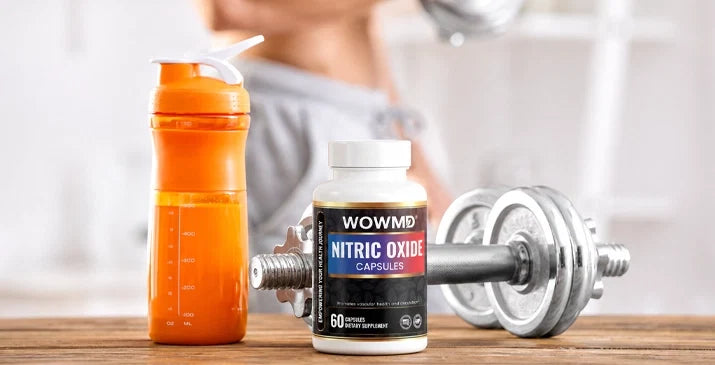
Top Pick: WOWMD Nitric Oxide
If you and your healthcare provider decide that a nitric oxide supplement fits your routine, the option below brings the arginine and citrulline pathways together in one daily capsule, with every ingredient amount clearly listed on the label.
WOWMD Nitric Oxide: Best for Daily Circulation Support

Pros:
- 400 mg L-citrulline DL-malate, 350 mg L-arginine hydrochloride, and 50 mg L-arginine alpha-ketoglutarate per serving
- Every active ingredient is listed with its own milligram amount, with no proprietary blend
- Gluten-free, non-GMO, vegan, and vegetarian, with a simple vegetable capsule
- Made in the USA in a GMP facility with third-party lab-tested ingredients
- 60-day money-back guarantee for first-time single-bottle purchases
Cons:
- Not suitable for anyone under 18, and pregnant or nursing people should consult a healthcare professional first
- People taking blood pressure medication or blood thinners should check with a provider before use
Key ingredients: L-citrulline DL-malate (400 mg), L-arginine hydrochloride (350 mg), L-arginine alpha-ketoglutarate (50 mg) | Format: 60 capsules (30 servings) | Rating: 4.8/5 from 540 verified reviews
WOWMD Nitric Oxide is formulated to support healthy circulation, muscle function, and endurance.† Take two capsules daily with 6 to 8 oz of water, preferably before a workout, or as directed by your healthcare provider. The only other ingredients are cellulose (the vegetable capsule) and brown rice flour. Mild side effects may include headaches, dizziness, or digestive discomfort, so do not exceed the recommended dose.
"I took this before workouts and liked how simple the process was. The capsules were easy to swallow, and the formula felt clean and straightforward." - Hannah F.
†These statements have not been evaluated by the Food and Drug Administration. These products are not intended to diagnose, treat, cure, or prevent any disease. Individual results may vary.
Advertisement


Final Thoughts
Nitric oxide plays a central role in relaxing blood vessels and supporting healthy circulation, and natural production declines significantly with age. You can support your levels by eating plenty of nitrate-rich vegetables, cooking them gently, going easy on antibacterial mouthwash, and staying active.
Nitric oxide supplements may offer additional support for some people, particularly around exercise, but the research is still developing, and they are not right for everyone. Choose products with clearly disclosed ingredients and third-party testing, and talk with your healthcare provider before starting, especially if you take heart, blood pressure, blood-thinning, or erectile dysfunction medication. If a supplement fits your plan, WOWMD Nitric Oxide offers a transparent, two-capsule daily formula made in the USA.
FAQs
This article is for informational purposes only and is not a substitute for professional medical advice, diagnosis, or treatment. Statements made on this website have not been evaluated by the U.S. Food and Drug Administration. Always consult a qualified healthcare professional before making changes to your diet, supplements, medications, or healthcare routine.