

Methylene Blue: What the Research Says
Learn what research says about methylene blue its clinical uses, how it may work, reported side effects, and important safety considerations.
 By WOWMD Staff

 Fact Checked
Advertiser Disclosure: WOWMD independently vets all recommended products. If you purchase a featured product, we may be compensated. Learn why you can trust us.


Methylene blue was first synthesized in 1876 as a textile dye. Researchers recognized its importance in clinical medicine, and it went on to become a diagnostic stain used in surgery and, ultimately, an FDA-approved treatment for methemoglobinemia — a blood disorder in which red blood cells lose the ability to carry oxygen effectively.
More recently, attention has focused on how methylene blue may affect cells, especially the mitochondria, which help produce energy inside your cells. Early research suggests it may play a role in cellular energy production and may have antioxidant properties, though more evidence is needed before firm conclusions can be drawn.
This guide covers what methylene blue is, how it works, what the science has actually found, the safety picture, and how to approach it practically if you are considering it as part of your routine.
TL;DR
- Pharmaceutical methylene blue is FDA-approved for methemoglobinemia and has established uses in surgery and several off-label clinical applications. That approval applies to the prescription drug, not to any dietary supplement.
- Research describes it as an electron carrier in the mitochondrial electron transport chain, and studies have examined its relationship to cellular energy production and oxidative by products.
- A 2016 randomized, double-blind human trial reported that a single low oral dose was associated with a small improvement in memory retrieval scores and with changes in brain activity in attention-related regions.
- Most findings come from animal studies. Human evidence is early and limited.
- Methylene blue carries serious drug interaction risks with serotonergic medications and is contraindicated for people with G6PD deficiency. Speak with your doctor before considering it.
What Methylene Blue Is and Why People Are Talking About It
Methylene blue has a longer clinical history than most compounds currently discussed in the wellness space. For decades, it has been used in emergency medicine as a first-line treatment for methemoglobinemia and as a precision dye in surgical procedures to help surgeons accurately identify tissue boundaries.
It is also used off-label in clinical settings for vasoplegic syndrome, a form of vascular shock that can occur after cardiac surgery, and for ifosfamide-induced encephalopathy, a serious neurological complication associated with certain chemotherapy drugs.
So why is it attracting fresh attention now? First, methylene blue crosses the blood-brain barrier, which most compounds cannot. That ability to reach central nervous system tissue directly makes it an interesting candidate for neurological applications. Second, it is a hormetic compound, that is, low and high doses produce different, and sometimes opposite, effects. This helps to understand both its potential and its risks.
Advertisement


How Methylene Blue Works at the Cellular Level
To understand why researchers are studying methylene blue for brain health, it helps to start with a basic fact about the brain itself.
Your brain uses roughly 20 percent of your body's total oxygen supply despite accounting for only about 2 percent of your body weight. It is one of the most energy-demanding organs in the body, and it relies on mitochondria — the energy-producing structures inside your cells — to meet that demand.
Mitochondrial efficiency naturally declines with age, which may affect how well your cells produce energy and support everyday brain functions such as mental sharpness, recall, and focus.
This is where methylene blue becomes relevant. Mitochondria generate energy through a process called the electron transport chain, which produces adenosine triphosphate (ATP), the molecule your body uses as cellular fuel. Laboratory research describes methylene blue as able to act as an electron carrier within this pathway.
Based on that mechanism, researchers have proposed that it may play a role in cellular energy production when parts of the process become less efficient. This remains a research hypothesis, and its effects in healthy adults have not been established.
"The research in animals suggests that methylene blue exerts a protective effect by repairing faulty cellular respiration — the process by which cells create energy — and reducing the production of harmful free radicals that can kill neurons," said Dr. Francisco Gonzalez-Lima, Ph.D., Professor of Psychology, Pharmacology, and Toxicology at the University of Texas at Austin, whose laboratory was the first to map methylene blue's effects in the human brain.
Beyond energy production, researchers have also examined a possible antioxidant role. Most antioxidants are consumed once they neutralize a free radical. Laboratory studies describe methylene blue as able to cycle between oxidized and reduced states, which may allow it to act repeatedly rather than be used up in a single reaction. This has been observed in laboratory settings and has not been established as a benefit in healthy adults.
What the Research Shows on Cognition and Memory
Most of the evidence on methylene blue's cognitive effects comes from animal studies, where results have been consistent across a range of memory and neuroprotection models. In these studies, low doses have been linked to improved memory consolidation and retention, along with increased metabolic activity in regions like the hippocampus and prefrontal cortex – areas central to memory and focus.
The human evidence is more limited, though. In 2016, Dr Gonzalez-Lima and colleagues at the University of Texas conducted a randomized, placebo-controlled trial on 26 healthy adults. Those given a single low oral dose showed a 7% improvement in correct responses during memory retrieval compared to the placebo group.
Brain imaging also showed that methylene blue increased activity in the parts of the brain involved in focus, attention, and working memory during cognitive tasks.
"This work certainly provides a foundation for future trials of methylene blue in healthy aging, cognitive impairment, dementia, and other conditions that might benefit from drug-induced memory enhancement," said Dr. Timothy Q. Duong, co-investigator on the study, following its publication.
At the same time, it was a small study measuring outcomes from a single dose. It does not confirm that regular supplementation yields lasting cognitive benefits in healthy adults, and larger human trials are still needed to draw that conclusion with confidence.
Researchers are also studying methylene blue derivatives for their potential role in the treatment of Alzheimer's disease. Phase 3 trials by TauRx Therapeutics of a derivative called LMTX suggested the compound might slow cognitive decline by inhibiting the buildup of tau protein, which is closely linked to Alzheimer's pathology. However, the larger Phase 3 trials didn't show any progress for broader patient groups.
That said, there's still a lot more research to be done in this area. Always consult your physician before using methylene blue, especially for cognitive or neurological purposes.
Advertisement


Medical and Diagnostic Uses
Before getting into wellness applications, you need to understand how much clinical ground methylene blue already covers. In surgical environments, methylene blue has been a standard diagnostic dye for decades.
It is used in sentinel lymph node mapping, urological procedures, and parathyroid localization to help surgeons accurately identify anatomical boundaries. None of this is experimental. It is part of standard practice in many hospitals globally. Researchers have also studied methylene blue for its ability to inactivate certain pathogens in blood products.
Safety, Interactions, and Who Should Not Use It
Methylene blue's safety profile depends on:
- Dose
- Purity
- Individual health status
- Medication history
Reported tolerability varies by individual, dose, and health status. Higher doses are associated with a greater risk of adverse effects. Only a healthcare provider can assess whether any dose is appropriate for you.
The most important concern is serotonin syndrome. Methylene blue functions as a monoamine oxidase inhibitor (MAOI). It inhibits an enzyme involved in the breakdown of serotonin in the brain. When it is combined with serotonergic medications, serotonin can accumulate to dangerous levels, causing agitation, muscle rigidity, and in severe cases, high fever and seizures.
The Anesthesia Patient Safety Foundation has documented this risk in detail, following multiple reported cases in clinical settings. If you take any antidepressant or serotonergic medication, do not use methylene blue without speaking to your prescriber first.
"Because it is an MAOI (Monoamine Oxidase Inhibitor), I recommend that people not take it on their own without discussing it with their healthcare provider," said Dr. Wald of Baptist Health. "Follow the guidelines of your healthcare providers for dosing."
G6PD deficiency is another contraindication. This is a genetic enzyme disorder that affects how red blood cells handle oxidative stress. Methylene blue has mild pro-oxidant properties, and in people with G6PD deficiency, those properties can trigger hemolytic anemia — the breakdown of red blood cells.
Also:
- Pregnant and breastfeeding individuals
- People with kidney impairment (since methylene blue is renally cleared and can accumulate with reduced kidney function)
- Anyone taking medications metabolized by the cytochrome P450 system, such as warfarin, cyclosporine, and phenytoin
Also, because methylene blue is hormetic, excessive doses can paradoxically cause methemoglobinemia, the same blood disorder that clinical doses are used to treat. This is why you need to consult a physician first before using, especially for the doses.
Reported side effects include blue-tinted skin or urine, nausea, headache, and dizziness. Contact your healthcare provider if any of these occur.
Why Purity and Sourcing Matter
With most supplements, purity is a quality question. With methylene blue, it is a safety question. Industrial-grade and laboratory-grade versions of the compound contain impurities that are not appropriate for internal human use.
Pharmaceutical-grade purity, sometimes called USP grade, is the standard referenced for material intended for oral use. Purity grade addresses raw material quality only. It does not indicate that a product has been reviewed or approved for any use.
So, if you are evaluating a product containing methylene blue, always look for clear purity documentation, third-party testing, and a Certificate of Analysis before buying. Our guide to the best methylene blue supplements breaks down how current options compare on these criteria.
Where WOWMD Methylene Blue Drops Fit In
The research discussed above involved pharmaceutical preparations under controlled study conditions. It does not describe the effects of any dietary supplement, and no finding above should be read as a claim about the products below.
For readers who have already spoken with their healthcare provider and confirmed no contraindications, WOWMD Methylene Blue Drops are formulated with pharmaceutical-grade material in a liquid format. Serving size and content are listed on the product label, and a Certificate of Analysis is available on request. Any decision about whether this product is appropriate for you should come from your healthcare provider, not from this article.
The Neuro Balance Stack bundles Methylene Blue Drops with Lion's Mane Mushroom and Reishi Relax Gummies. These formulas are intended to support cellular energy, focus, and relaxation as part of a daily routine. Individual responses may vary, and results cannot be predicted for any person.
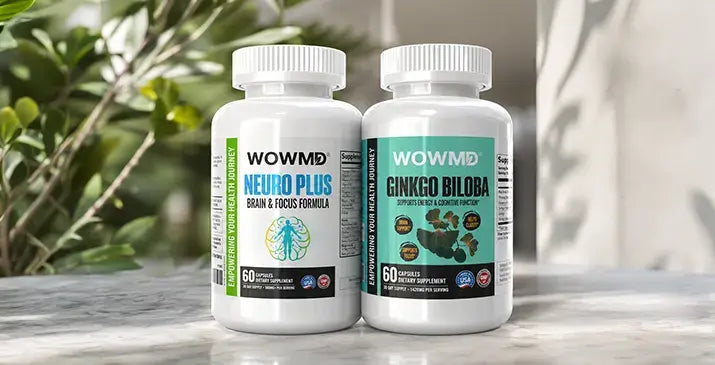
For readers exploring brain support supplements more broadly, Neuro Plus Brain & Focus Formula contains ingredients traditionally used to support brain health and focus. It does not contain methylene blue. If you take prescription medication, talk with your healthcare provider before using any supplement.
All WOWMD formulas are manufactured in a GMP-certified facility in the USA that is registered with the FDA. Facility registration is a requirement for manufacturers and does not mean the FDA has evaluated or approved any product. Every formula is non-GMO, free of artificial additives, and covered by a 60-day money-back guarantee. Refund terms and conditions are listed on the WOWMD website.
Advertisement


These statements have not been evaluated by the Food and Drug Administration. These products are not intended to diagnose, treat, cure, or prevent any disease.
FAQs
This article is for informational purposes only and is not a substitute for professional medical advice, diagnosis, or treatment. Statements made on this website have not been evaluated by the U.S. Food and Drug Administration. Always consult a qualified healthcare professional before making changes to your diet, supplements, medications, or healthcare routine.

References
WOWMD follows strict sourcing guidelines to ensure the accuracy of its content, outlined in our editorial policy. We use only trustworthy sources, including peer-reviewed studies, qualified experts, and information from top institutions.


- Mitochondria as a target for neuroprotection: role of methylene blue and photobiomodulation: https://pmc.ncbi.nlm.nih.gov/articles/PMC7262767/
- From Mitochondrial Function to Neuroprotection – An Emerging Role for Methylene Blue: https://pmc.ncbi.nlm.nih.gov/articles/PMC5826781/
- What is methylene blue, and what is it used for?: https://www.medicalnewstoday.com/articles/methylene-blue-benefits
- Multimodal Randomized Functional MR Imaging of the Effects of Methylene Blue in the Human Brain: https://pubmed.ncbi.nlm.nih.gov/27351678/