

CoQ10 for Heart Health: Benefits, Safety, and How to Take It
Learn how CoQ10 may support heart health, energy, and antioxidant protection, plus its potential benefits for statin users and key safety tips.
 By WOWMD Staff

 Fact Checked
Advertiser Disclosure: WOWMD independently vets all recommended products. If you purchase a featured product, we may be compensated. Learn why you can trust us.
Table of contents
- What is CoQ10?
- CoQ10’s Role in Heart Health
- Comparison Table
- Benefits of CoQ10 Supplementation
- CoQ10 for Statin Users
- Antioxidant Benefits of CoQ10
- How Much CoQ10 Should You Take With Statins?
- Which Foods Are High in CoQ10?
- How Much CoQ10 Should You Take Per Day?
- CoQ10 and Blood Pressure
- Can CoQ10 Cause Heart Palpitations
- Side Effects & Precautions
- Conclusion
- FAQs

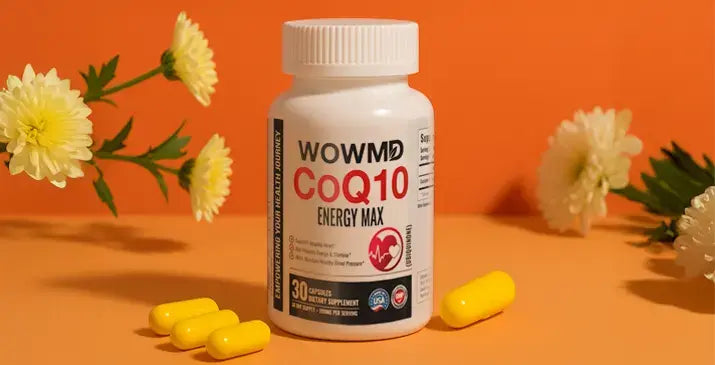
Your heart beats over 100,000 times daily, requiring tremendous energy to sustain this vital function. At the cellular level, a remarkable compound called Coenzyme Q-10 (CoQ10) serves as the powerhouse behind this energy production.
This naturally occurring substance helps cells produce energy and also works as an antioxidant that may help protect cells from everyday oxidative stress. However, our bodies naturally produce less CoQ10 as we age, with levels potentially dropping by about half between our twenties and eighties.
This decline may affect energy production at the cellular level, including in the heart, one of the body’s most energy-demanding organs. Understanding CoQ10’s role in normal heart function can be helpful as we age, especially for people who take medicines that may affect CoQ10 levels.
Disclaimer: This article is for informational and educational purposes only and is not intended as medical advice. It is not a substitute for diagnosis or treatment from a qualified healthcare provider. Always talk to your doctor before starting any supplement, especially if you are pregnant or breastfeeding, have a heart condition, or take prescription medicines. Never stop or change a prescribed medicine without your doctor’s guidance.
TL;DR
- CoQ10 helps the heart make energy and acts as an antioxidant that may help protect cells from oxidative stress. Levels naturally decline with age and may be further reduced by statins.
- Who may consider it: adults 40+ looking to support normal heart function and energy, and people taking statins who have discussed it with their doctor. See our guide: How Much Coenzyme Q10 Should You Take Per Day?
- Safety: generally well tolerated; watch for stomach upset, mild insomnia at higher doses, blood pressure changes when taken with blood pressure medicines, and a possible warfarin interaction. Always talk to your healthcare provider before starting.
What Is CoQ10 and How Does It Help the Heart?
CoQ10 stands for Coenzyme Q-10. It’s a substance our bodies make. This compound is found throughout the body, especially in organs that use the most energy, such as the heart. Our bodies need a lot of energy to work well.
CoQ10 helps them make this energy [1]. Our cells use it to produce Adenosine Triphosphate (ATP). Think of ATP as the power that keeps every cell running.
As we get older, we start having less CoQ10 in our bodies. We have lots of it when we are young, with levels peaking at about 20 years old [2]. By the time someone is 80, their CoQ10 levels can drop by half.
Advertisement


This natural reduction may affect energy production and, over time, may influence overall energy and vitality. Although CoQ10 is present in some foods such as beef, chicken, and fatty fish, the amounts are usually too small to significantly replenish declining levels.
For some adults, including people taking medications like statins that may lower CoQ10 levels, a supplement can be a practical way to help maintain healthy CoQ10 levels. Talk to your healthcare provider first.
Supplementing with CoQ10 may help maintain cellular energy production and support cellular health, contributing to overall well-being as we grow older.
Do CoQ10 Levels Drop With Age?
Now that we know what CoQ10 is, let’s consider its role in normal heart function. The heart needs a lot of energy to pump blood all over the body. This is where CoQ10 comes into play: it helps heart cells produce the energy they need.
With advancing age, our bodies make less CoQ10, especially after 65. Lower CoQ10 levels may affect how efficiently cells, including heart cells, produce energy [3]. People taking statins may also have lower CoQ10 levels and can ask their doctor whether a supplement is right for them. t.
In a study by Cochrane Library, It has been shown that It helps to lower blood pressure and help with side effects from statins [4]. In patients with severe heart failure, CoQ10 supplementation has been shown to reduce the risk of death.
Because the body makes less CoQ10 with age, a daily supplement may help support healthy CoQ10 levels and normal cardiovascular function as part of a balanced diet and active lifestyle.
Comparison Table
| Topic | How It May Help, Who | May Consider It | Found In |
|---|---|---|---|
| CoQ10 | May help support normal heart function and cellular energy, especially in aging adults | Adults looking to support cardiovascular health | Organ meats, fish, supplements |
| CoQ10 & Heart Health | Helps heart cells produce the energy needed for normal function | Adults looking to support heart health | CoQ10 supplements, fish, and organ meats |
| CoQ10 & Aging | CoQ10 levels naturally decline with age, and a supplement may help support healthy CoQ10 levels | Adults looking to support heart health as they age | CoQ10 supplements, organ meats |
| CoQ10 & Statins | Statins may lower CoQ10 levels, and a supplement may help support them. Not intended to treat statin side effects | Statin users, with their doctor’s approval | CoQ10 supplements |
Who May Benefit Most From CoQ10?
Think of CoQ10 as one of the parts that helps your cells’ batteries work. It helps create the energy heart cells use every day, and a supplement may help support healthy CoQ10 levels as natural production declines.
What makes CoQ10 interesting is that it plays more than one role. Along with supporting energy production, it acts as an antioxidant that may help protect cells from everyday oxidative stress that can build up over the years. These potential benefits of Coenzyme Q10 make it a popular choice for supporting heart health.
If you take a statin for cholesterol, these medicines may lower your body’s CoQ10 levels. Ask your doctor whether a CoQ10 supplement makes sense for you, and do not stop or change your statin without medical advice.
Supplementing isn't just helpful - it's essential. There are studies to suggest that taking it before surgery since it seems to help patients recover faster.
And as we get older? Our natural CoQ10 levels drop. While that’s just part of aging, supplementing may help support normal heart function as part of a healthy lifestyle.
Read More: The Best Magnesium for Heart Health: What Experts Actually Recommend
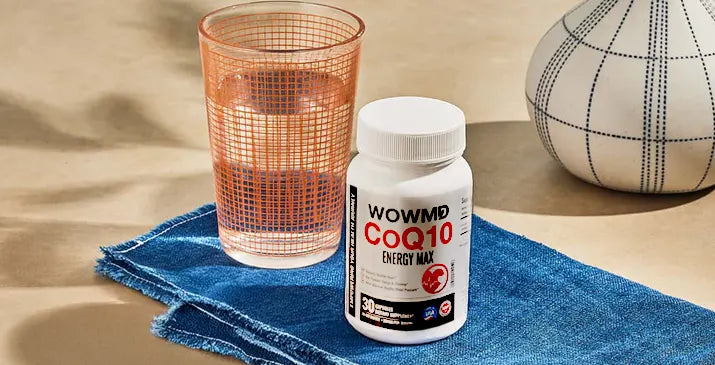
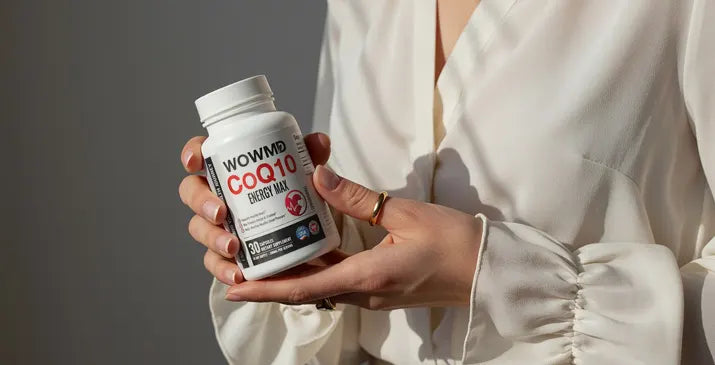
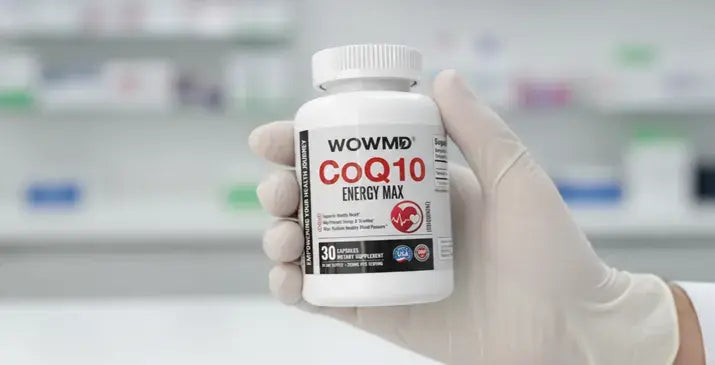
Our client shares how WOWMD CoQ10 Max Supplement has made a significant difference in her energy, heart health, and general wellness. Tune in to hear her full review and see the results for yourself!
CoQ10 for Individuals on Statin Medications
Some people take statin medications to lower cholesterol. These drugs can lower CoQ10 levels in the body. A CoQ10 supplements may help support healthy CoQ10 levels in people who use statins.
However, CoQ10 is not intended to treat or prevent statin side effects, and experiences vary from person to person.
In 2022, a big study found that CoQ10 does not always fix muscle pain caused by statins [5]. Though this study did not find any benefits, some people say it helps with their statin-related muscle pain. It is essential to talk to your healthcare provider before starting CoQ10.
This way, they can watch out for any problems and make sure it's safe for you.
Advertisement


Antioxidant Properties of CoQ10
CoQ10 has antioxidant properties. It may help neutralize free radicals, harmful molecules that can damage cells. CoQ10 may also help support the body’s own antioxidants systems, such as superoxide dismutase.
This may help reduce oxidative stress on cells [6]. CoQ10 may also help support healthy blood vessel function and normal circulation in healthy adults.
Dr. Ryan Peterson
According to Dr. Ryan Peterson, a board-certified physician in anesthesiology and pain medicine,
"CoQ10 acts as a powerful antioxidant, protecting heart cells from oxidative stress and damage, which can otherwise lead to inflammation and cardiovascular problems."

When taken consistently alongside a balanced diet and regular activity, CoQ10 may help support long-term heart health. If you have diabetes or a higher risk of heart disease, talk to your doctor about the right plan for you. [7]
John
"CoQ10 is an essential supplement for many people, as it boosts energy levels and helps prevent heart palpitations. It’s easy to swallow, making it convenient for daily use. The supplement provides great value for the price. With regular use, it supports overall heart health and vitality. A must-have for anyone looking to improve their wellness routine."
How Much CoQ10 Should You Take With Statins?
If you take a statin, you may have heard that it can lower your CoQ10 levels. That part is true. Statins bring down cholesterol by slowing a process in the body, and your body uses that same process to make CoQ10. So when the medicine slows one thing down, it slows the other one down too. This is what people mean when they talk about statin CoQ10 depletion.
That is why so many people look up statins with coenzyme Q10. They want to know if a supplement can help support their CoQ10 levels while they take their medicine.
There is no set dose, because CoQ10 is a supplement and not a drug your doctor writes out for you, so the numbers on labels are all over the place. That is also why people keep asking how much coenzyme Q10 they should take with statins and never get one clear answer.
Many people are curious about CoQ10 because some statin users experience muscle aches. Some people say they feel better with CoQ10, while others notice no change. CoQ10 is not intended to treat statin side effects, so no one can promise it will work for you. Always report muscle pain to your doctor.
But one thing is clear. CoQ10 does not take the place of your statin, and you should never swap one for the other. If you want to try it, ask your doctor first. They can look at everything you take and tell you if it fits, and what dose makes sense for you.
Which Foods Are High in CoQ10?
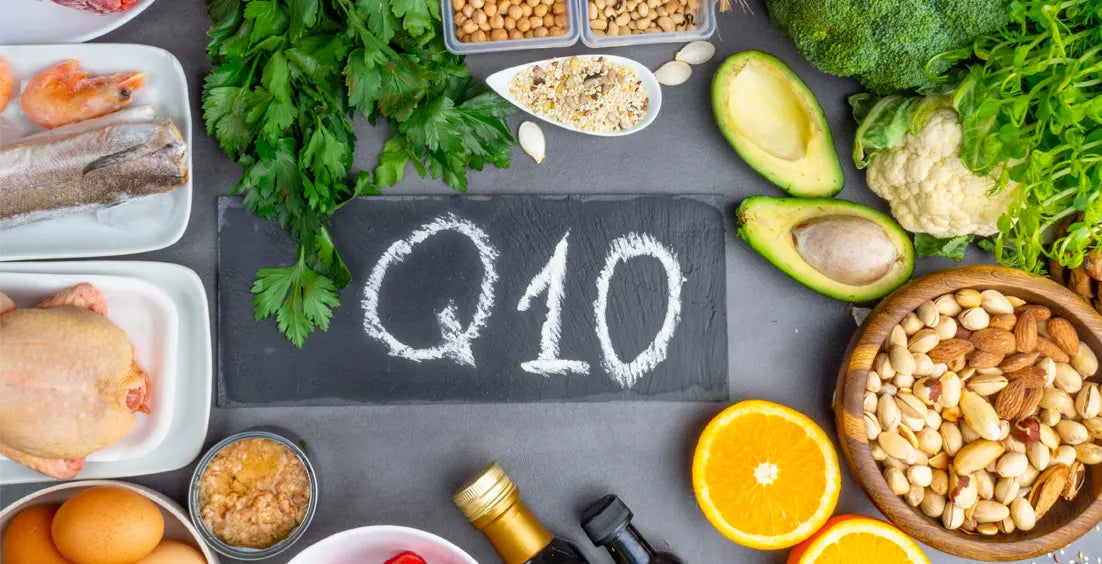
Your body makes most of its own CoQ10. Food only adds a little on top, usually a few milligrams a day. Even so, it helps to know what foods have coenzyme Q10 in them, especially if you are eating with your heart in mind.
Organ meats are the richest source by far. Heart, liver, and kidney have more CoQ10 than anything else on your plate. Not everyday food for most people, but good to know about.
Oily fish come next, and they are much easier to eat through the week. Sardines, mackerel, herring, and trout all give you a good amount. Normal meat like beef, pork and chicken has some too, just less than organ meat or oily fish.
If you eat mostly plants, your best coenzyme Q10 food sources are soybeans, lentils, peanuts, pistachios, and sesame seeds. Soybean and canola oil have some as well, and spinach, broccoli and cauliflower add a small amount.
One thing is worth knowing, though. The amount you get from coenzyme Q10 in foods is nowhere close to what heart studies use, which is usually 100 mg to 200 mg a day. You would have to eat pounds of sardines to get there. So eat these foods for all the other good they do, and do not count on them to lift your CoQ10 by much.
How Much CoQ10 Should You Take Per Day?
There is no set daily amount for CoQ10, because it is a supplement and not a drug. What we do have are the amounts used in studies, and those are a good place to start.
Look at what is on the shelf, and you will see anything from 30 mg to 600 mg in one capsule. That is a wide gap, and it makes picking one confusing. Most heart studies fall in the middle, usually a coenzyme Q10 100 mg to 200 mg dose each day, with a few going up to 400 mg.
When people take more than that, they usually split it. So 200 mg in the morning and 200 mg later, instead of one big 400 mg capsule. Splitting it may help your body take in more of it.
How you take it matters too. CoQ10 needs fat to be absorbed well, so take it with a meal that has some fat in it. On an empty stomach, your body may absorb less of it. This is also why the best time to take coenzyme Q10 for most people is with breakfast or dinner rather than between meals.
And more is not better. Bigger doses cost more, and past a point your body just passes the extra out. If you take heart medicine or a blood thinner, ask your doctor how much coenzyme Q10 per day is right for you before you start.
CoQ10 and Blood Pressure: What to Know
It might, but only a little, and the studies do not fully agree.
CoQ10 is not intended to lower blood pressure or to treat high blood pressure. Results are mixed, and any effect appears to be small and does not happen for everyone.
People often ask if they can use coenzyme Q10 instead of blood pressure medicine, and the answer is no. It is not a swap for your medicine, and you should never stop or change a prescribed medicine without your doctor’s guidance.
Time matters as well. In the studies that did see a change, it took about eight to twelve weeks of daily use. You would not feel anything in the first few days.
There is one safety point to keep in mind. In some people, CoQ10 may add to the effect of blood pressure medicine and push readings lower than expected.
Can CoQ10 Cause Heart Palpitations or Change Your Heart Rate?
This is one of the questions people ask most about CoQ10, so it is worth a clear answer.
CoQ10 is not a known cause of heart palpitations. It is not on the usual side effect list, and most people take it with no change to their heartbeat at all. So if you are wondering, can coenzyme Q10 cause heart palpitations, the answer for most people is no.
Even so, a few people do say they get a fluttering feeling in the chest, or trouble sleeping, after they start. It is hard to know if the supplement did it, because palpitations come from lots of things. Caffeine, stress, poor sleep, thyroid problems, and other medicines can all bring them on.
People also ask it the other way round, whether CoQ10 helps with heart palpitations. There is no clear proof either way, and CoQ10 is not intended to treat or prevent heart palpitations.
On heart rate, there is no good proof that CoQ10 raises it or lowers it. If your resting heart rate has changed since you started, look at those other causes first before you blame the supplement.
The main thing to take away is simple. Palpitations are not something to sort out from an article. If your heart is racing, skipping beats or pounding, and especially if you feel dizzy or short of breath with it, call your doctor. And if it started right after you began taking CoQ10, stop taking it and tell them that as well.
Side Effects, Interactions & How to Take It
CoQ10 supplements may help support heart health and are generally well tolerated. However, some people might have side effects.
- Stomach issues - Some may get an upset stomach, feel like throwing up, or have diarrhea.
- Loss of appetite - A few people might not feel hungry after taking CoQ10.
- Mild insomnia - Taking doses of 100 mg/d or more could make it hard for some to sleep.
- Blood pressure changes - CoQ10 may affect blood pressure, especially when taken with blood pressure medicines. If you have low blood pressure or take blood pressure medicine, check your readings regularly and talk to your doctor.
- Medication interactions - It can interact with certain medications, particularly blood thinners.
- Cancer treatment effects - It might change how cancer drugs work in the body.
- Pregnancy considerations - If you are pregnant, breastfeeding, or planning to become pregnant, do not use CoQ10 without your healthcare provider’s approval.
Final Thoughts
CoQ10 plays an important role in normal heart function by helping heart cells produce energy, allowing them to keep up with the constant demands of pumping blood. Beyond just providing energy, CoQ10 also acts as an antioxidant that may help protect cells from oxidative stress that can build up over time.
And here’s an important fact—as we get older, our natural levels of CoQ10 gradually decrease, making it worth thinking about how to support healthy levels.
For people taking statins, CoQ10 may be worth discussing with a doctor. Statins can lower the body’s natural CoQ10, and a supplement may help support healthy CoQ10 levels. CoQ10 does not replace any prescribed medicine.
Adding CoQ10 to your daily routine may be a helpful step in supporting normal heart function, especially as you age. By helping fuel cellular energy production and providing antioxidant support, CoQ10 may help support a healthy cardiovascular system.
Whether you want to support healthy CoQ10 levels as you age or you take a medicine that may lower them, CoQ10 may be a beneficial addition to support your heart’s long-term health. Talk to your healthcare provider to see if it’s right for you.
Advertisement


FAQs
This article is for informational purposes only and is not a substitute for professional medical advice, diagnosis, or treatment. Statements made on this website have not been evaluated by the U.S. Food and Drug Administration. Always consult a qualified healthcare professional before making changes to your diet, supplements, medications, or healthcare routine.
Our Top Picks

Berberine Essentials

Resveratrol

References
WOWMD follows strict sourcing guidelines to ensure the accuracy of its content, outlined in our editorial policy. We use only trustworthy sources, including peer-reviewed studies, qualified experts, and information from top institutions.


- Coenzyme Q10- https://www.mountsinai.org/health-library/supplement/coenzyme-q10
- Coenzyme Q10 supplementation – In ageing and disease- https://doi.org/10.1016/j.mad.2021.111521
- CoQ10: What are the Heart Health Benefits?- https://www.clevelandheartlab.com/blog/horizons-coq10-what-are-the-heart-health-benefits/
- Blood pressure lowering efficacy of coenzyme Q10 for primary hypertension - https://pmc.ncbi.nlm.nih.gov/articles/PMC6486033/
- Coenzyme Q10 Supplementation in Statin Treated Patients: A Double-Blinded Randomized Placebo-Controlled Trial - https://pmc.ncbi.nlm.nih.gov/articles/PMC9495827/
- Therapeutic potentials of superoxide dismutase - https://pmc.ncbi.nlm.nih.gov/articles/PMC5969776/
- The Use of Coenzyme Q10 in Cardiovascular Diseases - https://www.mdpi.com/2076-3921/10/5/755