

The Best Mushrooms for Anxiety and Depression
Discover the best mushrooms for anxiety and depression, including Lion’s Mane, Reishi, and more. Learn their benefits, uses, and what to consider.
 By WOWMD Staff

 Fact Checked
Advertiser Disclosure: WOWMD independently vets all recommended products. If you purchase a featured product, we may be compensated. Learn why you can trust us.

Struggling with anxiety and depression can feel like carrying a weight on your back that no one else can see. These conditions affect millions, manifesting as unshakable sadness, constant worry, or even exhaustion tied to persistent depressive disorder or clinical depression.
While conventional treatments like therapy and medications remain essential, emerging research highlights how functional mushrooms may complement these approaches.
Functional mushrooms are being studied for their role in the body's stress response. Specific types like Reishi are traditionally taken in the evening, and Lion's Mane has been studied for cognitive function. Human evidence for both is limited.
Needless to say, the best mushroom for anxiety and depression might offer a new edge in managing mental well-being. Could they hold a key to balance and relief? Let’s look into their science and benefits.
TL;DR
- Best mushrooms for anxiety and depression: Lion's Mane, Reishi, Cordyceps, Chaga, and Turkey Tail.
- Lion's Mane may support cognitive function and mood, while Reishi may support relaxation and sleep. Cordyceps may support energy, Chaga provides antioxidant compounds, and Turkey Tail may support general wellness.
- These are functional mushrooms, not magic mushrooms. No high, legal to buy.
- Take them daily for a few weeks, alongside good sleep, movement, and stress management.
- Mushrooms are support, not a cure. Talk to a healthcare provider first.
Disclaimer: This article is for general information only and is not medical advice. Anxiety and depression are medical conditions. If you are struggling, speak with a licensed healthcare provider. No mushroom supplement is approved to diagnose, treat, cure, or prevent anxiety or depression, and supplements should not replace therapy or prescribed medication.
What Is Anxiety and Depression?
Anxiety is your body's natural response to stress. In small doses, it is normal and even helpful, but when worry becomes constant and hard to control, it can start to affect daily life. Common signs include a racing mind, restlessness, trouble sleeping, and a body that feels tense or on edge.
Depression is more than just feeling sad. It is a low mood that sticks around and often comes with low energy, poor focus, and a loss of interest in things you once enjoyed. It can affect how you think, sleep, eat, and feel about yourself.
The two often go hand in hand. Both are linked to how certain brain chemicals, like serotonin and dopamine, and stress hormones, like cortisol, behave in the body. When these fall out of balance, mood and stress levels can suffer.
This is where mushrooms for anxiety and depression come in.Certain medicinal mushrooms contain natural compounds that may support the body's normal stress response, cognitive function, and overall mental wellness. They are not a replacement for professional care, but many people use them as gentle, everyday support.
“When it comes to mushrooms, we should focus on reishi, cordyceps, or lion's mane; we should really focus on the quality of the fruiting body extract and the mycelium, as the mycelium grown on grain can be very diluted and can really contribute little of the active beta-glucans, which is what people are looking for,” explains Jane Moon, pharmacist.
How Mushrooms May Support Stress Response and Mood
The Role of Adaptogens
Adaptogenic mushrooms are nature's way of equipping the body to handle stress[1].These fungi contain compounds that may support the body's normal response to occasional stress and help promote a sense of balance.
Reishi is a prime example, often labeled the ‘mushroom of immortality’ and traditionally used for its calming qualities. A 2020 study suggests that Reishi may help reduce overstimulation of the nervous system[2], and Reishi may support relaxation and a balanced response to occasional stress.
“Reishi is a greater concern of an effect as it may interact with blood pressure and blood thinners. Those unaffected should consult a pharmacist. Cordyceps, also a mushroom, may also affect blood sugar and blood clotting. These mushrooms may also affect those who are pregnant or breastfeeding and affect those on immunosuppressants, as mushroom beta-glucans stimulate the immune system and may create a reaction,” advises Jane Moon, pharmacist.
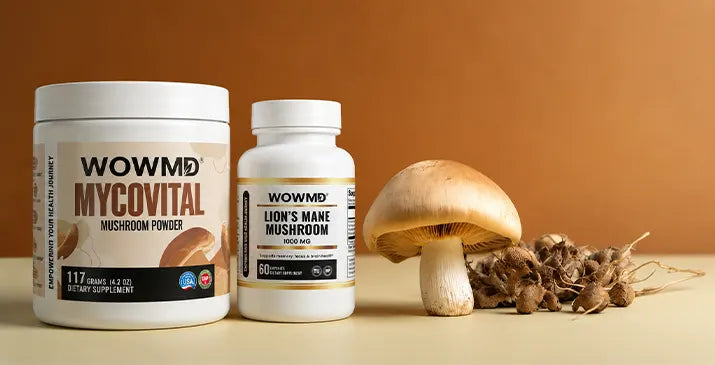
By supporting the body’s normal stress response, adaptogenic mushrooms like those in WOWMD Adaptogen Vitality Gummies may help with occasional stress.
Advertisement


Mushrooms That Affect Serotonin and Brain Health
Mushrooms like Lion’s Mane and psilocybin-based fungi go a step further, directly influencing brain chemistry.[3] Psilocybin, often under study in psychedelics for anxiety and depression[4], mimics serotonin, a neurotransmitter integral to mood stabilization. By interacting with serotonin receptors, psilocybin may influence mood and emotional responses.
Similarly, Lion’s Mane mushroom for anxiety contains compounds that boost nerve growth factor (NGF), essential for the regeneration of brain cells[5]. These mechanisms may support cognitive function and normal neurological activity, although their potential effects on mood are still being explored.
How Anti-Inflammatory Mushrooms Support Mood
Chronic inflammation is now recognized as a contributing factor to anxiety and depression. Mushrooms such as Cordyceps and Lion’s Mane contain compounds with antioxidant and anti-inflammatory properties that may support overall wellness.
Research shows Cordyceps reduces oxidative stress[6], while Lion’s Mane promotes a healthy immune response to combat brain inflammation.
These properties may support overall wellness and a balanced stress response, but mushrooms should not be viewed as an alternative to professional care or prescribed treatment.
Some medicinal mushrooms can help mood by influencing inflammation, immune function, and nerve growth factors. While early research shows significant support, the evidence is still quite limited, and mushrooms should not be used as primary forms of treatment for anxiety or depression but merely supplements,” emphasizes Daniel Tan, physician.
This makes them some of the best mushrooms for anxiety and depression when it comes to holistic care.
The Best Mushrooms for Anxiety and Depression
Reishi
Reishi has earned its reputation for its role in relaxation and mental balance. Reishi contains compounds that may support the body’s normal response to occasional stress and promote relaxation.
The 2020 study mentioned earlier noted that Reishi may promote relaxation and support a balanced response to occasional stress. WOWMD Reishi Calm Drops can be a convenient way to add Reishi to a daily routine and may help support relaxation during occasional stress.
Reishi can interact with blood thinners and blood pressure medication, so check with your doctor or pharmacist first if you take prescription medication.
For people looking to support everyday mental wellness, Reishi may contribute to relaxation and emotional balance.
Lion’s Mane
Lion’s Mane mushroom is an excellent pick if you’re all about mood and cognitive health.Lion’s Mane contains compounds that may influence nerve growth factor (NGF), which plays a role in normal nerve-cell development and function. Studies have linked NGF stimulation with improved cognitive function and mental clarity.[7]
Lion’s Mane may support cognitive function, mental clarity, and overall neurological wellness.
Advertisement


Cordyceps
Cordyceps is widely recognized for its role in energy, but its potential benefits extend beyond physical stamina. This mushroom may help support the body’s normal stress response, making it a popular pick for occasional stress that comes with tiredness.
Cordyceps may support energy and physical stamina, which can be useful for people looking to maintain an active daily routine. Its naturally occurring compounds may provide antioxidant and anti-inflammatory support as part of an overall wellness routine. Try WOWMD Cordyceps Energy Gummies, available in a value-packed Trio Bundle, which may help support normal energy levels and the body’s response to occasional stress.
Psilocybin
Perhaps the most talked-about mushroom in mental health research, psilocybin is being researched for its potential effects on mood and emotional well-being. This psychedelic compound mimics serotonin, a neurotransmitter critical for mood regulation.
Psilocybin has been explored for its potential effects on mood and thought patterns following controlled administration.
Research into psychedelics is exploring their potential effects on mood, emotional well-being, fear, and worry in controlled settings.
- Note: Psilocybin is a controlled substance in many regions. Always consult local laws and medical professionals before use.
Dr. Kelly Brogan, Holistic Psychiatrist and Integrative Health Expert, stated,
Psilocybin mushrooms are showing a lot of promise in treating depression and anxiety, particularly for those with treatment-resistant conditions. Clinical trials suggest that psilocybin offers a long-lasting positive impact on emotional well-being.
How to Use Mushrooms for Anxiety and Depression
Choosing a suitable form and following the product label can help make mushrooms easier to include in a consistent wellness routine.
Powders are flexible and easy to mix into coffee, smoothies, or warm water. Capsules offer a simple, measured daily dose with no taste. Extracts and tinctures are concentrated and fast to use. Teas are a gentle, calming ritual, especially with Reishi in the evening.
A few simple tips. Look for dual-extract products made from the fruiting body rather than mycelium grown on grain, since these usually contain more of the active compounds. Take your mushrooms at the same time each day, and give it a few weeks. These are not instant fixes, so consistency matters more than dose.
A simple daily routine can look like this. Some people choose Lion’s Mane or Cordyceps earlier in the day as part of a focus and energy routine, while Reishi is often included in evening wellness routines.
Other Natural Ways to Support Anxiety and Depression
Mushrooms work best as part of a bigger picture. These simple habits support the same brain chemistry and stress systems that mushrooms do.
Move your body
Regular exercise is one of the most proven natural mood boosters, and even a daily walk helps.
Protect your sleep
Poor sleep raises stress and lowers mood, so a steady sleep schedule matters.
Practice calm
Meditation, slow breathing, and journaling help quiet an anxious mind and lower stress hormones.
Spend time in nature
Time outdoors, sometimes called forest bathing, is linked to lower stress and a calmer mood.
“For standardized extracts, the dosage usually ranges from 500 mg to 2 g for different mushrooms and their concentrations, but because there is no consensus on what a therapeutic dosage is for mood support, as a general rule, begin with the lower dosage, adhere to the recommended dosages, and wait at least 4 weeks to evaluate the impact,” recommends Jane Moon, pharmacist.
Read more:
Advertisement


Conclusion
Whether you’re managing occasional stress or looking for natural ways to support mental clarity, mushrooms may offer some benefits. Early research is promising but limited, so these fungi may work best as one part of a mental wellness routine, alongside professional care for ongoing anxiety or depression.
FAQs
Meet The Experts
- Jane Moon, Pharmacist & Director at Herba Health Inc.
- Daniel Tan, Physician, MD, MPH.
This article is for informational purposes only and is not a substitute for professional medical advice, diagnosis, or treatment. Statements made on this website have not been evaluated by the U.S. Food and Drug Administration. Always consult a qualified healthcare professional before making changes to your diet, supplements, medications, or healthcare routine.
Our Top Picks

Anxiety Shield

Ginkgo Biloba

Ashwagandha Extra Strength Formula

References
WOWMD follows strict sourcing guidelines to ensure the accuracy of its content, outlined in our editorial policy. We use only trustworthy sources, including peer-reviewed studies, qualified experts, and information from top institutions.


- Fungal Mushrooms: A Natural Compound With Therapeutic Applications: https://doi.org/10.3389/fphar.2022.925387
- Ganoderma lucidum Ameliorates Neurobehavioral Changes and Oxidative Stress Induced by Ethanol Binge Drinking: https://doi.org/10.1155/2020/2497845
- The Acute and Chronic Effects of Lion’s Mane Mushroom Supplementation on Cognitive Function, Stress and Mood in Young Adults: A Double-Blind, Parallel Groups, Pilot Study: https://doi.org/10.3390/nu15224842
- Psychedelic effects of psilocybin correlate with serotonin 2A receptor occupancy and plasma psilocin levels: https://doi.org/10.1038/s41386-019-0360-5
- Neurohealth Properties of Hericium erinaceus Mycelia Enriched with Erinacines: https://pmc.ncbi.nlm.nih.gov/articles/PMC5987239/
- Effects of fermented Cordyceps sinensis on oxidative stress in doxorubicin treated rats: https://doi.org/10.4103/0973-1296.165562
- Nerve Growth Factor: A Focus on Neuroscience and Therapy: https://doi.org/10.2174/1570159X13666150403231920