



Choline for Liver Health: Understanding Its Role and Benefits
How Choline Supports Liver Function
 By WOWMD Staff

 Fact Checked
Advertiser Disclosure: WOWMD independently vets all recommended products. If you purchase a featured product, we may be compensated. Learn why you can trust us.
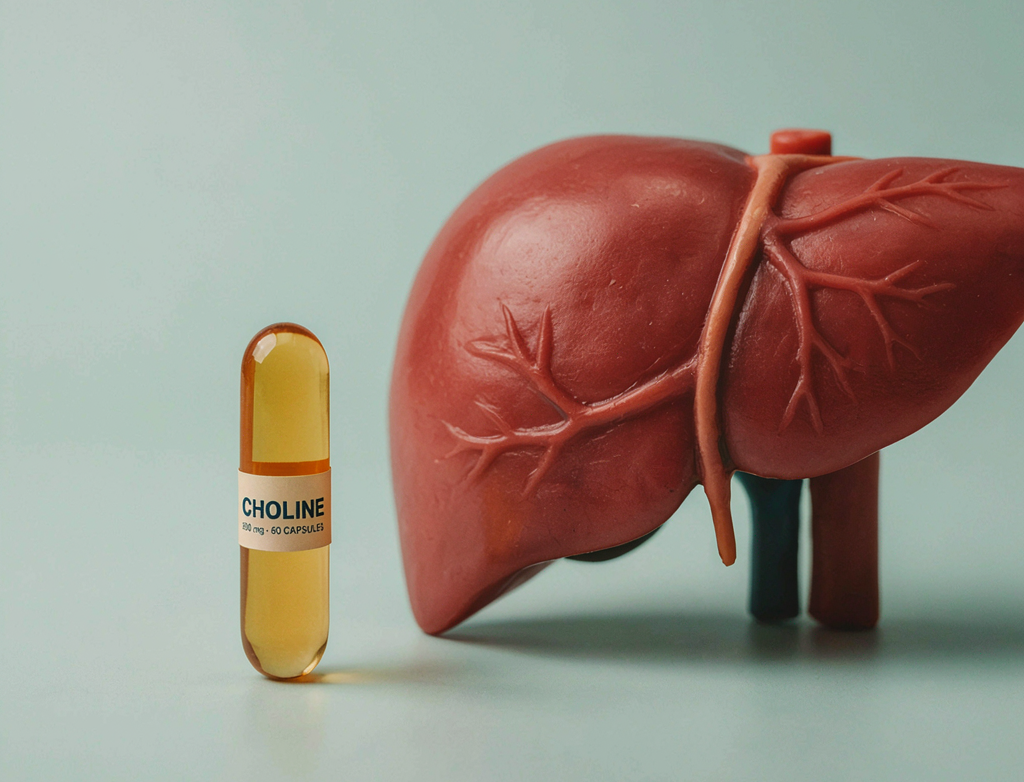
Your liver never stops working. Every hour, it filters compounds, metabolizes fat, produces bile, and keeps your metabolism in rhythm. When one key nutrient runs low, that system starts to strain, often before anyone notices.
That nutrient is choline. Most people connect it to brain health or pregnancy nutrition, but its role in liver function is just as significant, and for many adults, it’s a genuine gap in daily intake. In one large U.S. cohort study, 94% of men and 89% of women had a dietary choline intake below the recommended Adequate Intake.
Your body produces some choline on its own, but nowhere near enough to meet daily needs. Eggs, beef liver, salmon, and soybeans are among the richest dietary sources. Without enough choline, fat accumulates inside liver cells, a condition known clinically as nonalcoholic fatty liver disease, or NAFLD, estimated to affect 24% of adults in the U.S.
What makes choline distinct from other liver-supportive nutrients is structural necessity, not just antioxidant or anti-inflammatory activity. Choline is required for very-low-density lipoprotein, or VLDL, synthesis, the mechanism your liver uses to package and export fat. Without adequate choline, that export process slows and fat can accumulate over time. The NIH Office of Dietary Supplements notes adequate intake may help prevent NAFLD, though more research is needed to clarify choline’s role in treating the condition once it develops.
† These statements have not been evaluated by the Food and Drug Administration. These products are not intended to diagnose, treat, cure, or prevent any disease.
Advertisement


How Choline Supports Liver Function
When you eat dietary fat, your liver packages it into lipoproteins, specifically VLDL, and ships them into the bloodstream for use by other tissues. Choline is the raw material that makes this packaging possible. Without adequate choline, fat accumulates inside liver cells rather than moving out.
Choline and Lipoprotein Assembly
Phosphatidylcholine, the primary form of choline in the body, is a structural component of lipoprotein particles. Your liver uses it to package fat and cholesterol into a transportable form. When phosphatidylcholine availability falls, this assembly process slows, and fat that would normally leave the liver stays behind.
Choline and Methyl-Group Metabolism
Choline also contributes methyl groups to biochemical reactions the liver relies on constantly. Through transmethylation, choline donates methyl groups that support the conversion of homocysteine to methionine, a pathway shared with folate and vitamin B12. Elevated homocysteine is associated with inflammation and oxidative stress in liver tissue.
The liver can synthesize some choline using methyl groups from SAMe (S-adenosylmethionine). Still, this pathway has limits, particularly in men and postmenopausal women, who tend to have lower endogenous production. When dietary intake is also low, both processes are strained at once.
Choline Deficiency and Liver Health Risks

Choline deficiency can quietly set the stage for liver dysfunction long before symptoms appear.
Fatty Liver: What Happens When Choline Runs Low
Without enough choline, fat accumulates in liver cells rather than being shipped out through the bloodstream. The result is NAFLD, which can develop without heavy drinking or an otherwise poor diet. A sustained shortfall in choline intake alone can be enough to set it in motion.
Elevated Liver Enzymes: A Measurable Warning Signal
Choline deficiency can show up in bloodwork before becoming a structural problem. One of the clearest markers is serum alanine aminotransferase, or ALT. In the Zeisel study, ALT levels in healthy volunteers rose from 0.42 to 0.62 µkat/L over three weeks on a choline-deficient diet, normalizing again once choline was reintroduced.
Who Faces the Highest Risk
- Postmenopausal women, due to estrogen-related decline in choline production
- People following plant-based diets, since most high-choline foods are animal-derived
- Adults managing blood sugar concerns or conditions that impair fat metabolism
- Anyone eating a diet consistently low in eggs, meat, or seafood
Choosing the Right Choline Supplement for Liver Health
|
Form |
Notes |
Primary Use Case |
|
Choline bitartrate |
Common, accessible pricing |
General supplementation |
|
Alpha-GPC |
More studied for cognitive applications |
Cognitive support |
|
CDP-choline (Citicoline) |
More studied for cognitive applications |
Brain support, sometimes paired with liver-focused formulas |
|
Phosphatidylcholine |
The form found naturally in eggs and other dietary sources |
General liver and dietary-style support |
No studies have directly compared these forms’ bioavailability head-to-head, according to the NIH Office of Dietary Supplements. Phosphatidylcholine is a reasonable choice for people who want a form that mirrors what’s found naturally in food, but claims of one form being definitively superior for liver-specific outcomes go beyond current research.
Dosage Considerations
The Institute of Medicine’s Adequate Intake for choline is 550 mg for men and 425 mg per day for women. Most people fall short through diet alone. Supplemental doses used in clinical research have ranged from 500 mg up to the Tolerable Upper Intake Level of 3,500 mg per day, though doses in the 500 to 2,000 mg range are more typical starting points; starting at the lower end and adjusting based on your response is a reasonable approach.
A note on higher intakes: the NIH Office of Dietary Supplements notes that higher choline intake increases TMAO production, a compound linked to increased cardiovascular disease risk, in a dose-dependent manner. This is a reason to stay within recommended ranges rather than assume more is automatically better, and to discuss higher-dose supplementation with a healthcare provider, particularly if you have cardiovascular risk factors.
What to Look For on the Label
- Form of choline listed in the Supplement Facts panel
- Total elemental choline content per serving, not just the compound weight
- Third-party testing for purity and potency
- Non-GMO status and absence of artificial additives
- Manufacturing in a GMP-certified, FDA-registered facility
† These statements have not been evaluated by the Food and Drug Administration. These products are not intended to diagnose, treat, cure, or prevent any disease. Individual results may vary.
Integrating Choline into Your Wellness Routine

Start with food. A single large egg delivers roughly 147 mg per egg, while beef liver provides well over 350 mg per 3-ounce serving, close to a full day’s target in one serving. For most adults, a diet anchored by eggs, fatty fish, and legumes will move you meaningfully toward your daily target. Diet alone doesn’t always close the gap, especially for those who are plant-based or in a life stage where choline needs increase.
If you add a supplement, a few habits help. Take choline with a meal that contains healthy fat, since it works alongside fat metabolism. Pair it with folate and vitamin B12, which operate in the same methylation pathways. And treat choline as one piece of a broader approach to liver health rather than a standalone fix, alongside limiting alcohol, maintaining a healthy weight, and managing blood sugar.
Consistency matters more than occasional high doses. Build the habit, choose a well-formulated supplement if your diet falls short, and stay within recommended ranges.
† These statements have not been evaluated by the Food and Drug Administration. These products are not intended to diagnose, treat, cure, or prevent any disease.
This article is for informational purposes only and is not a substitute for professional medical advice, diagnosis, or treatment. Statements made on this website have not been evaluated by the U.S. Food and Drug Administration. Always consult a qualified healthcare professional before making changes to your diet, supplements, medications, or healthcare routine.
