

5 Best Vitamin C Serums: Dermatologist-Recommended
Discover the best vitamin C serums for brighter, smoother-looking skin. Compare formulas, ingredients, strengths, and tips for choosing the right serum.
 By WOWMD Staff

 Fact Checked
Advertiser Disclosure: WOWMD independently vets all recommended products. If you purchase a featured product, we may be compensated. Learn why you can trust us.


Vitamin C used to be a cosmetic ingredient that was optional, but it has become a regular part of people's skincare routines. There's a logic to searching for interest: When people are looking for dullness, uneven tone, post-blemish marks, fine lines and the brighter finish that just gets called a “glow,” they want to find help.
However, selecting the best vitamin C serum isn't just about picking the serum with the greatest percentage. Vitamin C formulation as well as stability, skin compatibility, antioxidants, skin tolerance and packaging are all important for the effectiveness of a formula.
Topical Vitamin C is effective for antioxidant activity, skin support (collagen), pigmentation and visible photoageing; however, the results vary widely, depending on the formulation and the frequency of use. Research gives vitamin C good reason to remain popular. Topical vitamin C has been studied for antioxidant activity, uneven-looking tone, collagen support and visible signs of photoageing. Clinical research has also reported improvements in photodamaged skin after regular topical use.
Among the most used formulas, five such formulas were analysed with reference to vitamin C type, concentration, supporting ingredients, usability, value, and suitability for different skin types for this guide.
TL;DR
- Serums with Vitamin C can help produce a brighter-looking skin, offer antioxidant benefits, stimulate collagen production, and improve your complexion's evenness.
- The most studied form is L-ascorbic acid, and derivatives might be more stable and less harsh for application.
- The quality is not only based on the concentration; formulation, packaging, pH, and supporting ingredients are also important.
- Hyaluronic acid, vitamin E, ferulic acid and emollients can help to enhance hydration and stability and increase overall usability.
- To reap the benefits of a vitamin C skincare regimen, it is important to use it consistently, store it properly and use sunscreen every day.
What is a Vitamin C Serum and What Does It Do for Your Skin?
A vitamin c serum for face is a topical product with a high concentration of vitamin C, which is applied to the skin before moisturiser. Vitamin C is also an antioxidant, which helps to prevent oxidative stress caused by exposure to the environment. It also helps to participate in the synthesis of collagen and can modulate the pathways of pigmentation.
Here is a breakdown of those properties and the most common benefits of using vitamin c serums for the skin: a brighter appearance, smoother and clearer-looking photoaged skin, antioxidant protection, and a more even-toned appearance of uneven skin tone and dark spots.
Real measurable results were observed in a double-blinded, clinical study with photoaged skin with repeated topical vitamin C application over 6 months.
A serum is not an instant spot eraser, however. Think of a vitamin C serum for skin care as a consistency-driven product that works best as part of a broader routine including moisturiser and daily sunscreen.
Advertisement


Different Types of Vitamin C: Forms & Formulas
“Vitamin C” on a label can describe several different molecules.
L-Ascorbic Acid (LAA)
L-ascorbic acid is pure vitamin C and remains the most extensively studied topical form. It can be highly effective but is also relatively unstable and typically performs best in acidic formulations. Reviews suggest concentrations between roughly 10% and 20% are common in well-formulated products.
Sodium Ascorbyl Phosphate (SAP)
SAP is a water-soluble, more stable vitamin C derivative. It is often seen in formulas for oily or blemish-prone skin. Clinical research has also investigated 5% sodium ascorbyl phosphate in acne-prone skin with favourable tolerability and improvements compared with vehicle.
Magnesium Ascorbyl Phosphate (MAP)
MAP is another stable vitamin C derivative. It is commonly chosen for gentler brightening and hydration-focused products and can be useful when highly acidic L-ascorbic acid formulas feel too aggressive.
Tetrahexyldecyl Ascorbate (THD Ascorbate)
THD ascorbate is lipid-soluble and relatively stable, allowing it to work in richer, less acidic formulations. Revision C+ Correcting Complex is the example in this guide. A 30% THD formula should not be compared directly with 30% L-ascorbic acid because they are chemically different forms.
Ascorbyl Glucoside
Ascorbyl glucoside combines vitamin C with glucose to improve stability. It must be converted within the skin to active ascorbic acid and is often used in gentler daily brightening products.
3-O-Ethyl Ascorbic Acid
Ethyl ascorbic acid is a modified vitamin C form designed to provide improved stability while retaining antioxidant and brightening activity. It is increasingly common in modern water-based serums.
What about 10%, 15%, and 20%?
10% can be a practical starting point for newer users. 15% offers a middle ground and is common in established L-ascorbic acid formulas. 20% sits toward the higher end of conventional topical concentrations.
Going above 20% does not automatically mean better results. Formulation quality matters more than chasing numbers.
Useful Vitamin C Pairings
Vitamin C + Vitamin E + ferulic acid is a well-known antioxidant combination. Research found that ferulic acid improved the stability of vitamins C and E and increased the photoprotective performance of the tested antioxidant solution.
A vitamin C serum and hyaluronic acid combination adds hydration rather than making vitamin C itself stronger. Niacinamide can also be used in routines containing vitamin C; the old idea that the two must always be separated is largely outdated for modern cosmetic formulas.
Water-Based, Oil-Based, or Anhydrous
Water-based serums usually feel light but make L-ascorbic acid stability more challenging.
Oil-based formulas work particularly well with lipid-soluble derivatives such as THD ascorbate.
Anhydrous formulas remove water altogether to improve stability, although texture may become heavier or granular, as seen with The Ordinary's suspension.
Read More: Foods That Are High in Vitamin C
Our Top Picks:
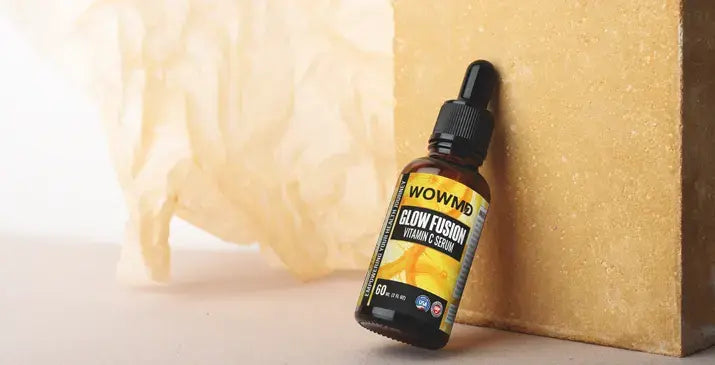
Best Overall: WOWMD Glow Fusion Vitamin C Serum
Best Antioxidant Blend: Maelove Glow Maker
Best Lightweight Formula: Vichy LiftActiv 16% Pure Vitamin C Serum
Best Premium Pick: Revision Skincare C+ Correcting Complex 30%
Best Budget High-Strength Option: The Ordinary Vitamin C Suspension 23% + HA Spheres 2%

Pros
- Contains 20% vitamin C.
- Includes hyaluronic acid and jojoba oil.
- Generous 60 mL format.
- Vegan and paraben-free.
Cons
- Available only on the official website
- Results build up gradually with regular use
Vitamin C form & %: 20% Vitamin C, form not specified | Key Ingredients: Hyaluronic Acid, Jojoba Oil, Botanical Extracts | Best for skin type: Normal, dry, combination | Size: 60 mL | Price: $44.65 |
Description:
WOWMD Glow Fusion combines 20% vitamin C with hyaluronic acid, jojoba oil, and botanicals, creating a hydration-focused daily serum rather than a stripped-back high-acid treatment.
Things to Consider:
The formula looks well-rounded, but identifying the exact vitamin C form would make its 20% concentration easier to compare with competitors.

Pros
- Contains 15% L-ascorbic acid.
- Adds vitamin E and ferulic acid.
- Includes hyaluronic acid and aloe.
- Vegan and cruelty-free.
Cons
- Vitamin C can oxidise with poor storage.
- Acidic formulas may not suit everyone.
Vitamin C form & %: 15% L-Ascorbic Acid | Key Ingredients: Vitamin E, Ferulic Acid, Hyaluronic Acid, Aloe | Best for skin type: Most skin types | Size: 30 mL | Price: $27.59
Description:
Glow Maker uses the classic 15% L-ascorbic acid, vitamin E, and ferulic acid trio, then adds hydrating and soothing ingredients to make the formula more wearable.
Things to Consider:
Maelove recommends paying attention to freshness and storing unopened backup bottles in the refrigerator because L-ascorbic acid is inherently delicate.

Pros
- Uses 16% pure L-ascorbic acid.
- Includes vitamin E and carnosine.
- Fragrance- and alcohol-free.
- Fast-absorbing, water-like finish.
Cons
- Small 20 mL bottle.
- Price varies between retailers.
Vitamin C form & %: 16% L-Ascorbic Acid | Key Ingredients: Vitamin E, Carnosine | Best for skin type: All skin types, including sensitive | Size: 10 mL | Price:10> $28.50
Description:
Vichy delivers a focused 16% L-ascorbic acid formula with vitamin E and carnosine in a fragrance-free, oil-free texture designed to disappear quickly under moisturiser and SPF.
Things to Consider:
Vichy stopped direct U.S. website sales in May 2026, so pricing, shipping, and return terms now depend largely on the chosen retailer.

Pros
- Uses 30% THD ascorbate.
- Stable, lipid-soluble vitamin C approach.
- Suitable for all skin types.
- Includes supporting antioxidants.
Cons
- Starts at $120.
- Percentage cannot be compared directly with LAA.
Vitamin C form & %: 30% THD Ascorbate | Key Ingredients: THD Ascorbate, antioxidant MelaPATH technology | Best for skin type: All skin types | Size: 30 ml | Price: From $190
Description:
Revision takes a premium route with 30% THD ascorbate in a creamy lotion-serum aimed at brightening, antioxidant support, and a more even-looking complexion.
Things to Consider:
The formula is sophisticated, but it costs substantially more than the others, and 30% THD does not equal 30% L-ascorbic acid.

05
Best Budget High-Strength Option
The Ordinary Vitamin C Suspension 23% + HA Spheres 2%
Pros
- Contains 23% pure L-ascorbic acid.
- Water-free for improved stability.
- Vegan and cruelty-free.
- Costs just $8.10.
Cons
- Granular texture.
- Can tingle on application.
Vitamin C form & %: 23% L-Ascorbic Acid | Key Ingredients: Sodium Hyaluronate, Squalane | Best for skin type: All skin types; better for experienced users | Size: 30 mL | Texture/Finish: Granular, oil-like suspension | Price: $8.10
Description:
The Ordinary prioritises potency and price with 23% direct L-ascorbic acid in a water-free suspension, supported by hyaluronic acid spheres and squalane.
Things to Consider:
The gritty finish is less cosmetically elegant than a conventional serum, and beginners may prefer introducing this concentration gradually.
Comparison Table
| Our Top Picks | WOWMD Glow Fusion | Maelove Glow Maker | Vichy LiftActiv 16% | Revision C+ Correcting 30% | The Ordinary Vitamin C 23% |
|---|---|---|---|---|---|
| Highlights | 20% vitamin C, HA, jojoba, 60 mL | 15% LAA + vitamin E + ferulic acid | 16% LAA, lightweight, fragrance-free | 30% THD ascorbate, premium lotion-serum | 23% LAA, water-free, low cost |
| Third-party tested | Yes | No | No | No | No |
| Money-Back Guarantee | 60 days | Not Applicable | 30 Days | 30 Days | 30 Days |
| Shipping | Free U.S. shipping over $60 | Standard Shipping Charges | Standard Shipping Charges | Standard Shipping Charges | Standard Shipping Charges |
| Customer Rating |  4.9/5 4.9/5 |
 3.3/5 3.3/5 |
 3.6/5 3.6/5 |
 3.5/5 3.5/5 |
3.5/5 |
What Are the Benefits of a Vitamin C Serum?
- Brighter-Looking Skin Vitamin C can help reduce the dull, uneven look associated with environmental stress and accumulated sun exposure. This is why brightening remains one of the most noticeable everyday benefits of vitamin C serum.
- Dark Spots and Hyperpigmentation Vitamin C can interfere with processes involved in melanin formation. A systematic review covering topical vitamin C studies reported measurable lightening in pigmentation assessments, although the authors also noted that stronger evidence and longer studies are needed.
- For someone searching for a vitamin c serum for dark spots or the best vitamin c serum for hyperpigmentation, consistency and sunscreen are as important as concentration.
- Antioxidant Support UV exposure and pollution generate oxidative stress. Vitamin C helps neutralise reactive molecules, which is why it works particularly well alongside daily sunscreen rather than in place of it.
- Collagen Support Vitamin C participates in collagen synthesis and may help support firmer, smoother-looking skin over time. Clinical research on photoaged skin has reported improvements in skin surface characteristics after sustained topical use.
Also Read: Vitamin C Benefits for Skin
Why Vitamin C Has Earned Its Place in Skincare
Vitamin C's popularity isn't based entirely on skincare trends.
As an antioxidant, vitamin C can help counter oxidative stress caused by environmental exposure. It also plays a role in collagen biology, which is one reason it is frequently included in products aimed at the visible signs of skin ageing. Reviews of topical vitamin C research have linked its use with improvements in the appearance of photodamage, pigmentation and skin texture.
In a double-blind split-face clinical study, topical vitamin C use was associated with improvements in photoageing scores and changes in collagen-related measures.
That does not mean every bottle labelled "vitamin C serum" will perform identically. Formulation is what determines whether the ingredient remains stable, reaches the skin effectively and is comfortable enough to use consistently.
Advertisement


How to Use Vitamin C Serum in Your Skincare Routine
Morning is the most popular time because antioxidant support pairs naturally with SPF:
- Cleanse and dry the skin.
- Apply a few drops of vitamin C serum.
- Add other compatible lightweight serums.
- Follow with moisturiser.
- Finish with broad-spectrum sunscreen.
Evening use is also fine if the product directions allow it.
Beginners can start every other day rather than assuming daily use is essential immediately. Once the skin is comfortable, frequency can be increased.
Hyaluronic acid can be layered with vitamin C without difficulty. If using niacinamide, modern formulas generally allow both ingredients in the same routine, although highly reactive skin may still prefer simpler layering.
How to Choose the Best Vitamin C Serum for Your Skin
Start with the form, not the number on the bottle. L-ascorbic acid has the strongest research history, while derivatives may provide better stability or a gentler experience.
For sensitive skin, look for a moderate concentration, fragrance-free formula, supportive hydrators, and fewer potentially irritating extras. The best vitamin C serum for sensitive skin is often the one that can be used consistently rather than the strongest option available.
Dry skin may benefit from hyaluronic acid, squalane, or jojoba oil. Oily skin often prefers lightweight, water-like serums. Mature skin may appreciate formulas combining antioxidants with hydrating and conditioning ingredients.
Packaging matters too. Air, heat, and light can speed oxidation, particularly with L-ascorbic acid. Opaque or protective packaging and sensible storage are worth paying attention to.
Finally, compare price by bottle size. A $45 60 mL bottle and a $35 20 mL bottle represent very different values even when their headline prices look similar.
Side Effects & Precautions
Vitamin C is generally well tolerated, but high-strength or low-pH formulas can cause temporary tingling, dryness, redness, or irritation. Sensitive or rosacea-prone skin deserves a patch test and a slower introduction.
Persistent bumps should not automatically be dismissed as “purging.” Vitamin C does not typically create the accelerated cell turnover associated with classic purging ingredients such as retinoids. If a formula repeatedly causes breakouts or irritation, it may simply not suit the skin.
Topical vitamin C is commonly used during pregnancy, but individual product formulas can contain additional actives, so checking the complete ingredient list is sensible.
Vitamin C can also go bad. If an L-ascorbic acid serum becomes dramatically darker, develops an unusual smell, or changes significantly in texture, check the brand's storage guidance and replacement recommendations.
Handled well, vitamin C is less about chasing an overnight transformation and more about gradually maintaining clearer, brighter, more even-looking skin.
Conclusion
The best vitamin C serum is not necessarily the one with the highest concentration. Vitamin C form, stability, supporting ingredients, packaging, texture, and skin tolerance all play an important role in how well a serum fits into a routine.
L-ascorbic acid remains the most researched form, while derivatives can offer advantages such as improved stability and potentially gentler application. Hydrating ingredients like hyaluronic acid and supportive antioxidants such as vitamin E and ferulic acid can also improve the overall formula.
Advertisement


Ultimately, choosing a vitamin C serum should come down to skin type, ingredient preferences, budget, and how consistently the product can be used. Regular application, proper storage, and daily sunscreen remain key to getting the most from a vitamin C skincare routine.
FAQs
This article is for informational purposes only and is not a substitute for professional medical advice, diagnosis, or treatment. Statements made on this website have not been evaluated by the U.S. Food and Drug Administration. Always consult a qualified healthcare professional before making changes to your diet, supplements, medications, or healthcare routine.

References
WOWMD follows strict sourcing guidelines to ensure the accuracy of its content, outlined in our editorial policy. We use only trustworthy sources, including peer-reviewed studies, qualified experts, and information from top institutions.


- Topical ascorbic acid on photoaged skin. Clinical, topographical and ultrastructural evaluation: double-blind study vs. placebo https://pubmed.ncbi.nlm.nih.gov/12823436/
- Double-blind, half-face study comparing topical vitamin C and vehicle for rejuvenation of photodamage https://pubmed.ncbi.nlm.nih.gov/11896774/