



Expert-Recommended Oily Skin Products†
Skincare for Oily Skin
From oil-control cleansers to lightweight gel moisturizers, here's our oily skin lineup — designed around how excess sebum actually behaves on the skin, not just how to mask it.
Oily skin isn't a flaw in your routine — it's your sebaceous glands doing exactly what they're built to do, just at a higher output than some other skin types. When sebum is overproduced, it can disrupt the skin's natural lipid balance and contribute to clogged pores, excess shine, and breakouts, which is why “just strip it all off” tends to backfire more often than it helps. WOWMD's oily skin collection is built around that nuance, with lightweight, non-comedogenic formulas designed to help regulate shine and support a clearer-looking complexion without stripping skin of what it actually needs.†

Glow Fusion Vitamin C Serum

Watermelon Hydration Moisturizer

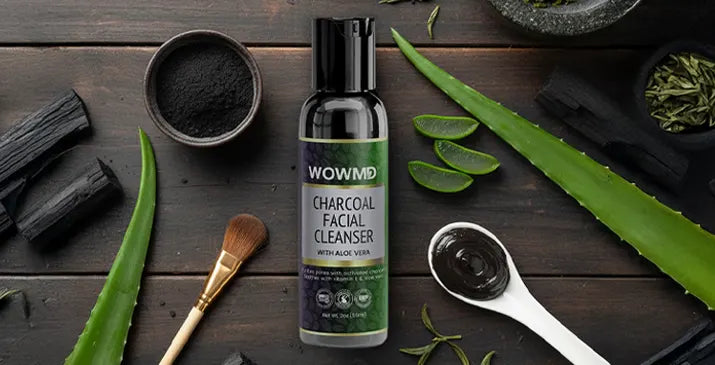
Charcoal Facial Cleanser

Hydro Balancing Gel-Cream
Understanding Oily Skin

Why Is My Skin So Oily?
Oily skin gets blamed for a lot — breakouts, enlarged-looking pores, that midday shine — but the underlying biology is more interesting than “too much oil, bad.” Sebum itself isn't the enemy. It's a complex mixture made up largely of squalene, wax esters, triglycerides, free fatty acids, cholesterol esters, and free sterols, and in normal amounts it plays a genuinely protective role, helping the skin retain moisture and resist outside irritants. The trouble starts with volume. Dermatology research generally classifies skin as oily once sebum output exceeds about 1.5mg per 10 cm² every three hours, and at that point, the same substance that's supposed to protect skin can start working against it.[1] Excess sebum can throw off the skin's surface lipid ratios and contribute to abnormal pore-lining buildup, creating conditions where breakout-causing bacteria are more likely to thrive — which is part of why oily skin and acne-prone skin so often show up together, even though they're not technically the same thing. What causes one person to produce more sebum than another is genuinely complex. Hormones play a major role, environmental factors like heat and humidity can ramp production up seasonally, and skin surface oil levels naturally shift throughout the day. None of that means oily skin is something gone wrong — it just means it responds better to formulas designed with that extra oil output in mind, rather than ones built for a drier baseline. [2]

How to Get Rid of Oily Skin?
The instinct with oily skin is often to reach for the harshest, most stripping option on the shelf, and that's usually the wrong move. Over-cleansing or using formulas that strip too much oil too fast can leave skin feeling tight and dehydrated, which paradoxically can prompt it to compensate by producing even more sebum. The better approach is working with your skin's chemistry instead of against it — lightweight, oil-free, non-comedogenic formulas that hydrate and balance rather than scrub everything away. A few ingredients have real evidence behind them for this specific job. Niacinamide is one of the better-studied options — a placebo-controlled study of 100 subjects found that topical 2% niacinamide significantly lowered sebum excretion rates after just two and four weeks of use, making it a reasonable ingredient to look for in a daily moisturizer or serum if shine control is the goal. Salicylic acid is another familiar name for oily and acne-prone skin, valued for its ability to get into pores and help clear out the debris that tends to accumulate when oil production runs high. Clay-based formulas can help absorb surface oil throughout the day without disrupting the skin barrier the way harsher surfactants can. And when it comes to texture, gel and gel-cream formulas tend to outperform heavier creams for oily skin — they deliver hydration without adding to the oil load skin is already producing on its own.

Why Shop WOWMD's Skincare For Oily Skin?
WOWMD formulates its oily skin collection around the actual mechanics of excess sebum — lightweight textures, oil-free and non-comedogenic formulas, and ingredients used at amounts meant to genuinely help regulate shine rather than just mattify it for an hour. No heavy fillers, no stripping surfactants doing more harm than good. Every product is manufactured in the USA under consistent quality control, with free shipping on U.S. orders over $60, so testing out a formula built for your skin's actual oil output doesn't come with much risk. Shopping WOWMD for oily skin means choosing products designed to work with your skin's natural chemistry as part of a consistent routine — not a replacement for dermatologic care when something needs real attention.
FAQs
What People are Saying

Loading review…

Loading review…

Loading review…

Loading review…
References:
- Oily Skin: A review of Treatment Options - PMC https://pmc.ncbi.nlm.nih.gov/articles/PMC5605215/
- A Comprehensive Review: The Bidirectional Role of Sebum in Skin Health - PMC https://pmc.ncbi.nlm.nih.gov/articles/PMC12729757/
‡ May help support oil balance, pore appearance, and overall skin appearance as part of a regular routine.†
† These statements have not been evaluated by the Food and Drug Administration. These products are not intended to diagnose, treat, cure, or prevent any disease.
SUBSCRIBE & SAVE MORE!
Subscribe to your favorites WOWMD® supplements and enjoy flexible deliveries, easy account control, and savings on select products. FREE U.S. SHIPPING on orders over $60!
Shop Subscribe & Save
Expert Advice About Skincare for Oily Skin
Learn more about Skincare for Oily Skin through recommendations, product guides and wellness education from trusted professionals


Why Trust WOWMD®?
At WOWMD®, our purpose is clear: to create thoughtfully formulated supplements designed to support everyday wellness. We know that when it comes to your health, there’s no room for compromise. That's why we carefully select ingredients and thoughtfully develop our formulas with quality, transparency, and everyday wellness in mind. Every formula is carefully designed to support your wellness journey—because we believe you deserve nothing less than the best.
Trust isn't just a word for us: It's the foundation of everything we do. We understand that taking care of your health is deeply personal, and we’re here to support you every step of the way. With WOWMD®, you're choosing a brand that’s committed to your well-being—not just today, but for the long haul. Let us be your partner in health, providing the reliability and confidence you deserve.